Turning 40 can be an important stage for women to reassess their health, fitness, and daily routines. With changing work responsibilities, family commitments, lifestyle habits, and natural changes in the body, maintaining regular physical activity can become increasingly valuable. Yoga is one form of movement that can be adapted to different fitness levels and lifestyles, making it a practical option for many women over 40.
Yoga combines physical postures, controlled movement, breathing, balance, and relaxation. It does not necessarily require expensive equipment or a gym membership, and many routines can be practiced at home. Women who have never practiced yoga before can start with beginner-friendly sessions and gradually develop their confidence.
The purpose of yoga does not have to be mastering difficult poses. A consistent practice can instead focus on comfortable movement, mobility, balance, strength, flexibility, and body awareness.
Women can also combine yoga with other forms of physical activity, including walking, strength training, swimming, cycling, or dance-based workouts. The right routine depends on individual preferences, fitness levels, schedules, and goals.
For women who are pregnant, yoga may require additional modifications and specific guidance. A general yoga class should not automatically be considered appropriate during pregnancy. A program such as Prenatal Yoga Online is specifically designed around pregnancy-related considerations and may be more suitable when recommended by an appropriate healthcare professional.
Benefits of Yoga for Women Over 40
Yoga can provide a variety of physical and lifestyle benefits when practiced appropriately. Women over 40 may particularly appreciate activities that support mobility, balance, strength, flexibility, and relaxation without requiring an extremely intense workout every day.
One of the most common reasons people begin yoga is flexibility. As adults become less active or spend more time sitting, certain movements may feel restricted. Regular, gentle yoga practice can encourage movement through comfortable ranges of motion.
Flexibility does not mean forcing the body into extreme positions. The goal should be controlled and comfortable movement. Every person has a different natural range of motion, and flexibility can vary depending on previous activity, injuries, age, and individual anatomy.
Supporting Everyday Mobility
Mobility is important for everyday activities such as walking, reaching, bending, standing, and getting up from a chair. Yoga can include movements that involve several areas of the body and encourage controlled mobility.
For example, gentle movements involving the hips, shoulders, spine, ankles, and legs can become part of a regular practice.
Maintaining mobility can also make it easier to participate in other activities. A woman who enjoys walking or strength training may use gentle yoga as a complementary activity.
Improving Balance and Body Awareness
Balance becomes an increasingly important part of maintaining physical independence as people age. Yoga includes many standing and controlled movements that can challenge balance.
Beginner-friendly balance poses can be practiced near a wall or other stable support if needed.
Yoga also encourages body awareness. During a session, you pay attention to how your body is positioned and how it feels as you move.
This awareness can help you recognize when a movement feels comfortable and when you need to modify it.
Supporting Strength and Stability
Yoga is often associated with stretching, but many poses also require muscular control.
Depending on the style of yoga, poses may challenge the legs, core, shoulders, arms, and back. Holding a position with proper technique can require strength and stability.
However, yoga does not necessarily replace dedicated resistance training. Women who want to improve overall muscular strength may benefit from combining yoga with an appropriate strength-training routine.
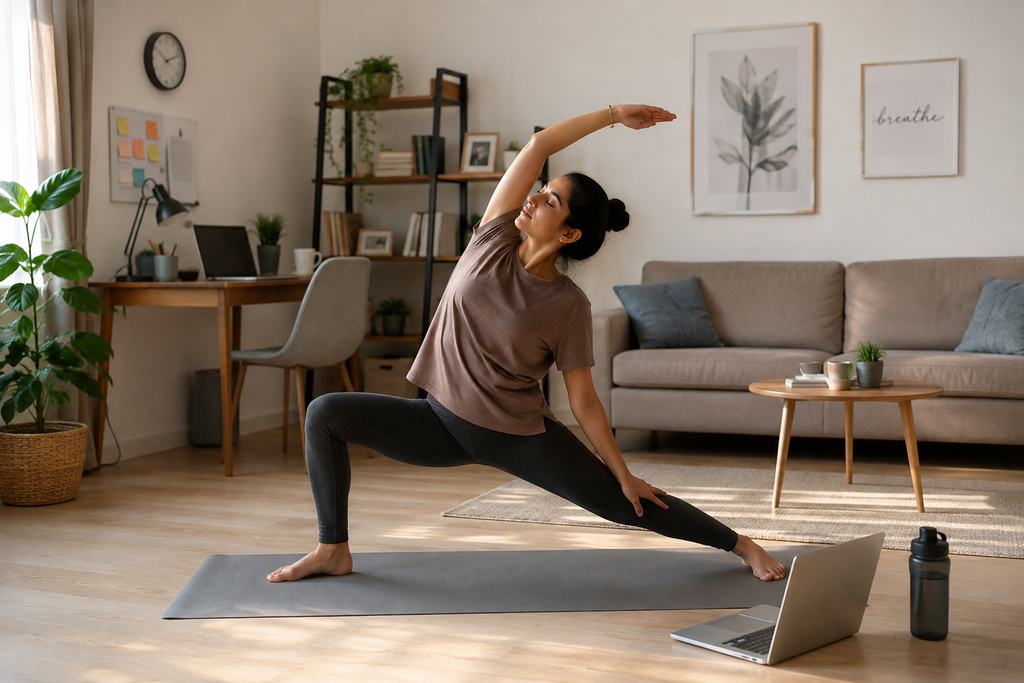
A varied exercise program can provide different types of physical challenges.
Relaxation and Mindful Movement
Busy lifestyles can make relaxation difficult. Work, family responsibilities, household tasks, and digital distractions may leave little time for quiet activities.
Yoga can create a dedicated period for slowing down and focusing on movement and breathing.
Gentle yoga sessions can be particularly suitable for evenings when the goal is to transition away from a busy day.
The relaxation component of yoga does not require advanced physical skills. Even simple movements followed by quiet breathing can create a more mindful exercise experience.
Supporting a Consistent Fitness Lifestyle
One of the biggest advantages of yoga is adaptability. A woman can choose a short session when she has limited time and a longer session when her schedule allows.
This flexibility can make it easier to maintain a regular routine.
The goal should not be perfection. Missing one session does not mean your routine has failed. Returning to your practice when you have time is more important than trying to maintain an unrealistic schedule.
How Women Over 40 Can Start Yoga Safely
Starting yoga after 40 does not require previous experience or exceptional flexibility. The most important step is choosing a suitable level and learning to work within your current abilities.
If you are completely new to yoga, begin with beginner-friendly sessions. Avoid starting with advanced classes simply because the poses look impressive.
A beginner class should provide clear instructions and enough time to understand each movement.
Select the Right Class
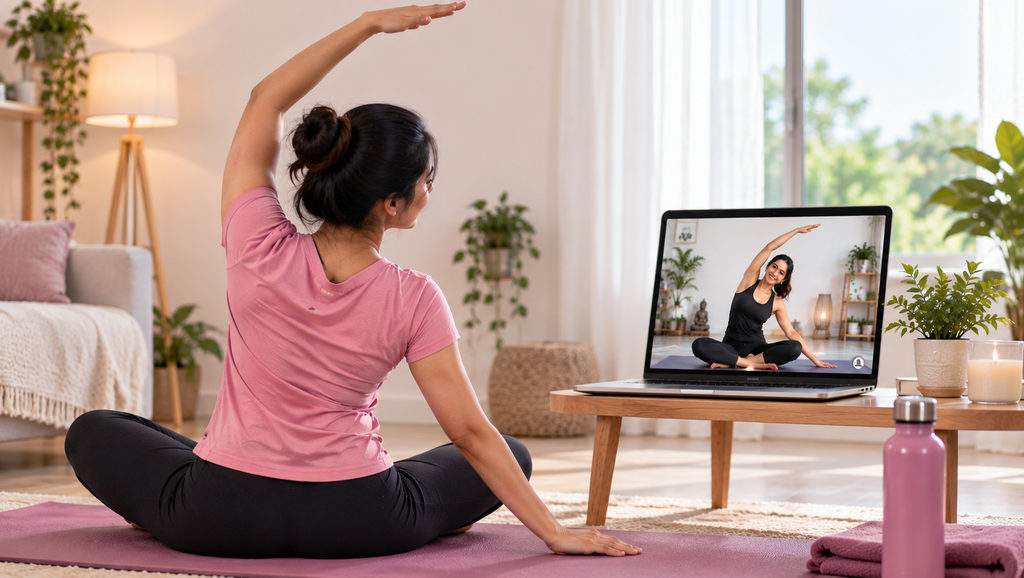
Online yoga provides access to many different types of classes. Some focus on gentle movement, while others are physically demanding.
When selecting a class, consider your current fitness level.
Beginner sessions may include:
- Basic standing poses
- Gentle seated stretches
- Simple balance exercises
- Breathing practices
- Mobility movements
- Relaxation techniques
As your experience increases, you can gradually explore different styles and levels.
Warm Up Before More Challenging Movements
A warm-up can help prepare your body for physical activity.
Start with gentle movements before progressing to deeper stretches or more demanding positions.
You might begin with comfortable shoulder movements, spinal mobility, gentle hip movements, and easy standing exercises.
Do not rush into deep stretches immediately after starting your session.
Use Modifications and Props
Yoga does not have to look identical for everyone.
You can modify poses based on your flexibility, strength, balance, and comfort.
Useful props may include:
- Yoga blocks
- Yoga straps
- Blankets
- Bolsters
- Chairs
- Walls for balance
Using a prop is not a sign that you are inexperienced. It can help you practice a movement more comfortably and safely.
Listen to Your Body
Learning to recognize physical signals is an important part of yoga.
A mild stretching sensation can occur during some poses, but sharp, sudden, or significant pain should not be ignored.
Stop or modify the movement if you experience unusual pain, dizziness, numbness, tingling, significant weakness, or loss of balance.
Never assume that forcing a stretch will automatically produce better results.
If you have an injury, persistent pain, or a medical condition that affects physical activity, speak with an appropriate healthcare professional before beginning or changing your exercise routine.
Consider Special Circumstances
Women over 40 may have different health and fitness considerations. Some may be recovering from an injury, managing a chronic condition, or experiencing changes related to menopause or other stages of life.
Yoga can be adapted in many circumstances, but adaptations should be appropriate for the individual.
Pregnancy is one situation where specialized guidance is particularly important. Women who are pregnant should not assume that a standard yoga class is automatically appropriate. A specialized Prenatal Yoga Online program may offer pregnancy-specific modifications, but it is still important to follow guidance from a qualified healthcare professional and appropriately trained instructor.
Building a Practical Yoga Routine After 40
A good yoga routine should fit your lifestyle rather than create additional stress.
There is no single perfect schedule. Some women prefer morning sessions, while others find evenings more convenient.
Start with a realistic number of sessions per week. Shorter sessions can be useful when your schedule is busy.
For example, you could begin with three sessions per week and adjust your routine over time.
Example Weekly Routine
A simple schedule could look like this:
Monday: 20-minute beginner yoga session
Tuesday: Walking or another form of physical activity
Wednesday: 15–20 minutes of mobility-focused yoga
Thursday: Strength-training session or active movement
Friday: Gentle yoga and breathing
Saturday: Longer yoga session or another enjoyable workout
Sunday: Rest or gentle stretching
This is only an example. Your schedule should reflect your own lifestyle, fitness level, and recovery needs.
Combine Yoga With Other Forms of Exercise
Yoga can be part of a broader fitness routine.
Women over 40 may combine yoga with:
- Walking
- Strength training
- Swimming
- Cycling
- Dancing
- Pilates
- Mobility exercises
- Other enjoyable physical activities
Combining different types of movement can provide variety and help address different aspects of fitness.
For example, strength training can specifically challenge muscles, while yoga can emphasize mobility, balance, controlled movement, and flexibility.
Make Your Routine Sustainable
The best exercise routine is one you can realistically continue.
If you have a demanding work schedule, do not create a plan that requires long daily workouts if you know it will be difficult to maintain.
Instead, start with manageable sessions.
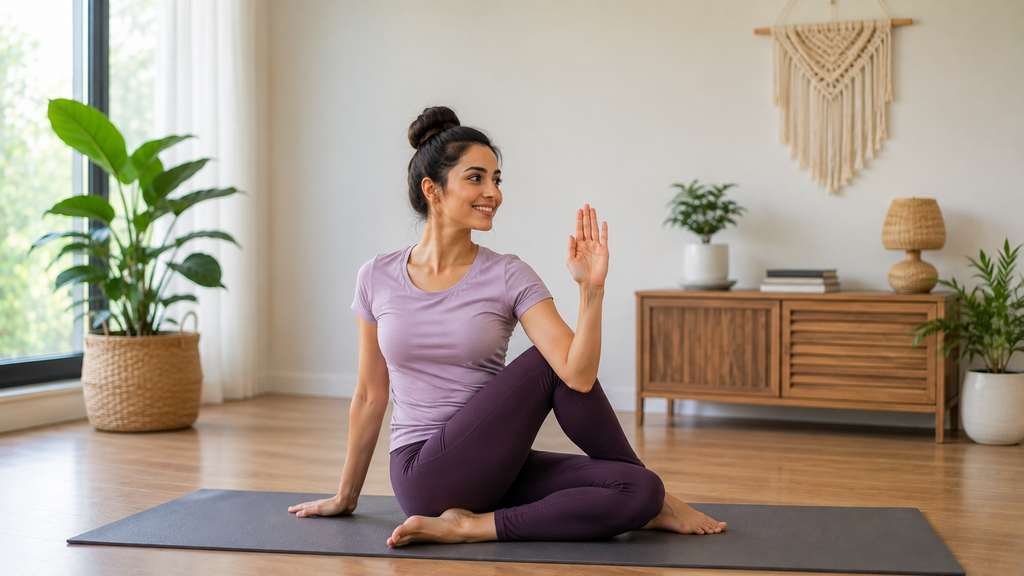
You can keep your yoga mat ready, schedule your practice at a consistent time, or follow online classes that match the amount of time you have available.
A 15-minute session can be useful on a busy day. On a quieter day, you may have time for a longer practice.