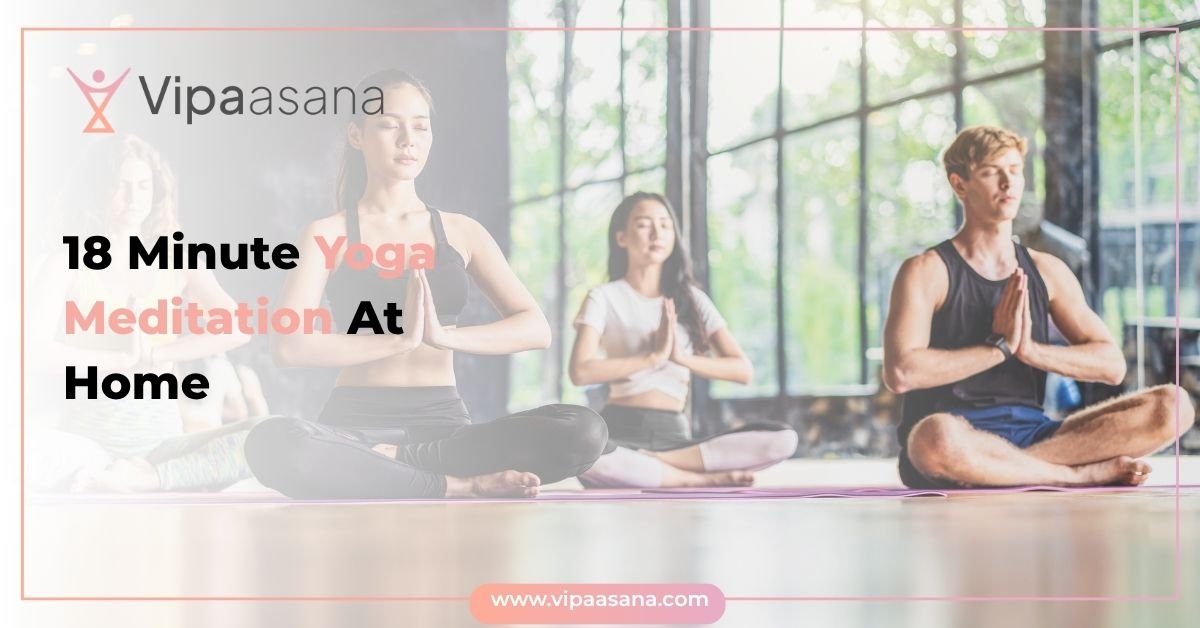
Finding time for exercise and relaxation can be difficult when you have a busy daily schedule. Work, household responsibilities, studies, family commitments, and other activities can make it challenging to dedicate a long period to wellness. However, a short and consistent practice can still become a meaningful part of your day. An 18-minute yoga meditation routine at home can provide a simple way to combine gentle movement, breathing, relaxation, and mindfulness without requiring a large amount of time.
Yoga and meditation are often practiced together because they can complement each other. Gentle yoga movements can help you become more aware of your body, while breathing exercises and meditation can encourage a calmer and more focused state of mind. You do not need an advanced level of flexibility or complicated equipment to begin.
An 18-minute routine can also be easier to maintain than a long workout. Instead of waiting for a completely free hour, you can choose a convenient time during your morning, afternoon, or evening and create a small wellness habit.
The following guide explains how to structure an 18-minute yoga meditation session at home, what movements you can include, how breathing can support the practice, and how to make the routine comfortable and sustainable.
What Is an 18-Minute Yoga Meditation Routine?
An 18-minute yoga meditation routine combines gentle yoga movements with breathing and mindfulness. The purpose is not to perform difficult poses or push the body to its maximum ability. Instead, the routine focuses on controlled movement, awareness, relaxation, and consistency.
You can divide the session into different sections. For example, the first few minutes can be used for breathing and preparation, followed by gentle yoga poses, and the final portion can focus on meditation and relaxation.
The exact structure can vary according to your experience and personal needs. Beginners may prefer slower movements, while people who already practice yoga can include slightly more challenging poses.
The most important factor is to maintain comfortable breathing and avoid forcing your body into positions that cause pain.
Why Choose an 18-Minute Practice?
One of the biggest challenges with exercise and wellness routines is finding enough time. A shorter session can remove some of the pressure associated with longer workouts.
An 18-minute practice is long enough to create a dedicated period for movement and mindfulness while remaining relatively easy to fit into a busy schedule.
You can practice before starting work, after waking up, during a break, or before going to bed. Creating a regular time for your practice may help turn it into a habit.
Short sessions can also be useful for beginners because they provide an opportunity to learn basic movements without becoming overwhelmed.
Rather than thinking that a workout must be long to be useful, Best Online Yoga focus on performing a manageable routine consistently.
Preparing Your Space at Home
Before beginning your yoga meditation session, prepare a comfortable and quiet space. You do not need a large room. A small area where you can comfortably stretch your arms and legs may be enough.
A yoga mat can provide cushioning and improve comfort, especially when performing seated or lying-down poses. However, you can adapt the routine to your available space.
Keep your phone on silent or remove unnecessary distractions if possible. Comfortable clothing can also make movement easier.
If you are practicing in the morning, allow some natural light into the room. For an evening session, softer lighting may help create a relaxing environment.
The goal is to create a space that encourages you to slow down and focus on the practice.
Start With Deep Breathing
Begin your 18-minute routine by sitting comfortably or lying down. Close your eyes if that feels comfortable and bring your attention to your breathing.
Take slow, comfortable breaths without trying to force them. Notice the movement of your abdomen and chest as you inhale and exhale.
Spend approximately two minutes focusing on your breath. If your mind becomes distracted, gently bring your attention back to your breathing.
This simple beginning can help create a transition between your everyday activities and your yoga practice.
There is no need to perform complicated breathing techniques when you are a beginner. Comfortable, controlled breathing is a good starting point.
Gentle Neck and Shoulder Movements
After breathing, begin with simple movements for your neck and shoulders. These can help you become aware of areas that may feel stiff after sitting, working, or using digital devices.
Slowly move your shoulders upward and downward. You can also gently roll them backward and forward if this feels comfortable.
For the neck, move slowly and avoid forcing the range of motion. You can gently look from side to side while keeping the movement controlled.
Spend approximately one to two minutes on these movements.
The purpose is not to stretch as deeply as possible. Instead, focus on slow movement and awareness.
Cat-Cow Movement
Move onto your hands and knees for a gentle Cat-Cow sequence. Position your hands underneath your shoulders and your knees underneath your hips.
As you inhale, gently lift your chest and allow your spine to move into a comfortable extension. As you exhale, slowly round your back and bring your attention toward your abdominal area.
Continue the movement slowly for several repetitions.
Coordinate the movement with your breathing rather than trying to move quickly.
Cat-Cow can be a useful way to introduce gentle spinal movement into the routine. If getting onto the floor is uncomfortable, you can perform a modified version using a chair.
Child’s Pose for Relaxation
Child’s Pose can be used as a resting position during a gentle yoga routine. From a kneeling position, slowly move your hips toward your heels and lower your upper body forward as far as comfortable.
You can extend your arms forward or rest them alongside your body.
Allow your shoulders to relax and breathe comfortably. Stay in the position for several breaths.
If your hips do not comfortably reach your heels, you can place a cushion or folded blanket underneath you for support.
The goal is relaxation rather than achieving a particular shape.
Seated Forward Fold
After Child’s Pose, move into a comfortable seated position with your legs extended or slightly bent.
Slowly lean forward from your hips while keeping the movement gentle. You do not need to reach your toes.
If your hamstrings feel tight, bend your knees slightly. Place your hands wherever they can comfortably reach.
Hold the position for several slow breaths and return gradually.
Avoid bouncing or forcing the stretch. A gentle sensation is generally more appropriate than pain.
Gentle Spinal Twist
Sit comfortably with your legs crossed or extended according to your mobility. Place one hand behind you and the other hand on your knee or thigh.
Slowly rotate your upper body to one side while keeping your spine comfortable. Best Online Yoga Take a few slow breaths before returning to the center.
Repeat on the other side.
The movement should remain gentle. Avoid using your arms to force your body into a deeper twist.
This section can also help you bring more attention to your posture and breathing.