
Yoga is a versatile practice that combines physical movement, breathing techniques, balance, flexibility, and mindfulness. For women, it can be a practical way to support overall fitness and well-being at different stages of life. Whether someone is completely new to exercise or already follows an active lifestyle, yoga can be adapted to different fitness levels and personal goals.
Unlike workouts that focus only on intensity, yoga encourages people to pay attention to breathing, posture, movement quality, and body awareness. A regular practice may support flexibility, muscular strength, balance, mobility, relaxation, and stress management.
Yoga also does not require a large amount of equipment. A comfortable space, suitable clothing, and a yoga mat are often enough to begin. With consistency and appropriate guidance, women can incorporate yoga into a daily or weekly wellness routine.
Why Is Yoga Beneficial for Women?
Women often balance multiple responsibilities, including work, family, household activities, and personal commitments. Finding time for physical activity can sometimes be challenging. Yoga offers a flexible approach because sessions can range from a few minutes of gentle stretching to longer, more active practices.
Some potential benefits of regular yoga include:
- Improved flexibility
- Better balance and coordination
- Increased body awareness
- Support for muscular strength
- Improved mobility
- Relaxation and stress management
- Better posture
- Support for healthy movement patterns
- A mindful approach to physical activity
The results of yoga can vary from person to person. The type of yoga, frequency, intensity, existing fitness level, and consistency all influence the experience.
Physical Benefits of Yoga for Women
1. Supports Flexibility
Flexibility is one of the most commonly associated benefits of yoga. Regularly practicing controlled stretches can help improve range of motion over time.
Movements involving the hips, shoulders, spine, hamstrings, and calves can be included in a balanced yoga routine.
Improved flexibility may also make everyday movements feel more comfortable, although flexibility goals should be approached gradually rather than by forcing the body into difficult positions.
2. Builds Functional Strength
Yoga is not only about stretching. Many poses require you to support your body weight and maintain controlled positions.
Plank, chair pose, warrior variations, bridge pose, and other movements can challenge different muscle groups.
Building strength through yoga can complement other forms of exercise and support everyday physical activities.
3. Improves Balance
Balance can become an increasingly important part of maintaining physical independence as people get older.
Standing poses and single-leg movements can challenge balance and coordination. Tree pose, warrior III variations, and other balance-focused exercises can be incorporated gradually.
Beginners can practice near a wall or another stable support when necessary.
4. Supports Better Posture
Long hours spent sitting at a desk or using phones can contribute to poor movement habits. Yoga encourages awareness of spinal alignment, shoulder position, and body posture.
Poses that strengthen the core and upper body while gently mobilizing the spine can be useful additions to a posture-focused routine.
5. Encourages Healthy Mobility
Mobility involves the ability to move joints through an appropriate range of motion with control.
Yoga combines movement and stability, which can make it a useful part of a broader mobility routine. Gentle movements involving the hips, shoulders, ankles, and spine can help keep the body moving comfortably.
Mental and Emotional Benefits of Yoga
Yoga also places significant emphasis on breathing and mindfulness.
Stress Management
Slow breathing and mindful movement may help create a calmer transition between busy activities. Taking even 10 to 15 minutes to focus on breathing and controlled movement can provide a valuable pause during the day.
Mindfulness
Yoga encourages awareness of the present moment. Instead of rushing through movements, practitioners are encouraged to pay attention to breathing, posture, sensations, and movement.
This can help make exercise feel more intentional.
Relaxation
Gentle yoga combined with breathing exercises can be useful as part of a relaxation routine, particularly when practiced in a quiet environment.
Yoga should not be viewed as a replacement for professional mental-health care when someone needs it, but it can be one component of a healthy lifestyle.
Yoga Poses Every Woman Can Explore
There is no requirement to perform advanced poses to benefit from yoga. Beginners can start with simple movements and gradually progress.
1. Mountain Pose
Mountain pose is a simple standing posture that encourages awareness of alignment.
Stand comfortably with your feet grounded. Keep the spine naturally tall, relax the shoulders, and breathe slowly.
This pose can be used as a starting point for many standing sequences.
2. Cat-Cow Pose
Cat-cow involves moving the spine through gentle flexion and extension.
Start on your hands and knees. Slowly alternate between rounding your back and gently lifting your chest while coordinating the movement with your breathing.
This can be useful as a gentle warm-up.
3. Child’s Pose
Child’s pose is commonly used as a resting position.
Kneel comfortably and lower your torso toward the floor while extending your arms forward or resting them alongside your body.
Use a cushion or folded blanket if you need additional support.
4. Downward-Facing Dog
Downward-facing dog is a familiar yoga posture that involves the shoulders, arms, back, hips, and legs.
Beginners can keep their knees slightly bent rather than trying to force the heels toward the floor.
The focus should be on comfortable positioning and controlled breathing.
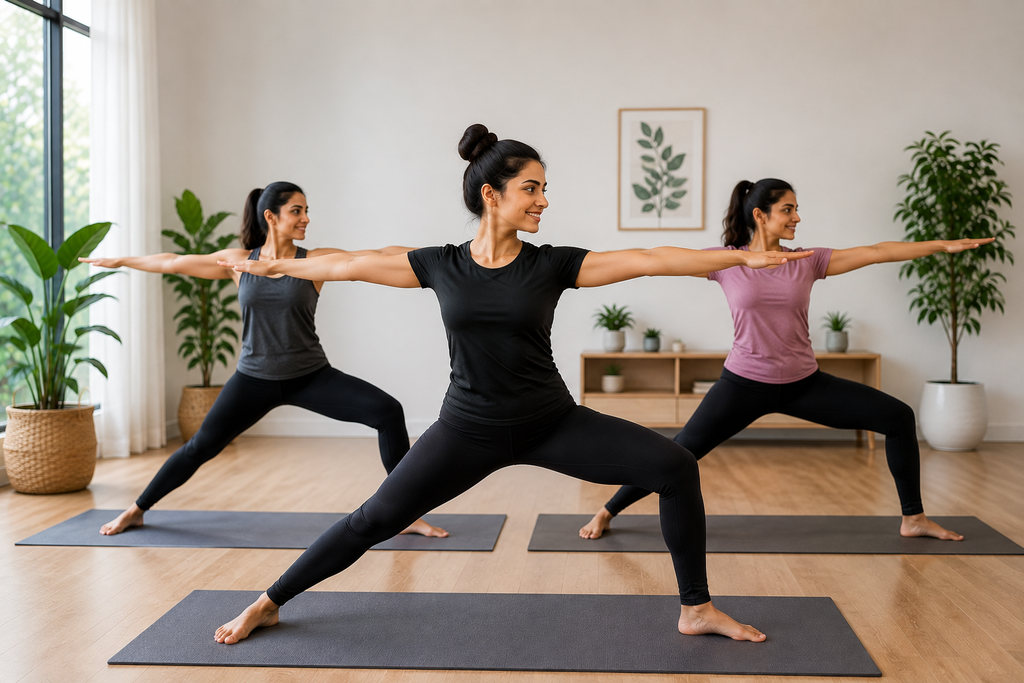
5. Warrior II
Warrior II is a standing posture that challenges the legs and encourages stability.
Step one foot forward, bend the front knee comfortably, extend the arms, and keep the torso upright.
Avoid forcing the knee beyond a comfortable position and adjust the stance according to your mobility.
6. Tree Pose
Tree pose is a balance-focused posture.
Stand on one leg and place the other foot on the inner calf or thigh, avoiding direct pressure against the knee joint. Keep a wall nearby if necessary.
Beginners can keep the toes of the raised foot lightly touching the floor for additional stability.
7. Bridge Pose
Bridge pose can engage the glutes, legs, and core.
Lie on your back with your knees bent and feet on the floor. Press through your feet and gently lift your hips while maintaining controlled breathing.
Do not force the movement or lift higher than feels comfortable
8. Seated Forward Fold
This seated pose involves a gentle stretch through the back of the body.
Sit comfortably with your legs extended or slightly bent. Hinge forward from the hips rather than aggressively rounding the spine.
The goal is not to touch your toes. A comfortable range is more important.
A Beginner-Friendly Yoga Routine
A simple routine can help beginners establish consistency.
Start with 2–3 minutes of relaxed breathing.
Follow with:
- Cat-cow — 5 to 8 gentle repetitions
- Child’s pose — 30 seconds
- Mountain pose — 30 seconds
- Downward-facing dog — 20 to 30 seconds
- Warrior II — 20 to 30 seconds per side
- Tree pose — 15 to 20 seconds per side
- Bridge pose — 8 to 10 repetitions
- Gentle seated stretch — 30 seconds
- Relaxed breathing — 2 to 5 minutes
This is only an example. Beginners should modify movements according to their comfort, experience, and physical needs.
Online Yoga for Women
How Can Online Yoga Fit Into a Busy Lifestyle?
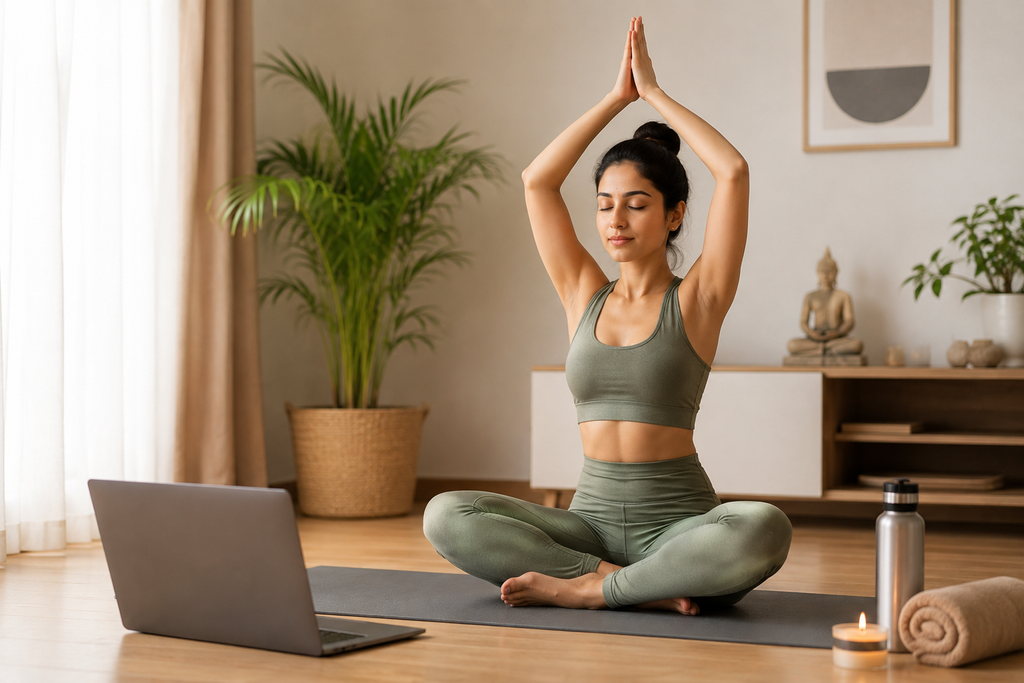
Online Yoga can make it easier to practice without traveling to a studio. Women with busy schedules can choose a suitable time and practice from a comfortable space at home.
Online sessions can also provide guided instruction, which may be useful for beginners who are unsure about sequencing poses or creating a routine.
When selecting a virtual class, consider the instructor’s experience, class level, session duration, teaching style, and whether modifications are provided.
The convenience of practicing at home can make consistency easier, but beginners should still prioritize correct technique and avoid pushing into painful positions.
Yoga for Different Fitness Goals
Yoga can be adapted depending on what you want to achieve.
For Flexibility
Gentle stretching-focused sessions can emphasize the hips, hamstrings, shoulders, and spine.
For Strength
More active styles and sequences can include weight-bearing poses such as planks, chair pose, warrior variations, and controlled transitions.
For Relaxation
Restorative or gentle yoga can emphasize slow movements, breathing, supported poses, and relaxation.
For Balance
Standing and single-leg poses can be gradually introduced.
For General Fitness
A combination of mobility, strength, balance, breathing, and relaxation can create a well-rounded practice.
Yoga and Weight Management
Yoga can be part of a healthy lifestyle, but it is important to have realistic expectations about weight loss.
The number of calories burned during yoga varies depending on the style, duration, intensity, and individual factors. More active yoga sessions generally require more energy than very gentle practices.
For weight management, yoga can complement a balanced diet and other forms of physical activity. Strength training, walking, cardio, adequate sleep, and nutritious meals can also play important roles.
Yoga should not be treated as a quick solution for losing weight. Sustainable results usually come from consistent lifestyle habits.

