
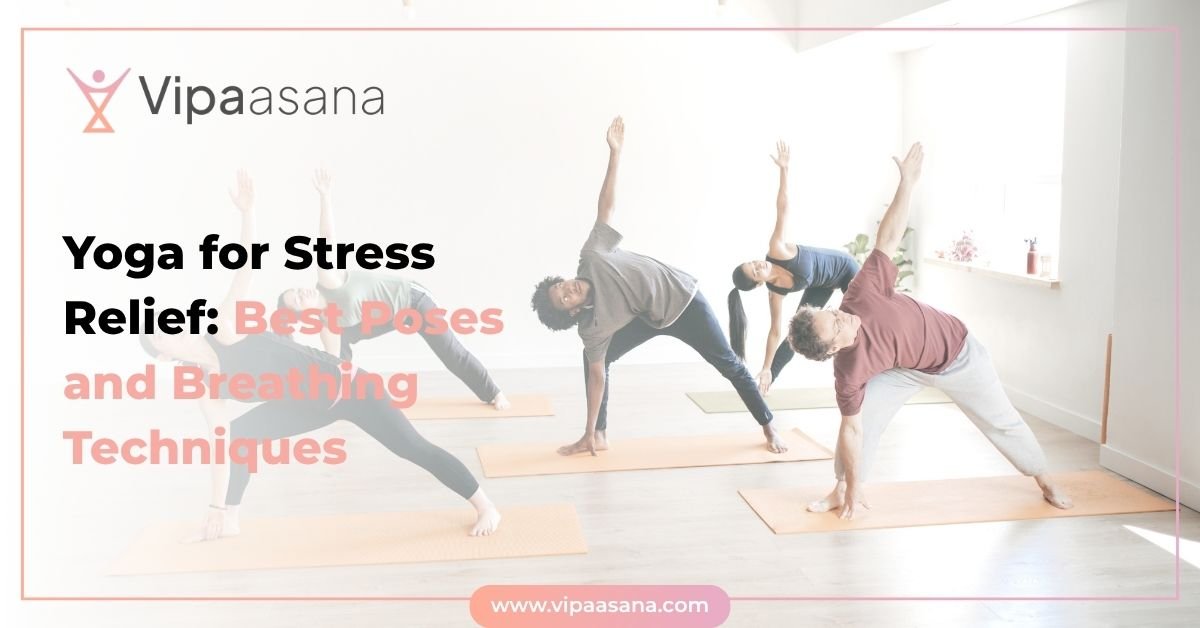
Stress has become a common part of modern life. Work pressure, long screen hours, busy schedules, family responsibilities, financial concerns, and a lack of personal time can all contribute to everyday stress. While some stress is a normal response to challenging situations, ongoing stress can affect how you feel physically and emotionally.
Finding healthy ways to manage daily stress is therefore an important part of overall wellness. Yoga is one practice that combines physical movement, breathing, relaxation, and mindfulness. A regular yoga routine can provide a dedicated opportunity to slow down, focus on the present moment, and reconnect with your body.
Yoga for stress relief does not necessarily require advanced poses or long sessions. Even a simple routine of gentle stretches, comfortable postures, breathing exercises, and relaxation can become a useful part of a healthy lifestyle.
This guide explains how yoga can support stress management, which poses beginners can try, breathing techniques to explore, and practical tips for creating a relaxing yoga routine at home.
Understanding Stress and Its Effects
Stress is the body’s natural response to challenging or demanding situations. Short-term stress can help you respond to immediate challenges, but frequent or prolonged stress may leave you feeling mentally and physically exhausted.
Common Signs of Everyday Stress
Stress can affect people differently. Some common experiences may include:
- Feeling mentally overwhelmed
- Difficulty relaxing
- Muscle tension
- Restlessness
- Trouble concentrating
- Feeling tired
- Irritability
- Difficulty switching off from work or responsibilities
- Changes in sleep patterns
These experiences can have many possible causes, so persistent or severe symptoms should not automatically be attributed to stress.

Why Relaxation Matters
Making time for relaxation can help create balance in a busy lifestyle. Activities such as walking, reading, spending time outdoors, meditation, and yoga can provide opportunities to slow down.
Yoga is particularly useful as a relaxation practice because it combines movement with conscious breathing and attention.
How Yoga Can Help With Stress Relief
Yoga brings together physical postures, breathing exercises, mindfulness, and relaxation. These elements can make a yoga session feel very different from a fast-paced workout.
Encourages Mindful Movement
During yoga, you are encouraged to pay attention to how your body moves rather than rushing through exercises.
Focusing on your breathing and body position can help you become more present during the session.
Supports Relaxation
Gentle yoga poses can help you transition from a busy state into a slower and more relaxed practice.
Finishing your session with a few minutes of quiet relaxation can create a calming routine.
Releases Physical Tension
Stress can sometimes be accompanied by physical tension, particularly around the shoulders, neck, back, and hips.
Gentle mobility and stretching exercises can help you move these areas comfortably.
Creates a Break From Screens
Many people spend hours looking at computers and smartphones. A yoga session gives you an opportunity to step away from screens and focus on movement and breathing.
Best Yoga Poses for Stress Relief
A stress-relief yoga routine does not need to include complicated poses. The focus should be on comfortable movement, steady breathing, and relaxation.
Child’s Pose
Child’s Pose is a gentle resting posture that is often included in relaxing yoga sequences.
Start on your hands and knees and gradually lower your hips toward your heels while bringing your upper body forward.
You can rest your forehead on the mat or on a cushion if that feels more comfortable.
Keep your breathing slow and relaxed.
Cat-Cow Pose
Cat-Cow is a gentle movement that can be used to warm up the spine.
Start on your hands and knees. Slowly move between rounding your back and gently extending your spine.
Coordinate the movement with your breathing and avoid rushing.
This simple movement can help you become more aware of your breath and body.
Standing Forward Fold
A gentle Forward Fold can be included in a relaxation-focused routine.
Stand comfortably and slowly hinge forward from your hips. Keep your knees slightly bent if necessary.
Do not force yourself to touch the floor.
Allow your head and neck to relax while maintaining comfortable breathing.
Legs-Up-the-Wall Pose
Legs-Up-the-Wall is a restorative-style posture that can be practiced during a quiet part of your routine.
Sit close to a wall, lie back, and extend your legs upward against the wall.
Keep your body comfortable and allow your breathing to become natural.
If the position creates discomfort, come out of the pose.
Seated Forward Fold
Sit comfortably with your legs extended and slowly lean forward from your hips.
There is no need to reach your feet.
The purpose is to create a gentle stretch while maintaining relaxed breathing.
Easy Pose
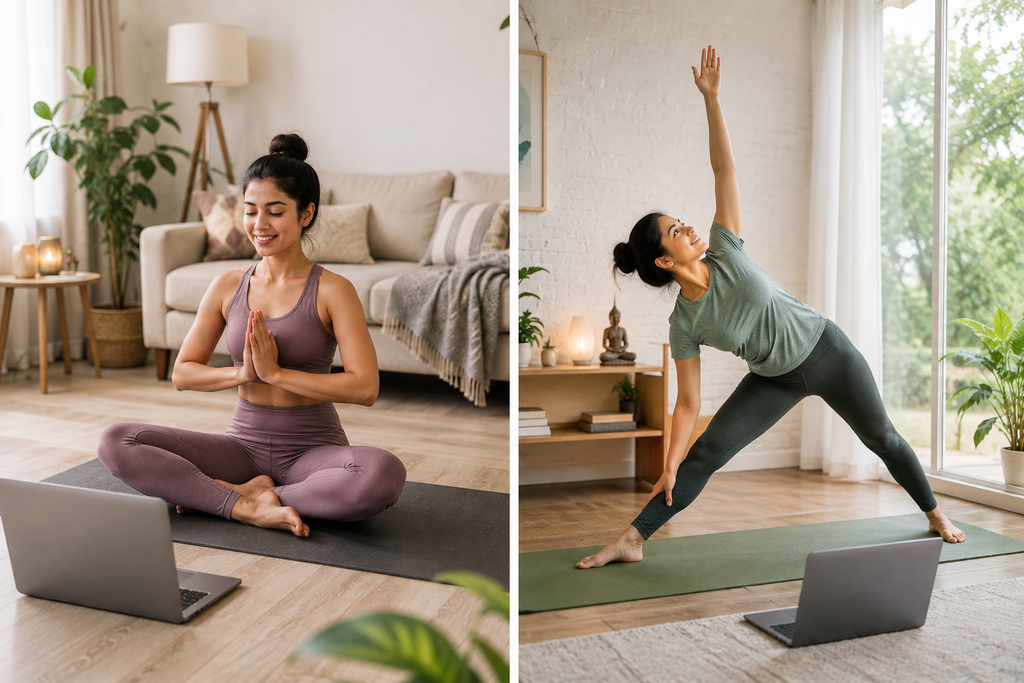
Easy Pose is a simple seated position that can be used for breathing and mindfulness.
Sit comfortably with your spine naturally upright. Relax your shoulders and place your hands comfortably.
Close your eyes if you prefer and focus on the rhythm of your breathing.
Corpse Pose
Corpse Pose, or Savasana, is commonly used at the end of a yoga session.
Lie comfortably on your back with your arms relaxed by your sides.
Allow your muscles to soften and focus on natural breathing.
Even a few minutes of quiet relaxation can provide a peaceful ending to your practice.
Breathing Techniques for Stress Relief
Breathing is an important part of yoga. Instead of treating breathing as something separate from movement, yoga encourages awareness of the breath throughout the practice.
Beginners should learn breathing techniques gradually and avoid forcing the breath.
Deep Belly Breathing
Deep belly breathing is a simple technique that can help you become more aware of your breathing pattern.
Sit or lie comfortably.
Place one hand on your abdomen if helpful.
Take a slow, comfortable breath and notice your abdomen gently moving as you inhale. Exhale slowly without forcing the breath.
Continue for several comfortable cycles.
Box Breathing
Box breathing involves four stages of equal duration: inhaling, holding, exhaling, and holding.
For beginners, the timing should remain comfortable. Do not hold your breath if it causes discomfort.
You can begin with shorter counts and gradually adjust according to your comfort.
This technique can be practiced while sitting quietly.
Alternate Nostril Breathing
Alternate Nostril Breathing, traditionally known as Nadi Shodhana, is a commonly practiced yogic breathing technique.
It involves breathing through one nostril at a time using a specific hand position.
Because breathing practices can feel different for different people, beginners should learn the technique from a qualified instructor, particularly if they are unfamiliar with breath retention or more advanced variations.
Slow Conscious Breathing
You do not always need a formal breathing technique.
Simply slowing down your natural breathing and paying attention to each inhale and exhale can make your yoga practice more mindful.
Try to breathe smoothly rather than taking exaggerated or uncomfortable breaths.
A Simple 20-Minute Yoga Routine for Stress
You can create a short stress-relief routine at home without needing a large amount of time.
1. Quiet Breathing – 3 Minutes
Sit comfortably and focus on natural breathing.
Allow your shoulders to relax and notice how your body feels.
2. Gentle Warm-Up – 3 Minutes
Perform slow shoulder rolls, gentle neck movements, and Cat-Cow.
Keep every movement controlled.
3. Child’s Pose – 2 Minutes
Move into Child’s Pose and focus on comfortable breathing.
4. Gentle Standing Sequence – 5 Minutes
Include Mountain Pose, gentle Forward Fold, and simple standing movements.
Move slowly between positions.
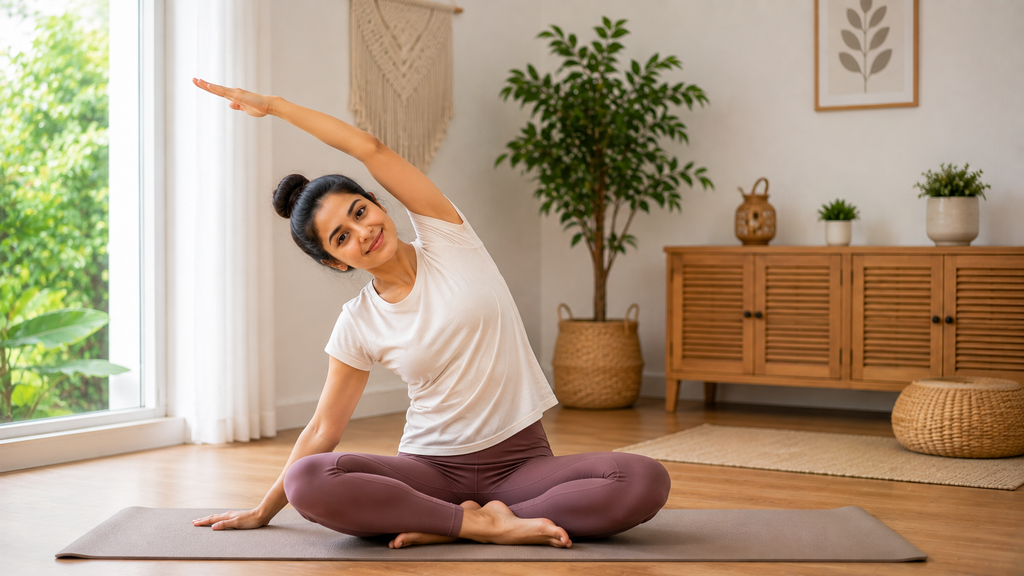
5. Seated Stretching – 3 Minutes
Practice a comfortable seated stretch without forcing your range of motion.
6. Relaxation – 4 Minutes
Finish with Savasana or another comfortable resting position.
Focus on natural breathing and allow yourself to remain still.
This routine is only an example. You can shorten or modify it according to your comfort, experience, and schedule.
Best Time to Practice Yoga for Stress Relief
There is no single perfect time to practice yoga.
Morning Yoga
Morning yoga can help create a peaceful beginning to the day.
A short session of gentle movement and breathing may be easier to maintain than a long workout when you have a busy schedule.
Yoga During a Work Break
If you spend most of your day at a desk, a short movement session can provide a useful break.
Simple shoulder, neck, spine, and hip movements can help you change position and move your body.
Evening Yoga
Evening can be a convenient time for slower yoga and relaxation.
A gentle routine may help create a clear transition between work responsibilities and personal time.
Yoga at Home for Stress Management
You do not need a studio to begin practicing yoga.
A quiet corner, comfortable clothing, and a yoga mat may be enough for many beginner routines.
Practicing at home can also make it easier to choose a time that fits your schedule.
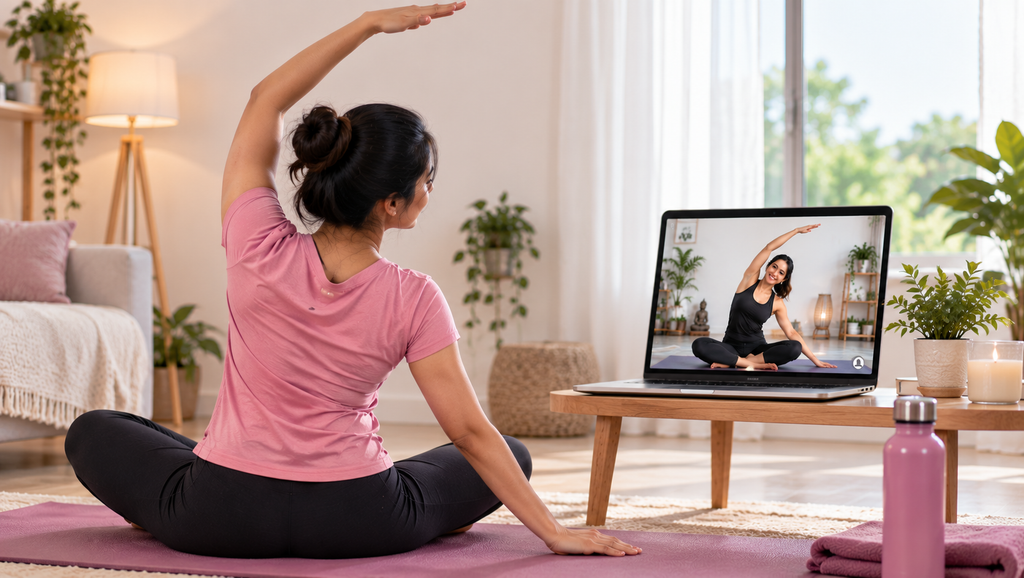
Guided online sessions can be useful for people who prefer structured instruction. They can help you follow a sequence instead of deciding which poses to practice on your own.
When choosing an online yoga program, consider the instructor’s experience, class level, session duration, modifications, and whether the sessions focus on your specific goals.
How to Create a Stress-Relief Yoga Environment
Your surroundings can influence how relaxing your practice feels.
Choose a Quiet Space
Select an area where you can practice without frequent interruptions.
Reduce Digital Distractions
Put your phone on silent or keep unnecessary notifications away during your session.
Keep the Lighting Comfortable
Soft, comfortable lighting can help create a calm environment.
Wear Comfortable Clothing
Choose clothing that allows you to move without restriction.
Avoid Making the Routine Too Complicated
A simple practice can be just as valuable as an elaborate one.
The purpose is to create a sustainable habit rather than another source of pressure.
Common Mistakes to Avoid
Yoga for stress relief should feel comfortable and manageable.
Forcing Yoga Poses
Do not push your body into a deep stretch simply because you want faster results.
Practicing Too Intensely
A very demanding workout may not be the best choice when your goal is relaxation.
Choose slower movements when you want a calming session.
Holding Your Breath
Avoid holding your breath during physical poses unless you are specifically practicing an appropriate technique under qualified guidance.
Comparing Yourself With Others
Yoga is an individual practice. Your flexibility and ability may be different from someone else’s.
Expecting Instant Results
Relaxation is a skill that can develop with practice. Give yourself time to become comfortable with breathing, movement, and stillness.
How Often Should You Practice Yoga for Stress?
Consistency is generally more important than duration.
You might begin with 10–20 minutes several times per week and gradually develop a routine that suits your lifestyle.
Some people prefer short daily practices, while others may choose three or four longer sessions each week.
The best routine is one that you can realistically maintain.
You can also combine different types of sessions. For example, practice gentle stretching on busy days and longer yoga sessions when you have more time.
Yoga and Other Stress-Management Habits
Yoga can be one part of a broader approach to managing everyday stress.
Get Enough Sleep
A consistent sleep routine can support overall physical and mental well-being.
Stay Physically Active
Walking, strength training, dancing, swimming, and other forms of appropriate physical activity can complement yoga.
Spend Time Outdoors
A short walk outside can provide a change of environment and an opportunity to move.
Take Regular Breaks
If your work involves long periods of sitting or screen use, include regular breaks throughout the day.
Practice Mindfulness
Simple mindfulness practices can help you pay attention to the present moment.
Maintain Social Connections
Spending time with supportive friends, family, or community can also be an important part of overall well-being.
When to Seek Professional Help
Yoga can support relaxation and healthy lifestyle habits, but it should not replace professional care when stress becomes persistent or overwhelming.
If stress is significantly affecting your daily functioning, sleep, relationships, work, or emotional well-being, consider speaking with a qualified healthcare or mental health professional.
Yoga can be used alongside appropriate professional support when suitable.
Safety Tips for Practicing Yoga
Although yoga can be adapted for different fitness levels, it is important to practice safely.
Start with gentle movements and gradually increase intensity.
If you experience sharp pain, dizziness, unusual shortness of breath, or significant discomfort, stop the practice and seek appropriate advice if needed.
People with injuries, chronic health concerns, pregnancy, or other specific physical considerations should consult an appropriate healthcare professional before beginning a new exercise routine.
Working with a qualified yoga instructor can also help you understand modifications and proper technique.
Making Yoga Part of Your Daily Wellness Routine
The biggest benefit of yoga may come from making it a sustainable part of your lifestyle rather than treating it as an occasional activity.
Start with a realistic goal.
Instead of committing to an hour every day, you can begin with 10 or 15 minutes.
Keep your mat in a convenient place. Choose a regular practice time. Create a comfortable environment and focus on how you feel rather than how your practice looks.
Over time, you can experiment with different yoga styles and routines.
You may prefer gentle yoga on busy days, mobility-focused sessions after long periods of sitting, or longer practices when you have more time.
Final Thoughts
Stress is a normal part of life, but creating healthy habits to manage everyday pressure can support your overall well-being. Yoga provides a combination of movement, breathing, mindfulness, and relaxation that can fit into many different lifestyles.
You do not need to be flexible or experienced to begin. Simple poses such as Child’s Pose, Cat-Cow, Mountain Pose, gentle Forward Folds, and Savasana can form the foundation of a relaxing beginner routine.
Breathing is equally important. Rather than focusing only on physical postures, take time to slow down, notice your breathing, and practice comfortable, controlled movement.
A short yoga session can be easier to maintain than a demanding routine. Start with a few minutes, listen to your body, and gradually build a consistent practice.
Most importantly, remember that yoga is not about perfection. It is about creating time to move, breathe, and become more aware of how you feel. When combined with healthy sleep, regular physical activity, balanced nutrition, meaningful connections, and appropriate professional support when needed, yoga can become a valuable part of a broader wellness routine.

