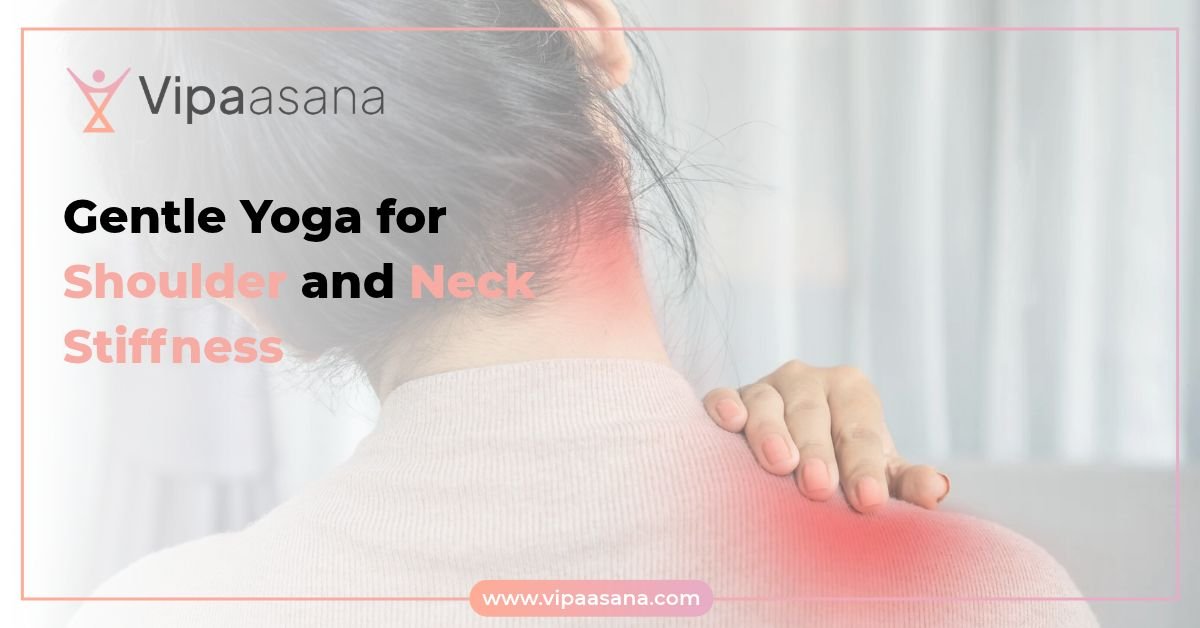
In today’s fast-paced lifestyle, neck and shoulder stiffness have become common problems for people of different age groups. Spending long hours working on computers, using mobile phones, sitting in one position, and maintaining poor posture can put continuous pressure on the neck, shoulders, and upper back. Over time, these habits may lead to muscle tightness, reduced flexibility, discomfort, and difficulty performing everyday activities. Even simple movements such as turning your head, reaching overhead, or carrying a bag can become uncomfortable when the muscles around your neck and shoulders feel stiff.
Yoga is a gentle and effective way to introduce mindful movement into your daily routine. It combines physical postures, controlled breathing, stretching, and relaxation to support flexibility and body awareness. Unlike intense workouts, gentle yoga focuses on slow movements that allow you to understand your body’s limits and gradually improve mobility. With regular and comfortable practice, yoga may help reduce everyday muscle tension and encourage better posture.
For individuals who are new to yoga, starting with Online Yoga For Beginners can make the learning process easier and more convenient. Practising under the guidance of an experienced instructor allows beginners to understand correct alignment, breathing techniques, and suitable modifications. A consistent routine can help you develop healthy movement habits without putting unnecessary pressure on your body.
Understanding Neck and Shoulder Stiffness
What Causes Neck and Shoulder Stiffness?
Neck and shoulder stiffness can develop for several reasons. One of the most common causes is maintaining the same position for extended periods. Office workers, students, and people who frequently use smartphones often keep their heads tilted forward while looking at screens. This position can increase strain on the muscles supporting the head and neck.
Poor sleeping posture, unsuitable pillows, stress, limited physical activity, and repetitive movements may also contribute to muscle tightness. Sometimes, people unknowingly raise their shoulders when feeling stressed or concentrating on work. Over time, these habits can create tension around the upper back and shoulder area.
Understanding the possible causes is an important first step towards managing discomfort. Making small lifestyle adjustments, taking movement breaks, and including gentle stretches in your routine may support better physical comfort.
Common Symptoms You Should Not Ignore
Neck and shoulder stiffness can appear in different ways depending on the individual. Some people experience tightness after waking up, while others notice discomfort after several hours of sitting or working.
Common symptoms include:
- Difficulty turning the head from side to side.
- Tightness around the neck and upper shoulders.
- Reduced shoulder mobility.
- Muscle tension around the upper back.
- Discomfort while looking down at a phone or computer.
- Feeling stiff after sitting for a long time.
- Difficulty performing certain overhead movements.
Persistent, severe, or unexplained symptoms should not be ignored. Yoga is a supportive wellness activity, not a substitute for medical assessment or treatment.
How Gentle Yoga Supports Neck and Shoulder Mobility
Encourages Better Flexibility
Gentle yoga involves slow stretching and controlled movements that encourage muscles and joints to move through comfortable ranges of motion. When practised regularly, suitable stretches may gradually improve flexibility in the neck, shoulders, chest, and upper back.
Many people spend most of their day sitting with rounded shoulders. This position can make the chest muscles feel tight and reduce comfortable shoulder movement. Gentle yoga movements that open the chest and mobilise the shoulders can help counter some of these movement habits.
The key is to practise without forcing the body. Movements should feel controlled and comfortable rather than painful.
Promotes Better Posture Awareness
Posture plays an important role in everyday physical comfort. When you sit with your head positioned forward and shoulders rounded, the muscles supporting your upper body may experience additional strain.
Yoga encourages awareness of spinal alignment, shoulder positioning, and body balance. During practice, you learn to keep your spine comfortably extended, relax unnecessary shoulder tension, and distribute your weight more evenly.
These habits can also be applied outside your yoga session, especially while sitting at a desk, walking, or using electronic devices.
Helps Release Everyday Muscle Tension
Stress and emotional pressure can sometimes contribute to physical tension. Many people unknowingly tighten their neck, jaw, and shoulders during stressful situations.
Gentle yoga combines movement with breathing exercises, encouraging you to slow down and become more aware of your body. Relaxation techniques may help create a sense of calm and support general well-being.
Best Gentle Yoga Poses for Neck and Shoulder Stiffness
1. Neck Tilts
Neck tilts are simple movements that help beginners become familiar with gentle neck mobility exercises.
Sit comfortably on a yoga mat or chair with your back straight and shoulders relaxed. Slowly tilt your right ear towards your right shoulder without lifting the shoulder. Hold the position briefly and return to the centre. Repeat on the opposite side.
Keep the movement small and controlled. Avoid pulling your head with your hand or forcing your neck into a deeper stretch.
Benefits:
- Encourages gentle neck mobility.
- Helps improve awareness of neck tension.
- Supports comfortable side-to-side movement.
2. Shoulder Rolls
Shoulder rolls are an easy exercise that can be included in a warm-up or short movement break.
Sit or stand with your arms relaxed beside your body. Slowly lift both shoulders towards your ears, move them backwards, and gently lower them. Repeat the movement several times before changing direction.
Avoid moving too quickly. Focus on smooth circles and relaxed breathing.
Benefits:
- Encourages shoulder movement.
- Helps reduce the feeling of everyday shoulder tightness.
- Supports better awareness of shoulder positioning.
3. Cat-Cow Pose
Cat-Cow Pose is a gentle spinal movement that encourages flexibility and mobility throughout the back.
Begin on your hands and knees, placing your wrists beneath your shoulders and knees beneath your hips. As you inhale, gently lift your chest and tailbone while keeping your neck comfortable. As you exhale, round your spine and gently draw your chin towards your chest.
Continue alternating between the two positions while coordinating your movement with your breath.
Benefits:
- Encourages spinal mobility.
- Helps improve body awareness.
- Gently moves the upper and middle back.
4. Thread the Needle Pose
Thread the Needle is a gentle yoga stretch that focuses on the upper back and shoulder region.
Start on your hands and knees. Slowly slide your right arm underneath your left arm, allowing your right shoulder to move towards the mat. Keep your hips comfortably positioned and avoid forcing the movement. Hold briefly before returning to the starting position and repeating on the other side.
Use a cushion or folded blanket under your shoulder if needed. Skip the pose if it causes discomfort.
Benefits:
- Encourages upper-back mobility.
- Provides a gentle shoulder stretch.
- Supports comfortable rotational movement.
5. Child’s Pose
Child’s Pose is a relaxing posture that can be used between more active movements.
Kneel on your mat and slowly lower your hips towards your heels. Extend your arms forward or rest them alongside your body. Allow your forehead to rest on a cushion or the mat if comfortable. Breathe slowly and relax your shoulders.
If your knees feel uncomfortable, place a folded blanket underneath them or choose another comfortable resting position.
Benefits:
- Encourages relaxation.
- Gently stretches the back.
- Provides an opportunity to release unnecessary shoulder tension.
6. Eagle Arms Stretch
Eagle Arms is a gentle upper-body stretch that focuses on the area around the shoulders and upper back.
Sit comfortably with your spine upright. Extend both arms forward and cross your right arm over your left. If comfortable, bend your elbows and bring your palms or the backs of your hands closer together. Gently lift your elbows without raising your shoulders.
Hold for a few comfortable breaths and switch the position of your arms.
Benefits:
- Encourages shoulder flexibility.
- Gently stretches the upper back.
- Supports awareness of shoulder movement.
7. Cow Face Arms
Cow Face Arms is a traditional yoga arm position that encourages shoulder mobility.
Sit comfortably with your spine extended. Raise your right arm overhead, bend your elbow, and allow your hand to move towards your upper back. Bring your left arm behind your waist and gently move it upwards. If your hands do not meet, use a yoga strap or towel between them.
Do not force your arms together. Keep your neck relaxed and breathe naturally.
Benefits:
- Encourages shoulder range of motion.
- Gently stretches the upper arms.
- Promotes better shoulder flexibility.
How to Practise Yoga Safely as a Beginner
Start With Simple Movements
Beginners should avoid starting with complicated poses or intense stretching routines. The body needs time to become familiar with new movements, especially when certain muscles feel tight.
Start with simple exercises such as shoulder rolls, gentle neck movements, and Cat-Cow Pose. Spend a few minutes understanding each posture before progressing to more challenging variations.
Choosing Online Yoga For Beginners can help you follow a structured routine at home. Guided sessions make it easier to understand the correct technique and learn modifications suitable for your current flexibility level.
Focus on Comfortable Breathing
Breathing is an essential part of yoga practice. Many beginners hold their breath when trying to stretch or maintain a posture. This can create unnecessary tension.
Try to breathe slowly and naturally throughout each movement. Inhale as you lengthen your spine or open your chest, and exhale as you gently release into a stretch.
Never force your breathing or hold it for extended periods unless you are following appropriate professional guidance.
Avoid Overstretching
One of the most common mistakes beginners make is trying to achieve the same flexibility as an experienced yoga practitioner.
Every person’s body is different. Your flexibility, strength, posture, and movement range may not be the same as someone else’s. A stretch should feel gentle and manageable, not sharp or painful.
If a movement causes pain, numbness, tingling, dizziness, or increased discomfort, stop immediately.
The Importance of Breathing Exercises for Neck and Shoulder Relaxation
Deep Breathing
Deep breathing can be a useful addition to a gentle yoga routine. Find a comfortable seated position and allow your shoulders to relax. Slowly inhale through your nose, noticing your abdomen expand naturally. Exhale gently and allow your body to settle.
Repeat for a few minutes without forcing your breath.
This simple technique encourages relaxation and helps you become more aware of physical tension.
Diaphragmatic Breathing
Diaphragmatic breathing involves allowing the diaphragm to move naturally during inhalation and exhalation.
Place one hand on your abdomen and another on your chest. Breathe slowly and notice the movement of your abdomen as you inhale. Allow your exhalation to happen naturally without pushing the air out.
Practising this technique can help develop a more relaxed breathing pattern during yoga.
Why Breathing and Movement Should Work Together
Combining gentle movement with mindful breathing makes yoga more than just a stretching routine. It encourages coordination, concentration, and awareness of your body’s responses.
When you move slowly and breathe comfortably, you are more likely to notice when a stretch feels appropriate or when you need to reduce its intensity.
Everyday Habits That May Contribute to Neck and Shoulder Discomfort
Maintain a Comfortable Sitting Position
If you work at a desk for several hours, your sitting position deserves attention. Keep your screen approximately at eye level, allow your shoulders to remain relaxed, and support your lower back when necessary.
Your feet should rest comfortably on the floor, and your elbows should remain close to your body while typing.
Small adjustments to your workspace may help reduce unnecessary strain during the day.
Take Regular Movement Breaks
Sitting in one position for extended periods can make the body feel stiff. Try to take short breaks throughout your workday.
During these breaks, stand up, walk around, gently roll your shoulders, and change your sitting position. Even a few minutes of movement can help interrupt long periods of inactivity.
Pay Attention to Your Sleeping Position
Your sleeping position and pillow can influence how your neck feels in the morning.
Choose a pillow that supports your neck in a comfortable and neutral position. Avoid sleeping in positions that leave your neck twisted for extended periods.
If you regularly wake up with significant neck discomfort, consider discussing your sleeping posture with a healthcare professional.
Reduce Excessive Mobile Phone Use
Looking down at a phone for long periods can encourage a forward-head position. Instead of constantly bending your neck, try to hold your phone closer to eye level.
Take breaks from screens and avoid using your phone in the same position for extended periods.
Creating a Simple Daily Yoga Routine
Morning Yoga Routine
Starting your day with gentle movement can help you become more aware of your posture and mobility.
A simple morning routine may include:
- 2 minutes of comfortable breathing.
- 1 minute of gentle neck tilts.
- 2 minutes of shoulder rolls.
- 3 minutes of Cat-Cow Pose.
- 2 minutes of Thread the Needle Pose.
- 2 minutes of Child’s Pose.
Adjust the duration according to your comfort and physical ability. These timings are suggestions rather than a fixed requirement.
Evening Yoga Routine
After a long working day, an evening routine can provide an opportunity to slow down and relax.
You can include shoulder rolls, gentle chest-opening movements, supported Child’s Pose, and comfortable breathing exercises.
Avoid performing intense stretches when you are already experiencing significant discomfort. Focus on relaxation and gentle mobility instead.
Consistency Matters More Than Intensity
You do not need to practise yoga for hours to develop a healthier movement routine. Starting with a few minutes every day or several times a week may be more manageable than following an intense schedule that is difficult to maintain.
Gradually increase the duration and variety of your practice as your body becomes comfortable with the movements.
How Online Yoga Classes Can Help Beginners
Learn From the Comfort of Your Home
Many people want to start yoga but find it difficult to attend in-person classes because of work schedules, family responsibilities, or travel time.
Online yoga classes provide a convenient way to practise from home. You can create a comfortable space, choose a suitable session, and follow guided instructions without travelling to a studio.
For people who are just starting their wellness journey, Online Yoga For Beginners offers an accessible way to understand basic yoga movements and build a consistent practice.
Follow Structured Guidance
Following random yoga videos can sometimes make it difficult to understand which movements are appropriate for your experience level.
A structured class helps you follow a planned sequence, understand basic alignment, and learn how to transition between poses. An instructor can also explain modifications and remind you not to force uncomfortable movements.
This guidance is particularly valuable when practising shoulder and neck mobility exercises.
Build a Consistent Wellness Routine
A regular class schedule can help you make time for physical activity despite a busy lifestyle.
You can select suitable sessions according to your availability and gradually develop a routine that includes stretching, breathing, mobility, and relaxation.
Who Can Benefit From Gentle Yoga?
Office Workers and Working Professionals
People who spend long hours sitting at desks may benefit from introducing regular movement breaks into their day.
Gentle yoga can encourage better posture awareness and help maintain comfortable mobility in the neck, shoulders, and upper back.
Homemakers and Busy Individuals
Household activities such as cooking, cleaning, carrying groceries, and using mobile phones can involve repetitive movements.
A gentle yoga routine can provide an opportunity to stretch, move, and focus on personal well-being.
Older Adults
Some older adults may prefer gentle movement rather than high-intensity exercise. However, yoga postures should be selected according to individual mobility, balance, and medical needs.
Chair-supported yoga and modified movements may be useful options when recommended by a qualified instructor or healthcare professional.
Common Mistakes to Avoid During Neck and Shoulder Yoga
Moving Too Quickly
Yoga is not a competition. Performing stretches rapidly may reduce your ability to notice discomfort and maintain proper alignment.
Move slowly and give your body enough time to adjust.
Ignoring Pain Signals
Mild stretching sensations may be normal, but sharp pain, tingling, numbness, or dizziness are not signs of a successful stretch.
Stop any movement that produces these symptoms and seek professional advice when necessary.
Comparing Your Flexibility With Others
Some people can easily move their arms overhead or rotate their shoulders, while others may need more time and modifications.
Focus on your own progress rather than comparing your body with another practitioner’s flexibility.
Skipping Warm-Up Movements
Beginning with intense stretches without preparing your body can make practice uncomfortable.
Start with gentle movements, such as shoulder rolls and comfortable arm circles, before moving into a longer sequence.
When Should You Seek Professional Advice?
Yoga may support general mobility and relaxation, but not every type of neck or shoulder discomfort should be managed through exercise alone.
If your stiffness is persistent, severe, recurring, or affecting your everyday activities, consult a qualified healthcare professional.
Seek prompt medical attention if neck or shoulder discomfort is accompanied by symptoms such as arm weakness, numbness, tingling, severe headache, fever, or pain following an injury. Sudden shoulder or arm pain accompanied by chest pain, breathlessness, sweating, or nausea may require emergency medical care.
People with existing neck conditions, recent injuries, or a history of surgery should seek professional guidance before beginning a new yoga routine.
Why Choose Vipaasana for Your Online Yoga Journey?
Developing a healthy lifestyle requires more than occasional exercise. It involves creating a routine that fits your schedule, understanding your body’s needs, and choosing activities that you can maintain consistently.
Vipaasana provides online yoga training designed to make guided yoga practice more accessible from the comfort of your home. Whether you are new to yoga or looking to improve your existing routine, guided sessions can help you explore different movements, breathing techniques, and relaxation practices.
With online classes, you can make time for your well-being without adding unnecessary travel to your daily schedule. You can learn at your own pace, follow guided instructions, and gradually develop a stronger connection with your body.
If you are experiencing everyday stiffness due to long working hours or limited movement, consider introducing gentle yoga into your lifestyle. Choose comfortable movements, practise regularly, and remember that your wellness journey should progress at a pace that feels right for you.
Conclusion
Neck and shoulder stiffness can affect your comfort, productivity, and everyday activities. Long hours of sitting, poor posture, repetitive movements, and limited physical activity may contribute to muscle tightness and reduced mobility.
Gentle yoga offers a mindful way to introduce stretching, movement, and relaxation into your daily routine. Poses such as Neck Tilts, Shoulder Rolls, Cat-Cow, Thread the Needle, and Child’s Pose can help you explore comfortable movement while developing better body awareness.
If you are new to yoga, begin with simple postures and focus on correct technique rather than intensity. Consistency, comfortable breathing, and appropriate modifications are important parts of a sustainable practice.
With Vipaasana, you can explore guided online yoga sessions and take small steps towards a healthier lifestyle. Make time for yourself, listen to your body, and build a routine that supports your overall well-being.