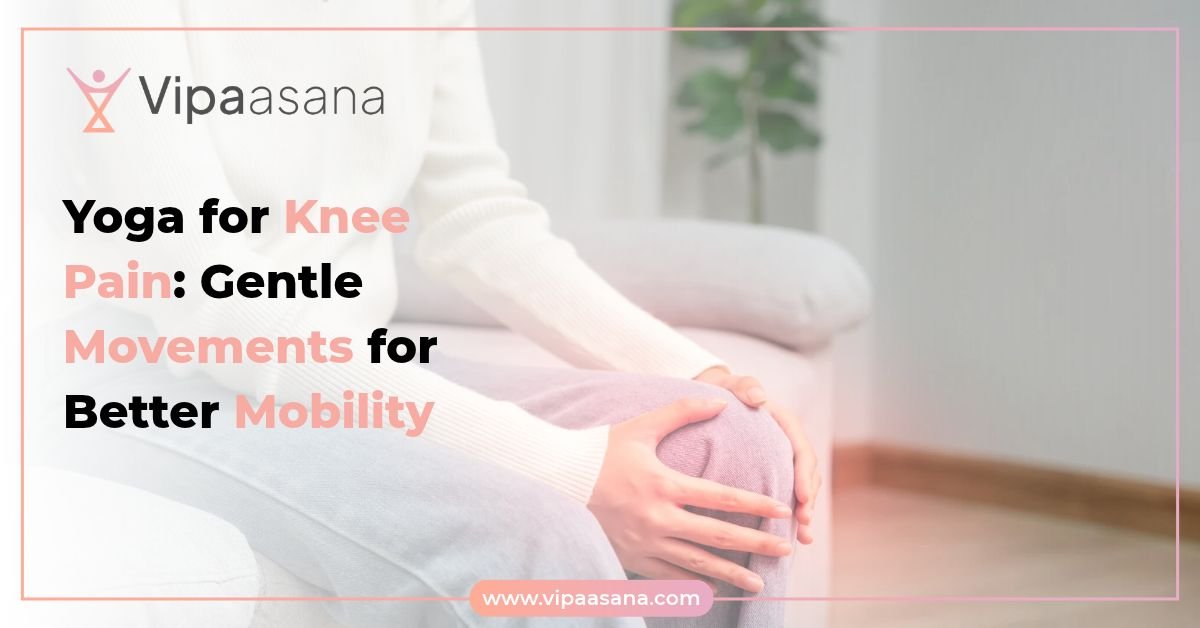
Knee pain is a common problem that can affect people of different age groups and activity levels. Whether it develops because of ageing, muscle weakness, joint stiffness, previous injuries, or conditions such as osteoarthritis, knee discomfort can make everyday activities challenging. Simple movements like walking, climbing stairs, sitting down, or standing up may become uncomfortable. Over time, avoiding physical activity because of knee pain can also affect flexibility, muscle strength, and overall mobility.
Maintaining healthy movement is important for supporting joint function and everyday comfort. Gentle stretching, strengthening exercises, and appropriate physical activity may help improve knee mobility and support the muscles surrounding the joints. Yoga for Knee Pain focuses on controlled movements, comfortable stretching, and body awareness that can be adapted to different fitness levels. With the right modifications, yoga may become a useful part of a balanced wellness routine.
For people who prefer learning from home, Online Yoga Classes For Beginners can provide convenient access to guided sessions and basic yoga movements. However, every knee condition is different, so choosing suitable exercises and understanding personal limitations is essential before starting a new routine.
Understanding Knee Pain and Its Common Causes
What Is Knee Pain?
The knee is one of the largest and most important joints in the human body. It connects the thigh bone (femur) to the shinbone (tibia) and includes the kneecap (patella). The joint is supported by ligaments, tendons, cartilage, muscles, and other structures that work together to provide stability and movement.
Knees help us perform essential daily activities such as walking, running, bending, sitting, and climbing stairs. Because they support body weight and are involved in repeated movements, they can experience strain and discomfort for different reasons.
Knee pain may develop suddenly after an injury or gradually because of age-related changes and repeated stress. Understanding the possible cause is important because not every type of knee discomfort responds to the same exercise routine.
Common Causes of Knee Pain
Several factors can contribute to knee discomfort. Some of the most common causes include:
- Osteoarthritis: Gradual changes in joint cartilage can cause stiffness, pain, and reduced mobility.
- Muscle weakness: Weak quadriceps, hamstrings, and hip muscles may affect knee stability and movement.
- Previous injuries: Ligament injuries, meniscus tears, and other joint injuries can lead to recurring discomfort.
- Overuse: Repeated activities, excessive exercise, or sudden increases in physical activity may irritate the knee.
- Excess body weight: Additional load on the knee joints may increase mechanical stress.
- Poor movement patterns: Certain movement habits may place unnecessary pressure on the knees.
- Age-related changes: Natural changes in muscles, cartilage, and joint structures may affect mobility over time.
Identifying the underlying cause can help determine which movements are appropriate. A healthcare professional or physiotherapist can recommend suitable exercises according to your condition. Yoga for Knee Pain should always be adapted to your individual comfort and physical abilities.
Common Symptoms Associated with Knee Pain
Stiffness and Reduced Mobility
Knee stiffness may occur after waking up, sitting for a long time, or remaining in one position. Some people find it difficult to fully bend or straighten their knees, which can affect everyday movement.
Gentle mobility exercises may help maintain a comfortable range of motion. However, movements should never be forced when the joint is painful or swollen.
Pain During Walking and Climbing Stairs
Some individuals experience discomfort while walking, climbing stairs, or standing for extended periods. The pain may become more noticeable when putting weight on the affected leg.
The severity of symptoms can vary depending on the underlying condition. It is important to avoid activities that significantly increase pain until the cause has been assessed.
Swelling and Tenderness
Swelling around the knee may occur after an injury, inflammation, or joint irritation. The affected area may also feel warm or tender when touched.
Sudden swelling, especially after an injury, should be assessed by a healthcare professional rather than managed through stretching alone.
Muscle Weakness and Instability
People with knee problems may notice weakness in the muscles surrounding the joint. Some may also feel that the knee is unstable or gives way during movement.
Strengthening exercises can be helpful in many knee conditions, but they should be selected according to the individual’s diagnosis and physical capacity. Online Yoga Classes For Beginners can introduce basic movements, although they cannot replace an individual assessment by a physiotherapist.
How Gentle Yoga May Support Knee Mobility
Improves Flexibility Around the Knee
The muscles surrounding the knee, including the quadriceps, hamstrings, and calf muscles, play an important role in supporting joint movement. When these muscles become tight, everyday activities may feel uncomfortable.
Gentle stretching may help maintain flexibility and support comfortable movement. Yoga for Knee Pain should focus on mild stretches that do not create pressure or discomfort inside the knee joint.
Strengthens Supporting Muscles
The quadriceps, hamstrings, gluteal muscles, and hip muscles help support the lower body during walking and standing. Maintaining their strength can contribute to better movement control and joint stability.
Some modified yoga postures involve gentle muscle activation. However, strengthening exercises should be introduced gradually and should not increase joint pain.
Encourages Better Balance
Balance is important for everyday activities such as walking, turning, and standing on different surfaces. Weakness or stiffness around the hips and legs may affect balance and confidence.
Suitable standing yoga practices can encourage body awareness and controlled weight distribution. Beginners should use a chair or wall for support whenever necessary.
Supports Relaxation and Stress Management
Living with recurring knee pain can sometimes affect sleep, mood, and motivation to remain active. Relaxation practices and mindful breathing may help reduce stress and support emotional well-being.
A comfortable yoga routine can provide an opportunity to slow down, focus on breathing, and develop a positive relationship with physical movement.
Promotes a More Active Lifestyle
Avoiding all movement because of knee discomfort may contribute to muscle weakness and reduced physical conditioning. For many people, appropriate low-impact activities can help maintain general mobility.
A suitable routine should be based on the cause of pain, exercise tolerance, and professional advice. Yoga for Knee Pain is most useful when it forms part of a balanced approach that includes appropriate strengthening and everyday physical activity.
Top 7 Gentle Yoga Poses for Better Knee Mobility
1. Tadasana (Mountain Pose)
Tadasana is a basic standing posture that encourages balance, body awareness, and comfortable alignment. It can be adapted for beginners and people who need additional support.
How to perform:
- Stand with your feet comfortably apart.
- Distribute your body weight evenly across both feet.
- Keep your knees relaxed rather than locking them.
- Lengthen your spine naturally.
- Relax your shoulders and keep your arms beside your body.
- Look straight ahead and breathe comfortably.
- Maintain the position for 20–30 seconds.
Possible benefits: Tadasana may help improve standing posture, balance, and awareness of how body weight is distributed across the feet and legs.
Modification: Stand beside a wall or sturdy chair for additional balance support. Avoid standing for too long if it increases knee discomfort.
2. Sukhasana (Easy Pose)
Sukhasana is a simple seated posture that encourages relaxation and comfortable breathing. It can be modified using a chair if sitting cross-legged creates pressure around the knees.
How to perform:
- Sit comfortably on a yoga mat or chair.
- Keep your back naturally upright.
- Relax your shoulders.
- Rest your hands on your knees or thighs.
- Keep your breathing slow and natural.
- Remain in the position for one to two minutes.
Possible benefits: This posture may support relaxation and reduce the need to remain standing during a yoga session.
Modification: If crossing your legs causes discomfort, sit on a chair with both feet resting comfortably on the floor.
3. Bhujangasana (Cobra Pose)
Cobra Pose is a gentle backbend that focuses on the upper body and spinal mobility. It does not require deep knee bending and may be comfortable for some people when performed with suitable modifications.
How to perform:
- Lie on your stomach on a yoga mat.
- Place your palms beside your chest.
- Keep your elbows close to your body.
- Gently lift your chest using your back muscles and hands for light support.
- Keep your shoulders relaxed.
- Hold briefly while breathing naturally.
- Slowly return to the starting position.
Possible benefits: Cobra Pose may help improve upper-body mobility and provide variety in a gentle yoga routine.
Modification: Keep your knees relaxed and avoid forcing your lower back into a deep arch. Skip the pose if lying on your stomach causes discomfort.
4. Setu Bandhasana (Supported Bridge Pose)
Supported Bridge Pose involves lifting the hips while lying on the back. It activates the gluteal muscles and may support hip strength.
How to perform:
- Lie on your back with your knees bent.
- Keep your feet flat on the floor and comfortably apart.
- Place your arms beside your body.
- Gently engage your abdominal and gluteal muscles.
- Slowly lift your hips to a comfortable height.
- Hold for a few seconds while breathing naturally.
- Slowly lower your hips back to the mat.
Possible benefits: This posture may help activate the gluteal muscles and support general lower-body strength.
Modification: Use a smaller hip lift and avoid forcing your knees into an uncomfortable angle. Stop if you experience knee pain.
5. Marjaryasana (Cat Pose)
Cat Pose is a gentle spinal mobility movement performed on the hands and knees. It encourages controlled movement and body awareness.
How to perform:
- Start on your hands and knees.
- Position your wrists under your shoulders.
- Keep your knees under your hips.
- Slowly round your back without forcing your neck.
- Return to a comfortable neutral position.
- Repeat the movement five to eight times if comfortable.
Possible benefits: Cat Pose may support spinal mobility and provide a gentle movement break during a yoga session.
Modification: Place a folded blanket under your knees for cushioning. If kneeling creates pressure or pain, perform a similar gentle movement while seated.
6. Dandasana (Staff Pose)
Dandasana is a seated posture that encourages an upright spine and comfortable leg positioning. It can be adapted to avoid excessive pressure on the knees.
How to perform:
- Sit on a mat with your legs extended forward.
- Place your hands beside your hips.
- Keep your spine naturally upright.
- Relax your shoulders.
- Avoid locking your knees forcefully.
- Breathe naturally and hold briefly.
Possible benefits: This posture may encourage sitting alignment and awareness of the legs and lower body.
Modification: Sit on a folded blanket or use a chair if extending your legs causes discomfort. Do not force your knees into a completely straight position.
7. Shavasana (Corpse Pose)
Shavasana is a relaxation posture usually performed at the end of a yoga session. It allows the body to rest after movement.
How to perform:
- Lie comfortably on your back.
- Keep your arms relaxed beside your body.
- Allow your legs to rest naturally.
- Place a pillow or bolster under your knees if it feels comfortable.
- Close your eyes if you wish.
- Breathe naturally and relax your body.
- Remain in the position for three to five minutes.
Possible benefits: Shavasana may help reduce physical tension and support relaxation.
Modification: If lying flat creates discomfort, rest on your side with a pillow between your knees.
When practising Yoga for Knee Pain, choose poses that allow comfortable movement without increasing symptoms. A suitable Online Yoga Classes For Beginners programme can help participants understand basic postures, modifications, and safe movement techniques.
Yoga Poses and Movements to Avoid with Knee Pain
Not every yoga posture is suitable for people experiencing knee discomfort. Some poses involve deep bending, excessive pressure, or prolonged weight-bearing positions that may aggravate existing problems.
1. Deep Squats
Deep squats involve significant knee bending and can increase pressure around the knee joint. People with painful knees may find these positions uncomfortable.
Avoid lowering your hips too far or forcing your knees into a deep bend. Use a chair-supported movement if appropriate and follow professional guidance.
2. Full Lotus Pose (Padmasana)
Full Lotus Pose requires considerable hip mobility and places the legs in a deeply bent position. Attempting this posture without sufficient flexibility may place unnecessary stress on the knees.
Avoid forcing your feet onto your thighs. Choose a comfortable chair or simple seated position instead.
3. Hero Pose (Virasana)
Hero Pose involves kneeling and sitting between the heels. It may create significant pressure around the knees and ankles.
People experiencing knee pain should avoid this posture unless a qualified healthcare professional has specifically advised that it is appropriate.
4. Deep Lunges
Deep lunges may place additional demands on the knee joint, especially when performed with poor alignment or excessive depth.
Avoid lowering your body too far or allowing movements to become painful. Modified standing exercises may be more appropriate for some individuals.
5. Forceful Knee Twisting
The knee joint is not designed for excessive twisting under load. Sudden rotation or forcing the lower leg into an uncomfortable position may aggravate an existing injury.
Keep movements controlled and avoid twisting your knee while your foot is firmly planted.
6. High-Impact Movements
Jumping, running, and rapid transitions may increase discomfort in some people with knee conditions.
Choose low-impact activities when appropriate and gradually increase activity according to your physical tolerance.
Understanding which movements to avoid is an important part of Yoga for Knee Pain. Never force a posture simply because it is included in a traditional yoga routine.
Important Safety Tips Before Starting Yoga
Consult a Healthcare Professional
Before beginning a new exercise routine, consult a doctor or physiotherapist if you have persistent knee pain, swelling, a recent injury, or a diagnosed joint condition.
A professional can help identify the cause of your discomfort and recommend suitable movements.
Start with Short Sessions
Beginners should start with short and gentle sessions rather than attempting a long routine immediately. Gradually increase the duration and intensity only when your body responds comfortably.
Use Supportive Yoga Props
Yoga blocks, cushions, folded blankets, and chairs can make certain positions more comfortable. Supportive props may also reduce unnecessary pressure around the knees.
Avoid Forcing Stretches
Stretching should never create sharp pain or increase joint discomfort. Avoid pushing your knees beyond their natural range of motion.
Pay Attention to Swelling
If your knee becomes increasingly swollen, warm, or painful after exercise, stop the activity and seek medical advice. Do not attempt to stretch through significant swelling.
Maintain Comfortable Breathing
Breathe naturally throughout your practice. Avoid holding your breath or tightening your body unnecessarily while performing movements.
Everyday Lifestyle Habits for Better Knee Health
Maintain a Healthy Body Weight
Excess body weight can increase the mechanical load placed on the knees during walking and other weight-bearing activities. If weight management is appropriate for you, a balanced diet and suitable physical activity may support joint health.
Focus on sustainable lifestyle habits rather than sudden or extreme weight-loss programmes.
Avoid Sitting for Long Periods
Remaining seated for extended periods may contribute to stiffness around the knees and hips. Change positions regularly and take comfortable movement breaks throughout the day.
Wear Comfortable Footwear
Supportive footwear can help improve comfort during everyday activities. Choose shoes that fit properly and provide suitable support for your walking requirements.
Include Appropriate Walking
Walking is a low-impact activity for many people and may help maintain general physical fitness. Begin with short distances and increase gradually if walking does not aggravate your knee symptoms.
Eat a Balanced Diet
A balanced diet containing vegetables, fruits, whole grains, protein sources, and healthy fats supports overall health. Adequate nutrition is also important for maintaining muscles and supporting physical activity.
Can Beginners Practise Yoga at Home?
Beginners can explore gentle yoga at home when their condition allows physical activity. However, choosing the right session is important because some general yoga routines may include deep squats, lunges, or kneeling postures that are unsuitable for painful knees.
Online Yoga Classes For Beginners can provide access to demonstrations, basic instructions, and modified movements from the comfort of home. Beginners can learn at a comfortable pace and use supportive props whenever necessary.
Before joining a session, check whether the instructor explains different levels of difficulty and offers alternatives for people with limited knee mobility. Avoid routines that encourage participants to push through pain or promise instant relief.
Benefits of Joining Guided Online Yoga Sessions
Flexible Practice Schedule
Online sessions make it easier to practise at a convenient time without travelling to a studio. This can be helpful for people balancing work, household responsibilities, and personal wellness.
Learn Basic Yoga Techniques
Guided demonstrations can help beginners understand basic postures, breathing techniques, and body alignment. Repeating simple movements at a comfortable pace may help build confidence.
Develop a Consistent Routine
Short and manageable sessions may be easier to maintain than demanding exercise programmes. A regular routine can encourage people to make physical activity part of their everyday lifestyle.
Practise in a Familiar Environment
Practising at home allows people to choose a comfortable space, keep supportive props nearby, and take breaks whenever necessary.
However, online instruction has limitations. An instructor may not be able to identify the cause of knee pain or assess joint swelling and instability. Medical advice remains important when symptoms are persistent or severe.
When Should You Consult a Healthcare Professional?
Although gentle exercise may be appropriate for many people, certain knee symptoms require medical attention.
Consult a healthcare professional if you experience persistent pain, recurring swelling, difficulty walking, or discomfort that interferes with everyday activities.
Seek prompt medical assessment if your knee becomes very swollen, looks deformed after an injury, feels unstable, or you cannot put weight on it. A hot, red knee accompanied by fever also requires urgent evaluation because it may indicate an infection or another serious condition.
Do not attempt to manage severe symptoms through yoga or home exercises alone.
Final Thoughts: Move Better with Gentle Yoga
Knee pain can affect mobility, independence, and everyday comfort. However, appropriate movement, muscle strengthening, and healthy lifestyle habits may help support better physical function.
Yoga for Knee Pain focuses on gentle movements, comfortable stretching, balance, and body awareness. Modified postures such as Mountain Pose, Supported Bridge Pose, and relaxation exercises may be suitable for some individuals, while deep squats, forceful twisting, and painful kneeling positions may need to be avoided.
With suitable guidance, Online Yoga Classes For Beginners can make learning basic yoga techniques more convenient for people who prefer practising at home. Remember that yoga is a complementary wellness activity, not a cure for every knee condition or a replacement for medical treatment.
Start slowly, respect your body’s limitations, and seek professional guidance whenever necessary. With patience and a suitable exercise routine, you can work toward maintaining comfortable movement, improving mobility, and supporting a healthier lifestyle.