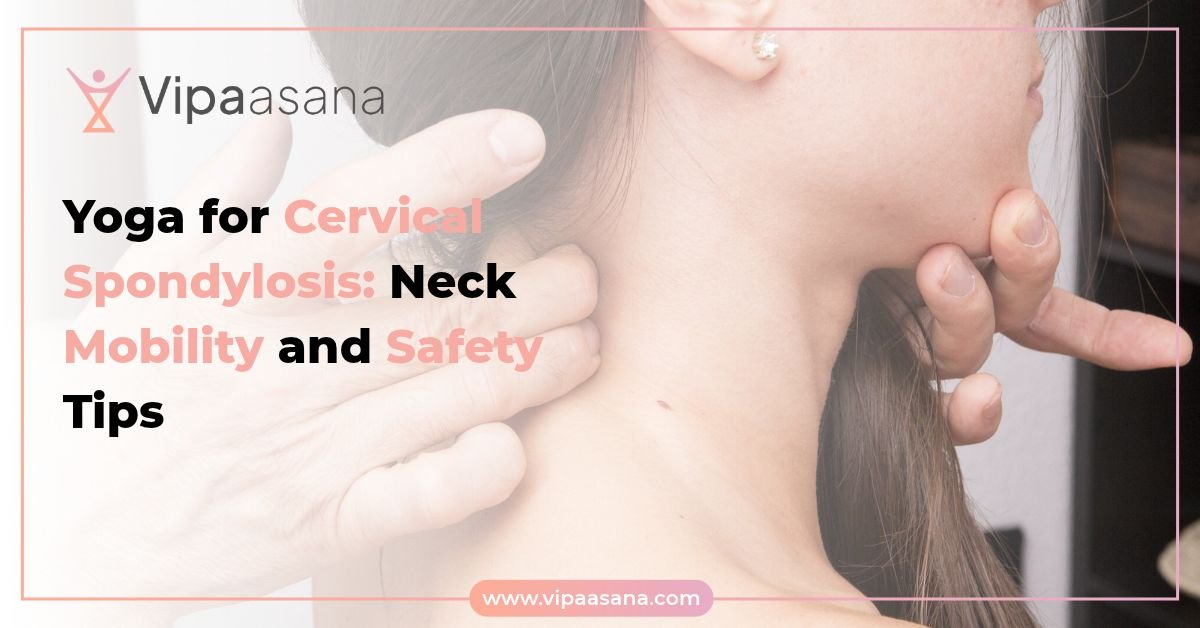
Cervical spondylosis is a common age-related condition that affects the bones, discs, and joints of the neck. It develops gradually as the structures of the cervical spine experience wear and tear over time. Many people experience neck stiffness, discomfort, reduced mobility, and occasional headaches. These symptoms can make everyday activities such as working on a computer, driving, reading, and sleeping uncomfortable.
Maintaining comfortable neck movement and practising good posture are important parts of overall spinal health. Gentle exercises, appropriate stretching, and relaxation techniques may help improve mobility and reduce stiffness in some individuals. Yoga for Cervical Spondylosis focuses on controlled movements, body awareness, and comfortable positioning rather than forceful stretching or advanced postures. With suitable modifications, yoga may become a supportive part of a balanced wellness routine.
People with busy schedules may also consider Online Yoga sessions to learn basic movements from home. However, cervical spondylosis affects everyone differently, so it is important to understand the condition and seek professional advice before starting a new exercise routine.
Understanding Cervical Spondylosis
What Is Cervical Spondylosis?
Cervical spondylosis refers to age-related changes in the cervical spine, which is the section of the spine located in the neck. It consists of seven vertebrae that support the head and allow movements such as turning, bending, and looking up or down.
Between these vertebrae are spinal discs that provide cushioning and help absorb movement-related pressure. Over time, these discs may lose some of their flexibility and height. The joints and surrounding structures can also undergo changes, sometimes resulting in stiffness or reduced movement.
Although cervical spondylosis becomes more common with age, not everyone with these changes experiences pain. Some people may have visible changes on imaging tests without noticing any symptoms. The condition should therefore be understood in the context of a person’s symptoms and medical assessment.
Common Causes of Cervical Spondylosis
Ageing is one of the main factors associated with cervical spondylosis. However, several other factors may influence neck health and contribute to discomfort.
- Age-related disc changes: Spinal discs may gradually lose hydration and flexibility.
- Poor posture: Repeatedly looking downward at phones or laptops may increase strain around the neck.
- Repetitive movements: Certain work activities may involve repeated neck movements or prolonged positioning.
- Previous injuries: Earlier neck injuries may contribute to changes in spinal structures.
- Genetic factors: Family history may influence the likelihood of developing degenerative spinal changes.
- Lack of physical activity: Limited movement may contribute to muscle stiffness and reduced flexibility.
Understanding these factors can help people make better lifestyle choices and develop healthy movement habits. Online Yoga can provide access to guided mobility sessions, but exercises should be selected according to individual comfort and professional recommendations.
Common Symptoms of Cervical Spondylosis
Neck Pain and Stiffness
Neck discomfort is one of the most common symptoms associated with cervical spondylosis. Some people notice stiffness after waking up, while others experience discomfort after working at a desk or looking at a screen for several hours.
The stiffness may make it difficult to turn the head comfortably or maintain one position for extended periods. Gentle movement may help maintain mobility, provided it does not increase pain.
Headaches and Shoulder Discomfort
Some individuals experience headaches that begin around the back of the neck and extend toward the head. Shoulder discomfort may also occur because the muscles around the neck and upper back work together to support head movement and posture.
However, headaches can have many different causes. New, severe, or unusual headaches should not automatically be attributed to cervical spondylosis.
Tingling or Numbness in the Arms
When changes in the cervical spine affect nearby nerve roots, some individuals may experience tingling, numbness, or weakness in the shoulders, arms, or hands.
These symptoms require medical assessment because they may indicate nerve involvement. Exercise should not be used as a substitute for diagnosis or treatment.
How Gentle Yoga May Support Neck Mobility
Encourages Comfortable Movement
Gentle movement helps maintain the natural mobility of the neck and surrounding muscles. Carefully controlled exercises may help reduce stiffness associated with prolonged inactivity.
Yoga for Cervical Spondylosis should focus on comfortable movement rather than attempting to achieve a large range of motion. Small, controlled movements are often more appropriate for beginners and people experiencing neck discomfort.
Supports Posture Awareness
Posture can influence how the neck and upper-back muscles work throughout the day. Sitting with the head pushed forward for long periods may increase muscular strain and discomfort.
Yoga encourages awareness of spinal alignment, shoulder positioning, and balanced movement. A guided Online Yoga session may help beginners understand how to maintain comfortable posture during basic exercises.
Helps Relax Tight Muscles
Stress and prolonged sitting can contribute to tension around the neck and shoulders. Gentle stretching and relaxation exercises may help people become more aware of unnecessary muscular tension.
Slow breathing and comfortable movements can support relaxation. However, yoga cannot reverse age-related changes in the cervical spine or guarantee pain relief.
Improves General Physical Well-Being
A suitable yoga routine may support balance, flexibility, coordination, and general physical activity. These benefits can contribute to maintaining an active lifestyle.
People should choose exercises according to their symptoms, fitness level, and medical advice. Consistency and comfort are more important than performing difficult poses.
Top 5 Gentle Yoga Practices for Cervical Spondylosis
1. Gentle Neck Range-of-Motion Exercise
Gentle neck movements can help maintain comfortable mobility. These exercises should be performed slowly and without forcing the head into extreme positions.
How to perform:
- Sit comfortably on a chair with your feet resting on the floor.
- Keep your spine upright and shoulders relaxed.
- Slowly turn your head slightly toward the right.
- Return to the centre.
- Repeat the movement toward the left.
- Keep the movement within a comfortable range.
- Perform a few repetitions if there is no discomfort.
Possible benefits: Gentle movements may help maintain neck mobility and reduce stiffness associated with remaining in one position for too long.
Safety tip: Avoid circular neck rotations, sudden movements, and turning the head as far as possible. Stop if you experience dizziness, pain, tingling, or other unusual symptoms.
2. Tadasana (Mountain Pose)
Tadasana is a basic standing posture that encourages body awareness and comfortable alignment. It does not require deep neck movement and can be modified according to individual needs.
How to perform:
- Stand with your feet comfortably apart.
- Distribute your weight evenly across both feet.
- Keep your knees relaxed.
- Lengthen your spine naturally.
- Relax your shoulders and arms.
- Keep your head balanced comfortably above your shoulders.
- Look straight ahead without lifting or lowering your chin excessively.
- Breathe naturally for 20–30 seconds.
Possible benefits: Tadasana may help improve standing posture, balance, and awareness of head and shoulder alignment.
Safety tip: Avoid pushing your chest forward or arching your lower back. Use a wall or chair for support if necessary.
3. Marjaryasana (Cat Pose)
Cat Pose is a gentle spinal mobility exercise performed on the hands and knees. It focuses on controlled movement of the back and can help develop awareness of spinal positioning.
How to perform:
- Begin on your hands and knees.
- Position your wrists under your shoulders.
- Keep your knees under your hips.
- Slowly round your back within a comfortable range.
- Keep your neck relaxed and avoid dropping your head forcefully.
- Return slowly to a neutral spine.
- Repeat a few times while breathing naturally.
Possible benefits: Cat Pose may support general spinal mobility and help reduce stiffness in the back.
Safety tip: Keep the neck in a comfortable position throughout the exercise. If being on your hands and knees causes discomfort, choose a supported seated movement instead.
4. Shoulder Rolls
Shoulder rolls are simple movements that help encourage mobility around the shoulder joints and release some muscular tension.
How to perform:
- Sit or stand comfortably.
- Keep your arms relaxed beside your body.
- Slowly lift your shoulders toward your ears.
- Gently move them backward and downward.
- Return to the starting position.
- Repeat several times.
- Reverse the direction if comfortable.
Possible benefits: Shoulder rolls may help reduce feelings of tightness around the upper shoulders and encourage comfortable upper-body movement.
Safety tip: Do not move your head along with your shoulders. Keep the neck relaxed and avoid shrugging forcefully.
5. Sukhasana (Easy Pose) with Relaxed Breathing
Sukhasana is a simple seated posture that encourages relaxation and awareness of body alignment. It can be adapted using a chair or cushion.
How to perform:
- Sit comfortably on a yoga mat or chair.
- Keep your back naturally upright.
- Relax your shoulders.
- Rest your hands on your knees or thighs.
- Keep your head balanced comfortably.
- Breathe slowly and naturally.
- Continue for two to three minutes.
Possible benefits: This practice may support relaxation, stress management, and awareness of comfortable sitting posture.
Safety tip: Avoid forcing your breathing or holding your breath. If sitting cross-legged causes discomfort, use a chair.
These gentle movements may be suitable for some individuals, but not every exercise works for every condition. Yoga for Cervical Spondylosis should always be adapted to your symptoms and professional recommendations. A guided Online Yoga session can demonstrate basic techniques, although an instructor cannot replace a physical examination.
Yoga Poses and Movements to Avoid with Cervical Spondylosis
Not all traditional yoga poses are appropriate for people experiencing neck discomfort. Some advanced postures place significant pressure on the cervical spine or require the neck to remain in an extreme position.
1. Headstand (Sirsasana)
Headstand places substantial weight and balance demands on the head and neck. People with cervical spine problems should avoid attempting this posture unless a qualified medical professional has specifically assessed and cleared it.
2. Shoulder Stand (Sarvangasana)
Shoulder Stand involves significant neck flexion and may place pressure on the cervical spine. It is generally best avoided by people with cervical spondylosis unless specifically cleared by their healthcare professional.
3. Plow Pose (Halasana)
Plow Pose requires deep forward bending of the spine and considerable neck positioning. This can be unsuitable for people with existing neck problems.
4. Deep Neck Bends
Forcefully bending the head forward, backward, or sideways can aggravate symptoms in some individuals. Avoid trying to stretch the neck beyond a comfortable range.
5. Forceful Neck Rotations
Rapid or repeated neck circles may increase discomfort or dizziness. Instead, choose small, controlled movements when appropriate.
6. Advanced Backbends
Some advanced backbends require the head to move significantly backward. These positions may increase strain around the neck and should not be attempted without professional guidance.
When selecting Yoga for Cervical Spondylosis, it is important to understand that avoiding painful movements is just as important as choosing suitable exercises.
Important Safety Tips Before Starting Yoga
Consult a Healthcare Professional
Before beginning a new yoga routine, speak with a doctor or physiotherapist, especially if you experience persistent neck pain, numbness, tingling, or weakness.
A professional can help determine which movements are suitable for your condition and whether additional treatment is necessary.
Start with Simple Movements
Beginners should begin with gentle mobility exercises instead of advanced postures. Start with short sessions and gradually increase activity only when the movements remain comfortable.
Avoid Forcing Stretches
Stretching should never produce sharp pain or increased nerve-related symptoms. Avoid pulling your head with your hands or using excessive pressure to increase flexibility.
Maintain Comfortable Breathing
Breathe naturally throughout your practice. Avoid holding your breath, especially while moving or maintaining a posture.
Use Supportive Props
A chair, cushion, or yoga block may help make certain positions more comfortable. Props can also reduce the need to bend or stretch excessively.
Stop When Symptoms Increase
If an exercise causes dizziness, severe pain, tingling, numbness, or weakness, stop immediately and seek appropriate medical advice.
Daily Lifestyle Habits for Better Neck Health
Maintain a Comfortable Working Posture
People who work on computers should position their screens at a comfortable viewing height. Keep the shoulders relaxed and avoid leaning the head forward for long periods.
A supportive chair and appropriate desk arrangement can help encourage comfortable sitting.
Take Regular Movement Breaks
Remaining in one position for several hours may contribute to muscular stiffness. Take regular breaks, change positions, and perform gentle movements when appropriate.
Use Your Phone at a Comfortable Height
Repeatedly looking downward at a mobile phone may increase strain around the neck. Try bringing the phone closer to eye level rather than constantly bending your head.
Choose a Comfortable Sleeping Position
Use a pillow that supports your neck without pushing your head too far forward or backward. Sleeping positions should maintain comfortable spinal alignment.
Stay Physically Active
Walking and other suitable low-impact activities may help maintain general physical fitness. Choose activities that do not aggravate your neck symptoms.
Can Beginners Practise Yoga at Home?
Beginners can explore gentle yoga at home when exercise is considered appropriate for their condition. However, it is important to select sessions that focus on basic movements, comfortable posture, and suitable modifications.
A guided Online Yoga session can provide demonstrations and help beginners understand how to perform simple exercises. Practising at home also offers flexibility in choosing a comfortable environment and schedule.
Before joining a session, check whether the instructor understands modifications for neck discomfort and whether participants are encouraged to stop movements that cause pain.
Benefits of Joining Guided Online Yoga Sessions
Flexible Practice Schedule
Online sessions make it easier to practise at a convenient time without travelling to a studio. This can be helpful for people managing work, household responsibilities, and personal wellness.
Learn Basic Movements
Beginners can follow demonstrations to understand basic postures, breathing techniques, and body alignment. However, online demonstrations should not be treated as personalised medical assessments.
Develop Consistency
A regular and comfortable movement routine may be easier to maintain when sessions are accessible from home. Short practices can help people gradually become more familiar with basic movements.
Practise in a Familiar Environment
Practising at home may help beginners feel more comfortable while learning. They can use supportive props, take breaks, and adjust their surroundings according to their needs.
Choosing Online Yoga should involve checking the instructor’s experience, the session format, and whether suitable modifications are available.
When Should You Seek Medical Attention?
Cervical spondylosis can sometimes affect the nerves or spinal cord. While mild stiffness may be managed with appropriate professional guidance, certain symptoms require prompt medical attention.
Consult a healthcare professional if you experience persistent neck pain, repeated headaches, tingling in the hands, difficulty with coordination, or increasing arm weakness.
Seek urgent medical assessment if you develop sudden or significant weakness, difficulty walking, loss of coordination, or new problems controlling your bladder or bowel. These symptoms may indicate serious neurological involvement.
Do not attempt to manage worsening neurological symptoms through stretching or yoga exercises.
Final Thoughts: Make Neck Mobility and Safety a Priority
Cervical spondylosis can affect neck movement, posture, and everyday comfort. However, understanding your condition and developing healthy movement habits can help you take a more informed approach to physical well-being.
Yoga for Cervical Spondylosis should focus on gentle mobility, comfortable alignment, relaxation, and appropriate modifications. Simple practices such as shoulder rolls, supported sitting, and gentle neck movements may be useful for some individuals, while advanced inversions and forceful neck stretches should generally be avoided.
With suitable guidance, Online Yoga can make learning basic movements more convenient for beginners who prefer practising at home. Always remember that yoga is a complementary wellness activity, not a cure for cervical spondylosis or a replacement for medical treatment.
Start slowly, respect your body’s limits, and consult a healthcare professional whenever necessary. Prioritising safety and consistency can help you maintain a healthier relationship with movement and support your overall quality of life.