
Modern professional life can be demanding. Meetings, deadlines, long working hours, commuting, emails, screen time, and personal responsibilities can leave very little time for exercise and self-care. When the schedule becomes busy, physical activity is often one of the first things people postpone.
Yoga can be a practical way for busy professionals to include movement, stretching, breathing, and relaxation in their daily routine. Unlike workouts that may require a gym or extensive equipment, yoga can be practiced in a small space and adapted to different fitness levels. Even a short session can help you create a healthier and more mindful break from work.
The key for professionals is not finding several free hours every day. Instead, it is about creating a realistic routine that can fit around work commitments. This guide explains the benefits of yoga for busy professionals and provides a simple daily routine that can be adjusted according to your schedule.
Why Yoga Is Useful for Busy Professionals
A professional lifestyle often involves long periods of sitting, repetitive movements, and extended screen time. Spending several hours at a desk may leave the body feeling stiff or uncomfortable.
Yoga includes gentle stretches, controlled movements, balance exercises, and breathing practices. These can make it easier to incorporate regular movement into a working day.
Yoga can also provide a structured opportunity to step away from work. Instead of continuously moving from one task to another, a short yoga session can become a dedicated period for physical activity and relaxation.
The most important factor is consistency. A 15-minute routine that you can maintain regularly may be more practical than an intense workout that fits into your schedule only occasionally.
Benefits of Yoga for Working Professionals
Yoga can support several aspects of physical and mental well-being. Its benefits may vary depending on the type of practice, duration, consistency, and individual needs.

Supports Flexibility and Mobility
Sitting for extended periods can make certain areas of the body feel stiff. Gentle yoga movements can encourage mobility in areas such as the shoulders, hips, spine, and legs.
Simple movements such as Cat-Cow, seated stretches, and gentle twists can be included in a short office-day routine.
Over time, regular movement can help you become more comfortable with everyday activities and reduce the feeling of stiffness that can come from remaining in one position for too long.
Helps Build Strength
Yoga is not only a stretching activity. Many yoga poses require you to support and control your body weight.
Positions such as Plank, Chair Pose, Warrior variations, and Bridge Pose can engage different muscle groups. A balanced routine can help improve muscular endurance and body control.
Professionals who spend most of the day sitting can benefit from including both mobility and strengthening movements in their weekly routine.
Encourages Better Body Awareness
When you work for several hours, it can be easy to lose awareness of your posture and physical tension. Yoga encourages you to pay attention to how your body feels while you move and breathe.
This awareness can help you recognize when your shoulders are tense, when you have been sitting for too long, or when you need to change your position.
Yoga does not replace healthy workplace ergonomics, but it can complement good posture habits and regular movement breaks.
Supports Relaxation
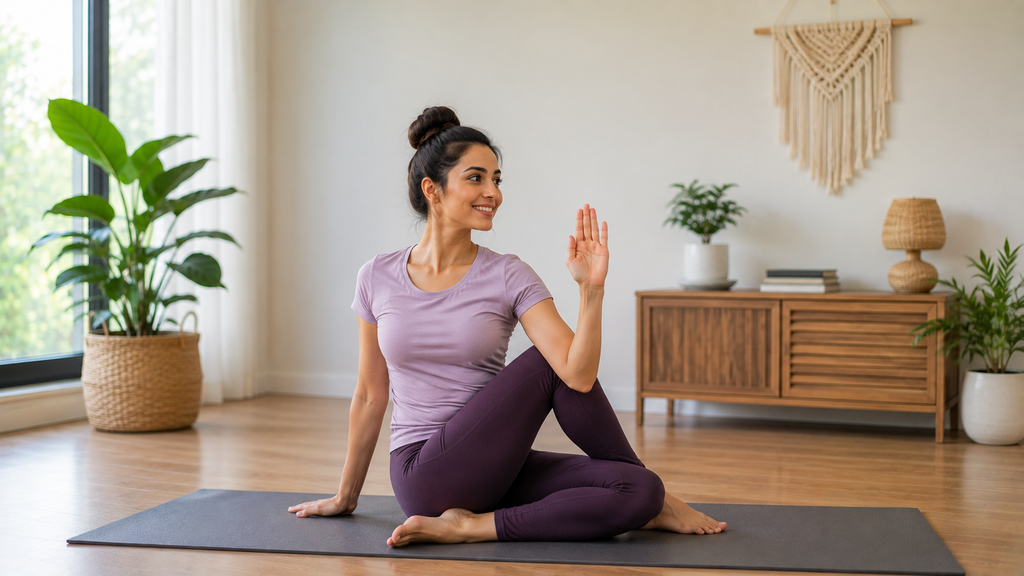
Work-related responsibilities can make it difficult to mentally switch off at the end of the day. Slow yoga movements combined with comfortable breathing can provide an opportunity to transition from work mode to personal time.
Relaxation-focused yoga can be especially useful in the evening when the goal is to slow down rather than perform an intense workout.
Helps Create a Consistent Fitness Habit
One of the biggest challenges for busy professionals is consistency. A routine that requires a lot of time can become difficult to maintain.
Yoga can be divided into shorter sessions. For example, you could practice for 10 minutes in the morning, take movement breaks during the workday, and complete a longer session in the evening.
This approach makes physical activity feel more manageable.
How Long Should a Busy Professional Practice Yoga?
There is no universal amount of yoga that every professional needs to practice. The ideal duration depends on your schedule, fitness level, goals, and comfort.
If you have limited time, start with 10 to 15 minutes. When you have more availability, you can practice for 20 to 30 minutes or longer.
The goal is to build a routine that you can realistically maintain. It is better to practice consistently at a comfortable level than to create a demanding schedule that becomes difficult to follow.
A Simple Morning Yoga Routine
Morning can be a convenient time for professionals to practice yoga before work responsibilities begin. A short routine can help you start the day with movement and awareness.
Begin With Deep Breathing
Start by sitting or standing comfortably. Relax your shoulders and take a few slow, natural breaths.
Focus your attention on the movement of your breathing rather than immediately thinking about emails, meetings, or tasks.
Spend approximately two minutes breathing comfortably.
Practice Cat-Cow
Move onto your hands and knees. Place your hands beneath your shoulders and your knees beneath your hips.
Slowly alternate between a comfortable rounded-spine position and a gentle extended-spine position.
Move with your breathing and avoid forcing the range of motion.
Continue for approximately one to two minutes.
Move Into Mountain Pose
Stand upright with your feet comfortably positioned. Relax your shoulders and keep your spine naturally aligned.
Take several slow breaths while becoming aware of your posture.
Mountain Pose can provide a simple transition into standing movements.
Add Chair Pose
From a standing position, bend your knees and move your hips slightly backward as if sitting into an imaginary chair.
Keep your chest comfortably lifted and avoid going lower than feels appropriate.
Hold the position for a few comfortable breaths before returning to standing.
This movement can engage the legs and encourage body control.
Finish With a Gentle Forward Fold
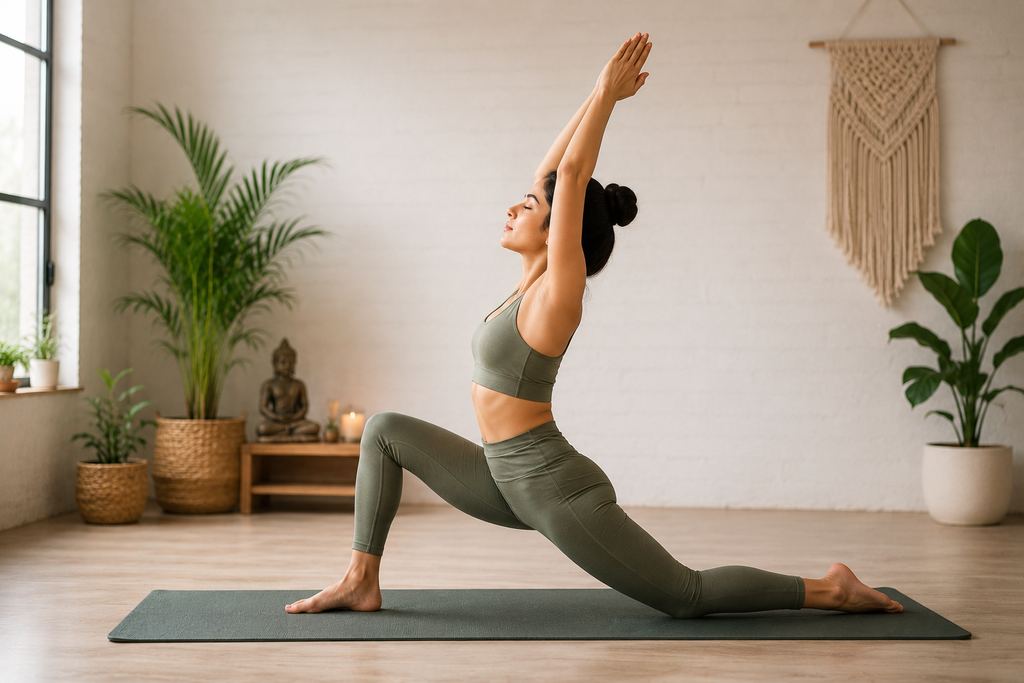
From standing, slowly bend forward while keeping your knees slightly bent if needed.
Allow your upper body to relax without forcing yourself toward the floor.
Take several comfortable breaths and slowly return to standing.
A Midday Yoga Routine for Office Workers
A midday routine does not need to involve changing into workout clothes or using a yoga mat. Several simple movements can be performed during a short break, depending on your workplace and comfort.
Neck and Shoulder Movement
Sit or stand comfortably and slowly move your shoulders backward and forward.
You can also gently turn your head from side to side without forcing the movement.
These simple movements can provide a break from prolonged screen work.
Seated Spinal Movement
Sit upright in your chair with both feet comfortably placed on the floor.
Place your hands on your thighs and gently lengthen your spine. You can then perform a small, comfortable seated twist.
Avoid forcing the twist or using your chair to pull your body further than is comfortable.
Wrist and Finger Stretch
Professionals who spend many hours typing or using a mouse can take short breaks to move their fingers and wrists.
Open and close your hands several times and gently move your wrists through a comfortable range.
These movements can be incorporated into regular work breaks.
Standing Side Stretch
Stand with your feet comfortably apart. Raise one arm overhead and gently lean toward the opposite side.
Return to the center and repeat on the other side.
Keep the movement controlled and avoid collapsing your torso sideways.
A Simple Evening Yoga Routine
An evening routine can focus more on gentle stretching and relaxation.
Start with a few minutes of comfortable breathing. Continue with Child’s Pose, a gentle seated stretch, a comfortable twist, and a short relaxation period.
If you have had a physically demanding day, keep the movements gentle. The goal of an evening session does not have to be improving flexibility or strength. It can simply be creating a calm transition away from work.
15-Minute Yoga Routine for Busy Days
On particularly busy days, a 15-minute routine can be enough to keep your movement habit active.
A simple structure could include:
- 2 minutes of comfortable breathing
- 2 minutes of Cat-Cow
- 2 minutes of gentle standing stretches
- 2 minutes of Chair Pose and standing movements
- 2 minutes of Warrior variations
- 2 minutes of seated stretching
- 3 minutes of relaxation
You can adjust the duration according to your experience and comfort.
The purpose of this routine is not to complete as many poses as possible. Instead, use the time to move intentionally and give yourself a break from continuous work.
Yoga for Professionals Working From Home
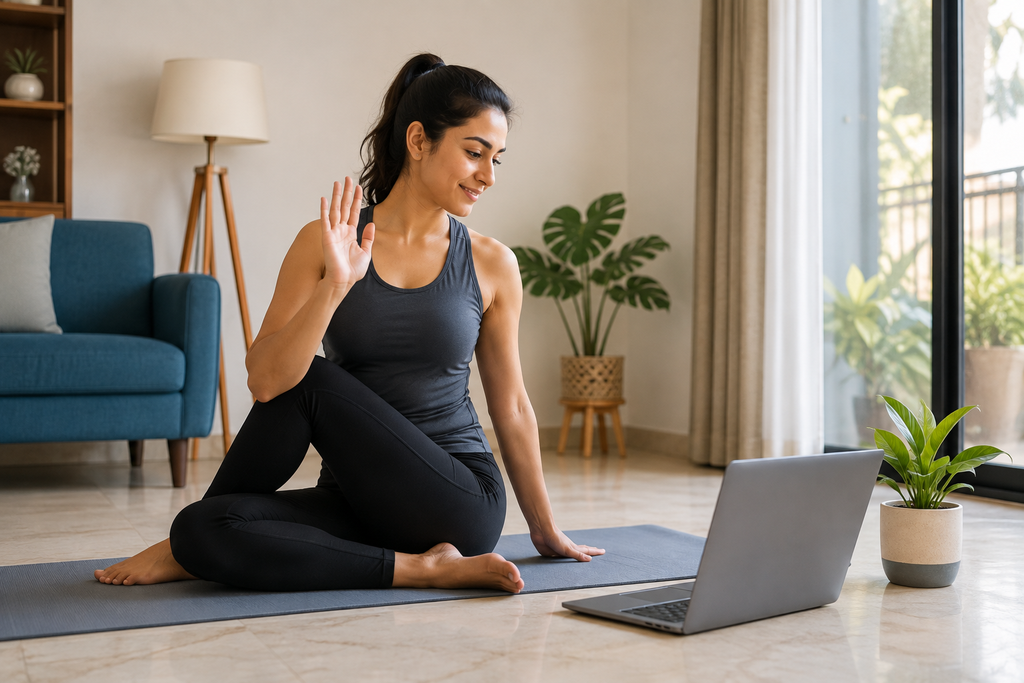
Working from home can make yoga even more convenient because you may already have access to a private space.
However, remote workers can also experience long periods of sitting. Back-to-back virtual meetings can make it difficult to remember to move.
Try placing short movement breaks between meetings. Even two or three minutes of standing, walking, stretching, or breathing can help break up long periods of sitting.
You can also schedule a short yoga session before starting work or after finishing your workday.
How to Fit Yoga Into a Busy Schedule
One of the easiest ways to maintain a yoga routine is to connect it with an existing daily habit.
For example, you can practice for 10 minutes after waking up, stretch during your lunch break, or do a short session after shutting down your work computer.
Scheduling yoga like any other appointment can also make it easier to prioritize.
Another option is to use guided Classes Yoga sessions when you prefer having a structured routine. Guided classes can help reduce the time spent deciding which poses to practice and allow you to focus on following the session.
https://vipaasana.com/
Choosing the Right Type of Yoga
Different yoga styles may suit different professional schedules and preferences.
Gentle or beginner-friendly yoga can be useful if your main goal is mobility and relaxation. More active styles may be appropriate if you want a stronger physical challenge and already have suitable experience.
Restorative practices can focus on relaxation and comfortable supported positions.
If you are new to yoga, start with beginner-level classes and gradually explore different styles as you become more familiar with the movements.
Common Mistakes Busy Professionals Should Avoid
One common mistake is waiting for a completely free hour before practicing yoga. Busy schedules rarely remain perfectly open.
Instead, consider shorter sessions that can fit into your available time.
Another mistake is practicing only when you feel stressed or physically uncomfortable. A consistent routine is generally more sustainable than using yoga only as an occasional response to a difficult day.
Professionals should also avoid competing with other people. Flexibility and strength develop differently for everyone.
Finally, avoid forcing poses. Yoga should be adapted to your current ability rather than treating discomfort as a sign that you need to push harder.
How to Stay Consistent With Yoga
Consistency becomes easier when your routine is simple.
Choose a realistic schedule rather than an idealized one. If 30 minutes every day is difficult, start with 10 or 15 minutes several times per week.
Keep your yoga mat or basic equipment accessible. Prepare your practice area in advance if possible.
You can also track your sessions using a simple calendar. Seeing regular practice can provide a visual reminder of your progress.
Most importantly, do not treat a missed session as failure. If you skip a day because of work, simply return to your routine the next day.
Safety Tips for Professionals
Yoga should be practiced according to your current abilities. Beginners should learn basic alignment and avoid immediately attempting advanced poses.
Move slowly, breathe naturally, and stop if you experience sharp or unusual pain.
If you have an injury, medical condition, are pregnant, or have concerns about whether certain movements are appropriate for you, speak with a qualified healthcare professional or appropriately trained yoga instructor before beginning.
A qualified instructor can also help you understand modifications that may make certain poses more comfortable.
Creating a Weekly Yoga Plan
A simple weekly plan can help busy professionals maintain consistency without making yoga feel overwhelming.
For example:
Monday: 15-minute morning yoga
Tuesday: Short workplace stretching breaks
Wednesday: 20-minute yoga session
Thursday: Gentle evening stretching
Friday: 10–15-minute relaxation-focused practice
Saturday: 30-minute full-body yoga session
Sunday: Rest or gentle mobility
This schedule is only an example. You can change the duration and frequency according to your professional and personal commitments.
Making Yoga Part of Your Lifestyle
Yoga becomes more useful when it becomes part of your lifestyle rather than another task on your to-do list.
You can practice a short session before work, use gentle stretches during breaks, and finish your day with breathing or relaxation.
You can also combine yoga with other healthy habits such as regular walking, adequate sleep, balanced nutrition, and appropriate workplace ergonomics.
For professionals with unpredictable schedules, flexible Classes Yoga options can make it easier to choose sessions according to available time rather than following a rigid schedule.
Final Thoughts
Busy professional life does not have to prevent you from maintaining a regular yoga practice. The key is to make the routine realistic, flexible, and easy to repeat.
Even a 10–15 minute session can provide an opportunity to move, stretch, breathe, and step away from work. As your routine becomes more consistent, you can gradually increase the duration or explore different yoga styles.
Whether you practice in the morning, during a work break, or in the evening, focus on movements that feel comfortable and appropriate for your experience level. Yoga is not about completing the most difficult poses. For busy professionals, it can simply be a practical way to make movement and mindful breaks part of everyday life.

