Yoga is a popular mind-body practice that combines physical postures, breathing techniques, and relaxation. It can be a helpful way to support flexibility, balance, strength, body awareness, and general well-being. Whether you are a beginner or someone who already exercises regularly, yoga offers different movements and styles that can fit your fitness level and daily routine.
The best yoga exercises for health and wellness are not necessarily the most difficult poses. Simple postures performed with proper technique, comfortable breathing, and regular practice can be more useful than forcing the body into advanced positions. Different poses offer different benefits, so a balanced routine may include gentle stretches, standing postures, balance exercises, and relaxation.
Yoga can also complement other healthy habits, including walking, strength training, nutritious meals, adequate sleep, and stress management. The key is to select movements that suit your needs and practise consistently without pushing beyond your limits.
Why Is Yoga Important for Health and Wellness?
Yoga encourages you to pay attention to how your body moves and how you breathe. A regular practice may support flexibility, mobility, balance, and muscular endurance. Gentle yoga can also provide an opportunity to relax and take a break from everyday responsibilities.
Many people spend long periods sitting at a desk, using digital devices, or travelling. Gentle movements and stretches can help them change positions and move their bodies throughout the day.
Yoga can also encourage mindfulness by directing attention toward breathing and physical sensations. Some people find this helpful for relaxation and managing everyday stress.
However, yoga is not a cure for medical conditions, and its effects vary from person to person. It works best as part of a broader approach to health that includes appropriate medical care when needed.
1. Mountain Pose (Tadasana)
Mountain Pose is a basic standing posture that helps develop body awareness, posture, and balance. It is suitable for many beginners because it does not require complicated movements.
Stand with your feet comfortably apart and distribute your weight evenly across both feet. Keep your knees relaxed, allow your arms to rest beside your body, and look straight ahead.
Relax your shoulders and breathe naturally. Stay in the position for several comfortable breaths.
Mountain Pose encourages you to notice how you stand and maintain a stable position. You can practise it before other standing postures as a way to establish a comfortable starting position.
If standing for long periods is difficult, practise near a wall or sturdy chair for support.
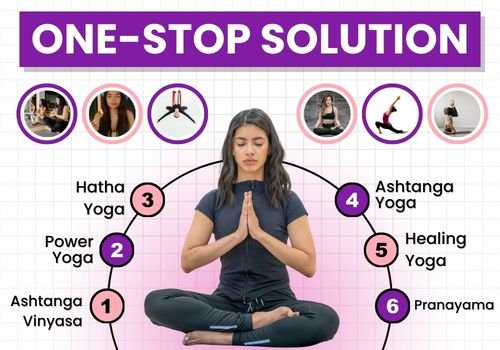
2. Cat-Cow Pose (Marjaryasana-Bitilasana)
Cat-Cow is a gentle movement commonly used to improve awareness of spinal movement and warm up the back.
Begin on your hands and knees, with your hands beneath your shoulders and knees beneath your hips. As you inhale, gently lift your chest and allow your back to arch comfortably. As you exhale, round your back and let your head follow the movement without forcing your neck.
Repeat slowly for five to eight rounds, coordinating each movement with comfortable breathing.
This exercise encourages gentle movement through the spine and can be useful as part of a warm-up routine.
If kneeling is uncomfortable, try a seated variation on a sturdy chair. Move your back gently between a slightly arched and rounded position.
3. Downward-Facing Dog (Adho Mukha Svanasana)
Downward-Facing Dog is a widely practised yoga posture that involves the shoulders, arms, back, and legs. It can be included in routines designed to develop flexibility and whole-body movement.
Start on your hands and knees. Place your hands slightly forward, tuck your toes, and gently lift your hips upward and backward.
Keep your knees bent if needed. Your heels do not have to touch the floor, and your back should not be forced into a straight position.
Press through your hands while allowing your head and neck to relax naturally. Breathe comfortably for a few breaths, then return to your starting position.
This pose can feel demanding for beginners. If it creates discomfort in your wrists, shoulders, or back, choose a gentler alternative or seek guidance from a qualified instructor.
4. Child’s Pose (Balasana)
Child’s Pose is a resting posture often used in gentle yoga routines. It can provide a comfortable pause between more active movements.
Begin on your hands and knees, then move your hips backward toward your heels as far as comfortable. Extend your arms forward or rest them beside your body.
You may place a folded blanket or cushion beneath your hips or forehead for support.
Breathe naturally and remain in the position for several comfortable breaths. Avoid forcing your hips toward your heels if your knees or ankles feel uncomfortable.
Child’s Pose can help you slow down during practice and recognise when your body needs a break. If the position is uncomfortable, rest in a seated position instead.
5. Tree Pose (Vrikshasana)
Tree Pose is a standing balance exercise that encourages concentration, stability, and body awareness.
Stand upright and focus your gaze on a stationary point. Shift your weight gently onto one foot, then place the other foot against your ankle or lower leg.
Avoid placing your foot directly against the side of your knee. If lifting your foot feels difficult, keep your toes on the floor and use them for support.
Bring your hands together in front of your chest if comfortable. Hold the position for a few breaths, then change sides.
Balance may feel challenging at first, which is normal. Practise beside a wall or sturdy chair to reduce the risk of losing balance.
Tree Pose can be a useful addition to a balanced yoga routine, particularly if you want to practise controlled standing movements.
6. Warrior II Pose (Virabhadrasana II)
Warrior II is a standing posture that involves the legs, hips, and upper body. It can help develop muscular endurance and body awareness when practised with appropriate alignment.
Stand with your feet comfortably wide apart. Turn one foot outward and bend that knee gently while keeping the other leg extended.
Raise your arms to about shoulder height and look over the front hand if comfortable. Keep your torso upright and avoid forcing the front knee into a deep bend.
Hold for a few comfortable breaths, then straighten your leg and repeat on the other side.
Adjust the distance between your feet and the depth of your knee bend according to your abilities. You should feel stable rather than strained.
7. Cobra Pose (Bhujangasana)
Cobra Pose is a gentle backbend that may be included in routines focused on spinal movement and front-body stretching.
Lie on your stomach with your hands placed near your shoulders. Keep your elbows close to your body and gently lift your chest using your back muscles, with light assistance from your hands.
Only lift as high as feels comfortable. Keep your shoulders relaxed and avoid pushing your lower back into a deep arch.
Breathe normally and lower yourself slowly.
Cobra Pose is not suitable for everyone in every circumstance. If you have back pain, a recent injury, or a condition that makes backbends uncomfortable, seek professional advice or choose another movement.
8. Bridge Pose (Setu Bandhasana)
Bridge Pose is a floor-based posture that engages the hips and legs while moving the spine through a gentle extension.
Lie on your back with your knees bent and feet resting on the floor. Place your arms beside your body.
Press gently through your feet and lift your hips to a comfortable height. Keep your knees pointing in the same direction as your feet and avoid forcing the lift.
Hold briefly while breathing naturally, then lower your hips slowly.
You can place a folded blanket beneath your head for comfort. If the movement causes pain or pressure, stop and choose a different exercise.
Bridge Pose may complement a routine that includes standing movements and gentle stretches.
9. Seated Forward Bend (Paschimottanasana)
Seated Forward Bend is a yoga posture often used to stretch the back of the legs and practise movement through the hips.
Sit on the floor with your legs extended in front of you. Bend your knees slightly if your hamstrings feel tight.
Inhale and lengthen your torso gently. As you exhale, hinge forward from your hips without forcing yourself to reach your feet.
Rest your hands on your thighs, shins, or a strap placed around your feet if needed. Keep your breathing comfortable and avoid pulling yourself into a deeper position.
Flexibility varies between individuals. The goal is a comfortable stretch, not touching your toes at any cost.
If you have a back condition or the pose causes discomfort, try a gentler seated movement or seek qualified guidance.
10. Legs-Up-the-Wall Pose
Legs-Up-the-Wall is a supported posture that many people use during gentle relaxation routines.
Sit sideways beside a wall, then carefully lie back and bring your legs upward against the wall. Keep your hips at a comfortable distance from it, and use a folded blanket beneath your head if desired.
Relax your arms beside your body and breathe naturally for a short period.
This position may feel relaxing after a busy day, although it is not necessary for everyone. Avoid it if it is uncomfortable or conflicts with advice from your healthcare professional.
People who have been advised to avoid certain positions because of a medical condition should follow that guidance.
11. Easy Pose and Mindful Breathing
Easy Pose is a comfortable seated position used for breathing and relaxation.
Sit cross-legged on a cushion or choose a chair with your feet resting on the floor. Keep your spine in a natural position and allow your shoulders to relax.
Notice your breathing without trying to control every breath. If your attention wanders, gently return it to the feeling of breathing.
You can practise for two to five minutes, depending on your comfort.
Mindful breathing can provide a quiet pause during the day and may support relaxation. If focusing on your breathing makes you uncomfortable, open your eyes and return your attention to your surroundings.
12. Corpse Pose (Savasana)
Corpse Pose is commonly used at the end of a yoga session to allow the body to rest.
Lie on your back with your legs comfortably apart and your arms resting beside your body. You can place a cushion beneath your knees for extra support.
Close your eyes if comfortable, relax your muscles, and breathe naturally.
Remain in the position for three to five minutes, or choose a seated relaxation posture if lying down is uncomfortable.
Savasana helps bring a session to a calm close and provides time to notice how you feel after movement.
How to Combine Yoga Poses Into a Daily Routine
You do not need to practise every yoga pose in one session. A short, balanced routine can include a warm-up, several postures, and relaxation.
Here is an example of a beginner-friendly 20-minute routine:
- Minutes 1–3: Gentle breathing and shoulder movements.
- Minutes 4–5: Mountain Pose.
- Minutes 6–8: Cat-Cow Pose.
- Minutes 9–11: Child’s Pose or another comfortable resting position.
- Minutes 12–14: Warrior II on both sides.
- Minutes 15–16: Tree Pose with support if needed.
- Minutes 17–20: Easy Pose, comfortable breathing, or Savasana.
Modify the routine according to your flexibility, fitness level, and available time. If a posture feels uncomfortable, leave it out or choose a simpler variation.
Beginners may start with 10–15 minutes and gradually build up as their confidence improves.
How Often Should You Practise Yoga for Wellness?
The ideal frequency depends on your schedule, goals, and physical condition. Beginners can start with short sessions three to five days a week. Gentle daily movement may also be appropriate for some people if they feel comfortable and allow time for recovery when needed.
Regular practice is generally more practical than attempting long sessions occasionally.
You can combine yoga with walking, cycling, swimming, or strength training to develop a more varied fitness routine. Yoga can complement these activities, but some yoga sessions may not provide enough aerobic or strength training on their own to meet every fitness goal.
Notice how you feel after each session. Increase the duration gradually and avoid pushing through pain.
Common Yoga Mistakes to Avoid
One common mistake is attempting advanced poses before learning the basics. Start with simpler postures and use modifications as needed.
Another mistake is forcing stretches to achieve greater flexibility. Stretching should feel controlled and comfortable, not painful.
Avoid holding your breath during challenging movements. Breathe naturally and come out of a pose if you feel dizzy or uncomfortable.
It is also important not to compare your body with an instructor’s demonstration. Differences in mobility, strength, and body structure are normal.
If you have an injury, persistent pain, balance difficulties, or a medical condition, ask a qualified healthcare professional or appropriately trained yoga instructor about suitable modifications.
How Online Yoga Training Can Support Your Practice
Online yoga sessions can provide structure and guidance, especially for people who are learning at home. Recorded lessons let you pause and repeat instructions, while live classes may allow you to ask questions and receive feedback.
Choose a qualified instructor who explains alignment clearly, demonstrates easier variations, and encourages safe practice.
If you are interested in teaching yoga in the future, researching the Best Online Yoga Teacher Training can help you understand the different course formats and training topics available. Check the curriculum, instructor qualifications, practical teaching opportunities, assessment process, and recognition of the programme before enrolling.
For personal practice, however, you do not need to complete teacher training. A beginner-friendly class or a simple home routine may be enough to get started.
Final Thoughts
The best yoga exercises for health and wellness are those that suit your abilities and help you practise consistently. Mountain Pose, Cat-Cow, Child’s Pose, Tree Pose, Warrior II, Cobra Pose, Bridge Pose, and gentle relaxation exercises can all be considered when building a balanced routine.
Start with a few basic movements, focus on comfortable breathing, and avoid forcing your body into difficult positions. Gradually increase your practice as you become more familiar with the poses.
Yoga can support flexibility, balance, body awareness, and relaxation as part of a healthy lifestyle. Combine it with other forms of movement, balanced nutrition, adequate sleep, and appropriate healthcare when needed.
You do not need to be flexible or experienced to begin. Start at your own pace, practise safely, and choose a routine that makes you feel comfortable and motivated to continue.