
A good morning routine can set a positive tone for the rest of the day. While many people begin their mornings by checking their phones, rushing through breakfast, or preparing for work, adding a few minutes of yoga can create an opportunity to slow down and focus on the body and mind.
Yoga combines physical postures, controlled breathing, gentle movement, balance, and relaxation. A morning yoga routine does not need to be complicated or time-consuming. Even a short session can become a practical way to introduce mindful movement into your daily schedule.
For beginners, the most important thing is to start gradually. You do not need to perform advanced poses or spend an hour on the mat. A simple sequence of warm-ups, basic postures, stretching, breathing, and relaxation can be enough to establish a consistent practice.
Why Practice Yoga in the Morning?
Morning yoga can be a convenient way to make movement part of your daily routine. Practicing early means you can complete your session before work, household responsibilities, or other activities become distractions.
A morning session may include gentle movements that help you become more aware of your body after sleeping. Stretching and controlled movement can also make your morning routine feel more active and intentional.
Some people prefer morning yoga because it provides dedicated personal time before the day becomes busy. Others may simply find it easier to maintain a routine when it is scheduled at a consistent time.
The most important factor is consistency. If mornings are extremely busy, another time of day may work better for you.
How Long Should a Morning Yoga Routine Be?
A morning yoga routine can be as short or long as your schedule allows. Beginners can start with 10 to 15 minutes and gradually increase the duration.
A simple structure could be:
- 2–3 minutes of quiet breathing
- 3–5 minutes of warm-up movements
- 5–10 minutes of yoga postures
- 2–5 minutes of gentle stretching
- 2–3 minutes of relaxation
A 15- to 30-minute routine can be practical for busy people. If you have more time, you can practice for 40 or 60 minutes.
There is no need to make every session long. A short routine that you can practice regularly may be easier to maintain than an ambitious routine that becomes difficult to follow.

Prepare Your Body Before Yoga
It can be helpful to begin with gentle movements instead of immediately moving into challenging postures.
After waking up, your body may feel stiff or less mobile. Start slowly and give yourself time to become comfortable with movement.
You can begin with:
- Gentle neck movements
- Shoulder rolls
- Wrist and ankle movements
- Arm stretches
- Cat-Cow movements
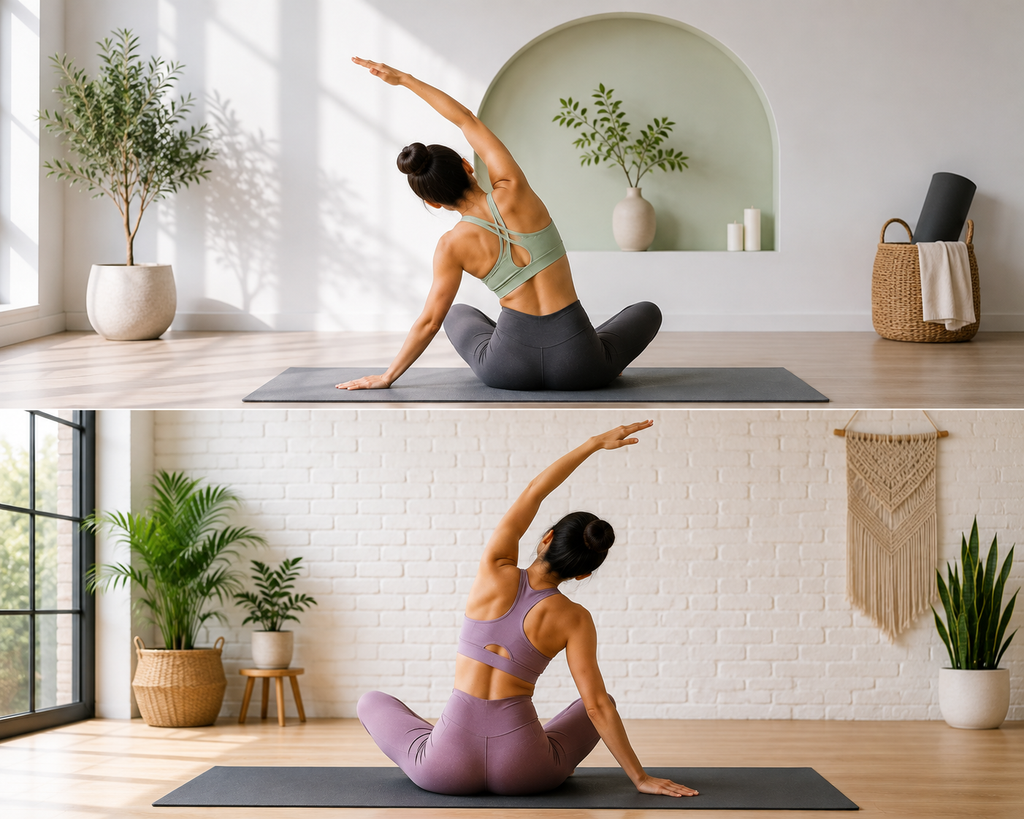
- Gentle seated twists
- Slow standing movements
These movements can gradually prepare your body for the rest of the session.
Avoid sudden or forceful movements, particularly if you are new to yoga.
Start With Comfortable Breathing
Breathing can be a simple way to transition from rest into your practice. Sit or stand comfortably and take slow, natural breaths.
Focus on breathing without trying to force it. Notice the movement of your chest or abdomen as you inhale and exhale.
You can spend two or three minutes simply paying attention to your breathing before starting physical postures.
If any breathing technique makes you feel uncomfortable, stop and return to normal breathing.
Cat-Cow for Gentle Spinal Movement
Cat-Cow is a common beginner-friendly movement that can be included near the beginning of a morning routine.
Start on your hands and knees with your wrists positioned comfortably beneath your shoulders and your knees below your hips. Move slowly between a rounded-back position and a gentle extension of the spine.
Coordinate the movement with comfortable breathing.
The movement should remain controlled rather than rushed. If your wrists, knees, or back feel uncomfortable, adjust your position or use appropriate support.
Child’s Pose for Gentle Stretching
Child’s Pose can be used as a resting or gentle stretching posture.
From a kneeling position, gradually lower your hips toward your heels and extend your arms forward or keep them alongside your body, depending on what feels comfortable.
This pose can provide a gentle stretch and can also be used between more active postures.
Beginners can place a cushion or folded blanket under the body for additional support if needed.
Downward-Facing Dog
Downward-Facing Dog is a commonly practiced yoga posture that involves the shoulders, arms, legs, and back.
From a hands-and-knees position, lift the hips upward while keeping the movement controlled. Beginners do not need to straighten their legs completely.
Bending the knees slightly can make the posture more accessible. Focus on maintaining comfortable breathing and avoiding unnecessary strain.
If this posture feels too demanding first thing in the morning, replace it with a gentler movement.
Mountain Pose
Mountain Pose is a simple standing posture that can help beginners focus on alignment and body awareness.
Stand with your feet comfortably positioned and allow your arms to rest naturally. Keep your posture tall without stiffening your body.
Take several comfortable breaths and notice how your feet connect with the floor.
Although the pose looks simple, it can help beginners understand the importance of posture, balance, and awareness.
Standing Forward Fold
A gentle Standing Forward Fold can be included in a morning routine to introduce movement around the back of the legs and spine.
Stand comfortably and slowly hinge forward. Keep your knees slightly bent if necessary.
There is no need to touch your toes. The purpose is to move within a comfortable range rather than force flexibility.
If you experience discomfort, return to an upright position and choose a gentler stretch.
Low Lunge
Low Lunge can be useful for incorporating controlled hip and leg movement into a morning sequence.
Step one foot forward while lowering the back knee toward the floor. Keep the front knee positioned comfortably and use your hands or blocks for support if necessary.
Move gradually and avoid pushing the hips forward aggressively.
Beginners can hold the position for a few comfortable breaths before switching sides.
Warrior Poses for Strength and Stability
Warrior poses can add a strength and stability element to a morning yoga routine.
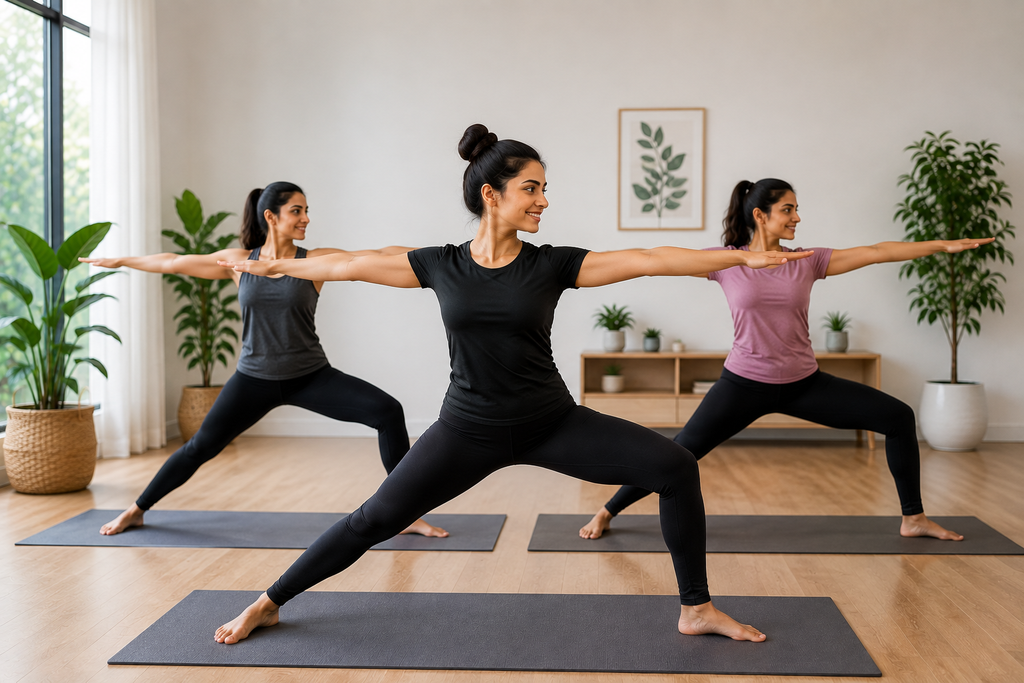
Warrior I and Warrior II involve standing with the legs positioned apart while maintaining an upright posture. They can challenge the legs and encourage body awareness.
Beginners should focus on comfortable positioning rather than trying to create a very deep stance.
If your knees, hips, or other joints become uncomfortable, reduce the range of movement or stop the pose.
Tree Pose for Balance
Tree Pose can introduce balance practice into your morning routine.
Stand on one leg while placing the other foot in a comfortable supported position. Beginners can keep the toes of the lifted foot on the floor or use a wall for support.
Keep your gaze focused on a stable point and breathe naturally.
Balance may vary from day to day. There is no need to hold the pose for a long time when you are first learning.
Bridge Pose for a Balanced Routine
Bridge Pose can be included toward the middle or end of a beginner routine.
Lie on your back with your knees bent and feet positioned comfortably on the floor. Gradually lift the hips while maintaining control.
Do not force the movement or try to lift the hips as high as possible.
If you have a back, neck, or other physical concern, seek appropriate professional guidance before adding new exercises to your routine.
Seated Forward Fold
A seated forward fold can provide a slower movement toward the end of your practice.
Sit comfortably with your legs extended or slightly bent. Hinge forward gradually from the hips while keeping the movement controlled.
You do not need to reach your feet. Using a strap or keeping the knees bent can make the position more accessible.
Avoid bouncing or forcing yourself deeper into the stretch.
Add a Short Breathing Practice
After completing physical postures, spend a few minutes focusing on your breathing.
Sit comfortably and allow your breath to return to its natural rhythm. You can simply observe each inhale and exhale.
This quiet period can help create a clear transition between yoga practice and the rest of your morning.
If you are learning specific breathing techniques, follow instructions from a qualified instructor and avoid practices that cause dizziness, discomfort, or unusual symptoms.
Finish With Relaxation
A morning yoga routine does not need to end with an intense movement. A short relaxation period can help you finish the session calmly.
Lie down or sit comfortably and allow your body to relax. Keep your breathing natural and spend a few moments noticing how you feel.
Even two to five minutes of relaxation can give you time to pause before moving into your daily responsibilities.
Morning Yoga for Busy Professionals
Working professionals often have limited time in the morning. A short routine can make yoga easier to fit into a busy schedule.
For example, you can practice for 15 minutes before getting ready for work. Your routine could include breathing, Cat-Cow, Downward-Facing Dog, a few standing poses, a balance posture, and relaxation.
Another option is a 20- to 30-minute session several times a week.
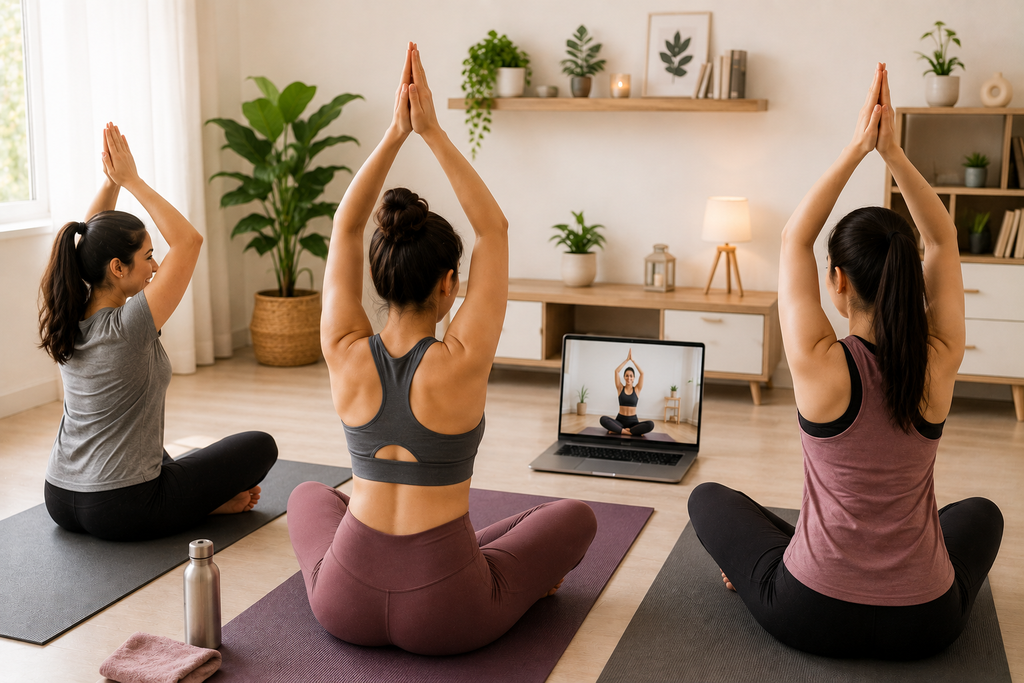
If you prefer guided instruction, Online Yoga Classes can provide access to structured sessions that you can follow from home according to your schedule.
Morning Yoga at Home
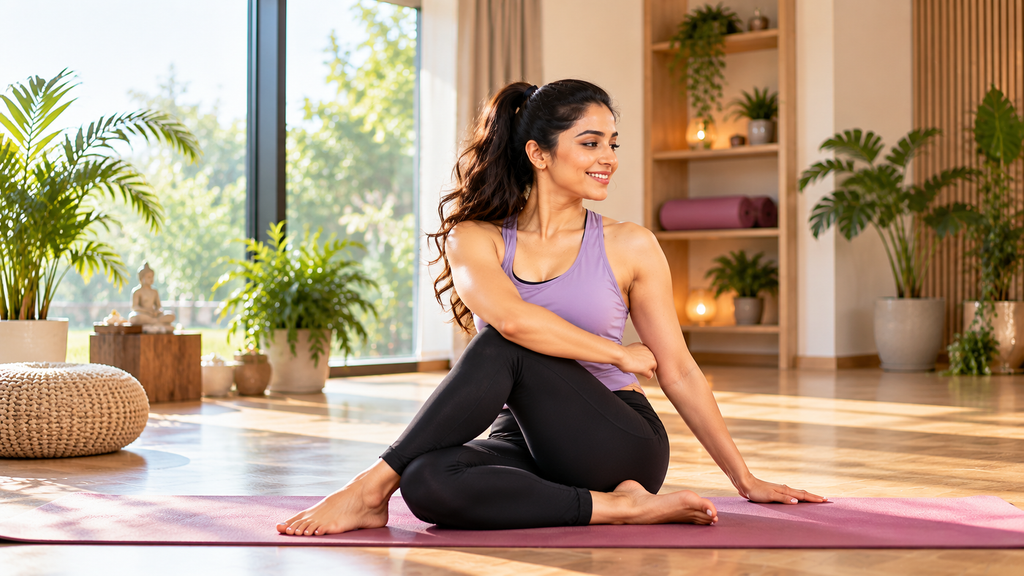
One of the advantages of practicing yoga at home is that you can create a comfortable environment that suits your needs.
Choose a stable, non-slippery surface and make sure you have enough space to move safely. Keep your yoga mat ready so you do not need to prepare everything each morning.
Wear comfortable clothing that allows you to move freely.
You can also keep your phone away from distractions during your practice, unless you are using it to follow a guided class.
Sample 15-Minute Morning Yoga Routine
If you have only 15 minutes, try a simple structure such as:
Minutes 1–2: Comfortable breathing
Minutes 3–5: Neck, shoulders, Cat-Cow, and gentle mobility
Minutes 6–8: Mountain Pose, Forward Fold, and Low Lunge
Minutes 9–11: Warrior II and Tree Pose
Minutes 12–13: Gentle seated stretch
Minutes 14–15: Relaxation and natural breathing
This is an example rather than a requirement. Modify the sequence according to your ability and comfort.
Sample 30-Minute Morning Yoga Routine
With 30 minutes available, you can spend more time on each part of the practice.
5 minutes: Breathing and warm-up
8 minutes: Gentle mobility and stretching
8 minutes: Standing poses and balance
5 minutes: Floor-based postures
4 minutes: Relaxation
A longer session allows you to move more slowly and spend additional time learning each posture.
How to Make Morning Yoga a Daily Habit
Creating a routine is often easier when you remove unnecessary barriers.
Keep your mat in a convenient location. Decide what time you will practice before going to bed. Prepare comfortable clothing in advance.
Start with realistic goals. If you know you can consistently practice for 15 minutes, begin there rather than planning an hour every morning.
You can also keep track of your practice days. The goal is not perfection but developing a sustainable habit.
Common Morning Yoga Mistakes
Beginners can make several mistakes when starting a morning practice.
One common mistake is moving too quickly because of limited time. Even a short session should be controlled.
Other mistakes include:
- Skipping warm-up movements
- Forcing stretches
- Holding the breath
- Trying advanced poses too soon
- Ignoring pain
- Comparing your flexibility with others
- Practicing on an unstable surface
- Making the routine too difficult to maintain
A simple and comfortable practice is often a better starting point.
How to Progress Your Routine
Once you become comfortable with basic movements, you can gradually increase the duration or introduce new postures.
For example, you might start with a 15-minute routine three days per week. After a few weeks, you could increase some sessions to 20 or 30 minutes.
You can also explore different focuses, such as flexibility, strength, balance, mobility, or relaxation.
Progress should be gradual. You do not need to master difficult poses to have a meaningful yoga practice.
Safety Tips for Morning Yoga
Yoga should be practiced with attention to your current ability. Never force a posture simply because an instructor or video demonstrates a deeper variation.
Move slowly, especially when you are new to a particular exercise. Stop if you experience sharp pain, significant discomfort, dizziness, or other concerning symptoms.
If you have an injury, medical condition, are pregnant, or have specific physical limitations, seek guidance from an appropriate healthcare professional or qualified instructor before starting or changing your routine.
Choosing Guided Online Yoga Sessions
Some people prefer practicing independently, while others find guided sessions easier to follow. Guided classes can provide structure and demonstrations, which may be particularly useful for beginners.
When selecting an online program, consider the instructor’s experience, class difficulty, duration, schedule, teaching style, and whether modifications are provided.
A program that offers both shorter and longer sessions can be useful because your available time may change from day to day.
You can also consider Online Yoga Classes when you want guided sessions without needing to travel to a physical studio.
Final Thoughts
A morning yoga routine can be a simple and practical addition to your wellness routine. You do not need advanced skills, expensive equipment, or a large amount of free time to begin.
Start with gentle breathing and warm-up movements, then gradually include beginner-friendly postures such as Cat-Cow, Child’s Pose, Mountain Pose, Low Lunge, Warrior poses, Tree Pose, and gentle seated stretches.
Most importantly, focus on consistency and comfortable movement. A 15-minute routine that fits naturally into your morning may be more sustainable than an hour-long routine that feels difficult to maintain.
With patience and regular practice, morning yoga can become a meaningful part of your daily lifestyle and provide dedicated time for movement, awareness, and relaxation before your day begins.

