Losing weight is a common fitness goal for people who want to improve their overall health, feel more energetic, and develop a healthier lifestyle. However, achieving sustainable weight loss is not just about following a strict diet or spending hours at the gym. It requires a balanced approach that includes regular physical activity, mindful eating, proper sleep, and stress management. Yoga is one activity that can support this journey by combining physical movements, breathing techniques, flexibility exercises, and relaxation practices.
If you are wondering how to lose weight with yoga, the good news is that you can start practising at home without expensive equipment or complicated workout routines. Yoga offers different styles and postures that engage various muscle groups, improve Yoga Retreat India physical endurance, and help develop body awareness. Depending on the intensity and duration of your practice, yoga can contribute to your overall calorie expenditure and support a more active lifestyle.
Unlike some high-intensity workouts, yoga can also be adapted according to your fitness level. Beginners can start with gentle movements and gradually explore more challenging sequences as their strength and confidence improve.
However, yoga should not be considered a magical solution for losing weight. Long-term results depend on consistency, nutrition, daily movement, and individual health factors. In this article, we will explore how yoga can support weight management, which poses you can practise, how frequently you should exercise, and what lifestyle habits can help you achieve sustainable results.
Understanding the Connection Between Yoga and Weight Loss
Yoga supports weight management through a combination of physical activity, muscle engagement, movement awareness, and stress management. Different yoga styles offer different levels of intensity, so the results may vary depending on how you practise.
Some yoga sessions involve slow stretching and relaxation, while others include continuous movements that challenge your strength and endurance.
1. Supports Physical Activity and Calorie Expenditure
Weight loss generally occurs when your body uses more energy than it consumes over time. Yoga can contribute to your daily physical activity, helping you increase energy expenditure.
Dynamic yoga styles such as Vinyasa and Power Yoga involve continuous movements that may require greater physical effort than slower practices.
Although the number of calories burned varies according to body weight, exercise intensity, duration, and individual metabolism, regular yoga can become a useful part of an overall fitness routine.
2. Helps Build Strength and Muscle Endurance
Many yoga postures require you to support your body weight using different muscle groups.
For example, Plank Pose engages the core, shoulders, and legs, while Warrior poses challenge the lower body and improve stability.
Practising these postures regularly can help improve muscular endurance and functional strength.
Building strength is important because it supports everyday physical activities and helps you maintain an active lifestyle.
3. Encourages Mindful Eating Habits
Yoga is not limited to physical movements. It also encourages awareness of your thoughts, habits, and bodily sensations.
Regular mindfulness practices may help you become more attentive to hunger, fullness, and emotional eating patterns.
When you become more aware of your eating habits, it may become easier to make balanced food choices and avoid unnecessary snacking.
4. Supports Stress Management
Long-term stress can affect sleep, appetite, and eating behaviour. Some people experience increased cravings or emotional eating during stressful periods.
Yoga combines physical movement with breathing and relaxation techniques that can support stress management.
Although yoga does not directly eliminate stress-related weight gain, developing healthier stress-management habits can support your overall weight-management efforts.
Best Yoga Styles for Weight Loss
Not all yoga styles have the same physical intensity. Some are designed mainly for relaxation and flexibility, while others involve continuous movement and greater muscular effort.
Choosing the right style depends on your current fitness level and personal goals.
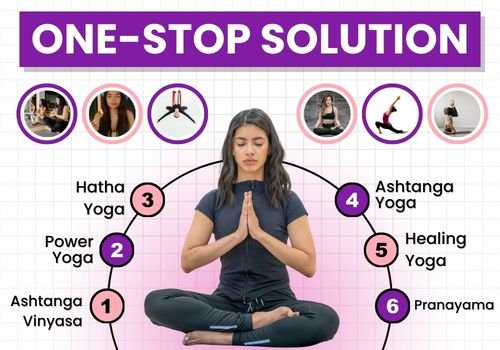
1. Vinyasa Yoga
Vinyasa Yoga connects different postures through coordinated breathing and continuous movement.
It usually involves flowing sequences that keep the body active throughout the session.
Benefits include:
- Engages multiple muscle groups.
- Develops movement coordination.
- Improves flexibility and balance.
- Supports cardiovascular activity depending on intensity.
- Adds variety to your workout routine.
Beginners can start with slower Vinyasa sequences and gradually increase the pace as they become more comfortable.
2. Power Yoga
Power Yoga is a more physically demanding style inspired by traditional yoga practices.
It combines strength-focused postures, continuous movements, and controlled breathing.
This style may be suitable for individuals who already have some basic yoga experience and want a more challenging session.
It can help improve muscular endurance, body strength, and overall fitness.
3. Hatha Yoga
Hatha Yoga focuses on traditional postures, controlled movements, and breathing techniques.
It is often suitable for beginners because many sessions involve a slower pace and provide time to understand posture alignment.
Although it may involve less continuous movement than Power Yoga, it can help improve flexibility, stability, and body awareness.
4. Ashtanga Yoga
Ashtanga Yoga follows a structured sequence of postures performed in coordination with breathing.
It can be physically demanding and requires concentration, strength, and flexibility.
People who prefer a disciplined and structured practice may enjoy this style.
However, beginners should learn the foundations under appropriate guidance before attempting challenging sequences.
5. Surya Namaskar Practice
Surya Namaskar, also known as Sun Salutation, is a sequence of yoga postures performed in a flowing pattern.
It involves forward bends, backward extensions, plank-like positions, and controlled transitions.
Practising suitable rounds of Surya Namaskar can help engage different muscle groups and add movement to your daily routine.
Start with a manageable number of rounds instead of immediately attempting a large number.
10 Best Yoga Poses That Can Support Weight Loss
If you want to start practising yoga for weight management, certain postures can help improve strength, flexibility, balance, and muscular endurance.
Here are ten useful yoga poses to include in your fitness routine.
1. Surya Namaskar (Sun Salutation)
Surya Namaskar is a sequence of connected yoga postures that works on several parts of the body.
It includes movements that engage the arms, shoulders, back, abdomen, and legs.
How to practise:
- Stand straight with your feet together.
- Bring your palms together in front of your chest.
- Inhale and raise your arms overhead.
- Exhale and bend forward comfortably.
- Move into a lunge position.
- Transition into a plank position.
- Lower your body according to your ability.
- Move into a gentle backbend.
- Return through the sequence and repeat.
Start with three to five comfortable rounds and gradually increase according to your fitness level.
Benefits: Supports full-body movement, flexibility, coordination, and muscular endurance.
2. Plank Pose (Phalakasana)
Plank Pose is an effective bodyweight exercise that engages the abdominal muscles, Yoga Retreat India shoulders, arms, and legs.
How to practise:
- Start on your hands and knees.
- Place your palms firmly on the mat.
- Extend one leg behind you, followed by the other.
- Keep your body aligned from shoulders to heels.
- Engage your abdominal muscles.
- Hold the position while breathing normally.
Beginners can start with 10–15 seconds or practise with their knees on the mat.
Benefits: Improves core strength, stability, and muscular endurance.
3. Warrior II (Virabhadrasana II)
Warrior II is a standing yoga posture that engages the thighs, hips, shoulders, and core.
How to practise:
- Stand with your feet comfortably apart.
- Turn your right foot outward.
- Bend your right knee while keeping it aligned with your ankle.
- Extend both arms sideways.
- Look over your right hand.
- Hold the posture for several comfortable breaths.
- Repeat on the opposite side.
Benefits: Builds lower-body strength, improves balance, and develops body stability.
4. Boat Pose (Navasana)
Boat Pose focuses on the abdominal muscles and helps develop core strength.
How to practise:
- Sit on your yoga mat with your knees bent.
- Lean your upper body slightly backward.
- Lift your feet from the floor.
- Balance on your sitting bones.
- Extend your arms forward.
- Hold the position while maintaining comfortable breathing.
Beginners can keep their knees bent and hold the position for a shorter duration.
Benefits: Strengthens the core and improves balance.
5. Bridge Pose (Setu Bandhasana)
Bridge Pose engages the glutes, thighs, back, and core muscles.
How to practise:
- Lie on your back.
- Bend your knees and place your feet on the mat.
- Keep your arms beside your body.
- Press your feet gently into the floor.
- Lift your hips comfortably.
- Hold the position for a few breaths.
- Slowly lower your hips.
Benefits: Strengthens the posterior chain, improves hip mobility, and supports body stability.
6. Chair Pose (Utkatasana)
Chair Pose is a standing posture that challenges the thighs, hips, and core.
How to practise:
- Stand straight with your feet together or slightly apart.
- Inhale and raise your arms overhead.
- Exhale and bend your knees.
- Move your hips backward as if sitting on a chair.
- Keep your chest lifted.
- Hold the position for several breaths.
Benefits: Improves lower-body strength, balance, and muscular endurance.
7. Downward-Facing Dog (Adho Mukha Svanasana)
This posture stretches several muscle groups and engages the arms, shoulders, back, and legs.
How to practise:
- Start on your hands and knees.
- Place your palms shoulder-width apart.
- Lift your knees and hips upward.
- Move your chest gently towards your thighs.
- Keep your knees slightly bent if needed.
- Breathe comfortably and hold the posture.
Benefits: Supports flexibility, shoulder strength, and overall body coordination.
8. Cobra Pose (Bhujangasana)
Cobra Pose is a gentle backbend that helps improve spinal mobility and strengthens the back muscles.
How to practise:
- Lie on your stomach.
- Place your palms beneath your shoulders.
- Keep your elbows close to your body.
- Gently lift your chest using your back muscles.
- Avoid pushing beyond your comfortable range.
- Slowly return to the starting position.
Benefits: Improves spinal mobility and engages the back and shoulder muscles.
9. Triangle Pose (Trikonasana)
Triangle Pose involves a standing side stretch that challenges balance and flexibility.
How to practise:
- Stand with your feet wide apart.
- Turn your right foot outward.
- Extend your arms sideways.
- Move your upper body towards the right.
- Place your right hand on your shin or a yoga block.
- Extend your left arm upward.
- Repeat on the opposite side.
Benefits: Improves flexibility, balance, and body awareness.
10. Child’s Pose (Balasana)
Child’s Pose is a gentle resting posture that can be used between more active movements.
How to practise:
- Kneel on your yoga mat.
- Bring your toes together.
- Slowly move your hips towards your heels.
- Extend your arms forward or keep them beside your body.
- Rest your forehead comfortably on the mat or a cushion.
- Take slow, relaxed breaths.
Benefits: Encourages relaxation and provides a gentle resting position during your yoga practice.
How Often Should You Practise Yoga for Weight Loss?
Consistency is more important than performing an intense workout occasionally.
If you are a beginner, start with three or four yoga sessions per week. Each session can last approximately 20–30 minutes, depending on your fitness level and the intensity of the practice.
As your endurance improves, you can gradually increase your practice duration.
A Simple Weekly Yoga Schedule
Here is an example of a balanced weekly routine:
| Day | Yoga Practice | Duration |
|---|---|---|
| Monday | Surya Namaskar and basic yoga | 30 minutes |
| Tuesday | Power or Vinyasa Yoga | 30 minutes |
| Wednesday | Gentle stretching and breathing | 20 minutes |
| Thursday | Core and strength-focused yoga | 30 minutes |
| Friday | Full-body yoga flow | 30 minutes |
| Saturday | Walking and gentle yoga | 30 minutes |
| Sunday | Rest or relaxation | Optional |
This is a general example, not a fixed prescription. Adjust the intensity according to your physical ability and recovery.
For additional health benefits, combine yoga with regular walking, cycling, swimming, or other suitable aerobic activities.
A 30-Minute Daily Yoga Routine for Weight Management
If you have a busy lifestyle, a 30-minute yoga routine can be a practical way to include physical activity in your day.
You do not need to perform dozens of complicated postures. A structured combination of warm-up movements, standing poses, core exercises, and relaxation can be enough to establish a consistent habit.
First 5 Minutes: Warm-Up
Start with gentle neck movements, shoulder rotations, wrist movements, and comfortable stretches.
Warm-up exercises prepare your body for physical activity and help you gradually increase movement.
Next 10 Minutes: Dynamic Yoga
Include suitable rounds of Surya Namaskar, gentle lunges, and standing movements.
Focus on controlled transitions rather than performing the sequence too quickly.
Next 10 Minutes: Strength-Focused Postures
Practise Plank Pose, Chair Pose, Warrior II, and Bridge Pose.
Hold each posture according to your comfort and take short breaks when necessary.
Final 5 Minutes: Cooling Down
Finish with Child’s Pose, gentle stretching, and relaxed breathing.
Allow your body to recover before completing the session.
Can Yoga Help Reduce Belly Fat?
Many people begin yoga with the specific goal of reducing belly fat.
However, it is important to understand that you cannot choose exactly where your body loses fat. Exercises that target the abdominal muscles strengthen that area, but they do not guarantee fat loss specifically around the stomach.
Yoga can support overall weight management by encouraging physical activity, improving muscular endurance, and supporting stress management.
Yoga Poses for Core Strength
Some postures that engage the abdominal muscles include:
- Boat Pose.
- Plank Pose.
- Side Plank.
- Chair Pose.
- Forearm Plank.
These movements can help improve core stability and muscular strength.
For sustainable fat loss, combine yoga with a balanced eating pattern and regular physical activity.
What Should You Eat While Practising Yoga for Weight Loss?
Nutrition plays an important role in achieving and maintaining a healthy weight.
Even if you practise yoga regularly, your overall food intake and eating habits will influence your results.
A balanced diet should provide enough protein, fibre, healthy fats, vitamins, minerals, and energy.
1. Include Protein-Rich Foods
Protein supports muscle maintenance and helps you feel satisfied after meals.
Some useful options include:
- Lentils and dals.
- Chickpeas and beans.
- Paneer.
- Tofu.
- Curd and Greek yoghurt.
- Eggs.
- Fish and lean meat, if included in your diet.
Try to include a suitable protein source in your main meals.
2. Eat More Vegetables and Fruits
Vegetables and fruits provide fibre, vitamins, minerals, and other beneficial nutrients.
Include seasonal vegetables, leafy greens, berries, apples, oranges, guavas, and other fruits in your daily eating pattern.
Fibre-rich foods can help improve fullness and support digestive health.
3. Choose Balanced Carbohydrates
Carbohydrates provide energy for everyday activities and exercise.
You can include whole grains such as oats, brown rice, whole-wheat roti, millets, and other minimally processed options.
Portion sizes should depend on your energy requirements and activity level.
4. Stay Hydrated
Drink enough water throughout the day.
Hydration is important for normal body functions and physical activity. Your water requirements may increase depending on the weather, sweating, and exercise intensity.
5. Avoid Extreme Dieting
Skipping meals or following highly restrictive diets may make it difficult to maintain your routine.
Instead, focus on balanced portions, regular meals, and sustainable food choices.
If you have specific nutritional requirements, consider consulting a registered dietitian.
How Yoga Retreat India Experiences Can Support a Healthy Lifestyle
Sometimes, maintaining a regular fitness routine becomes difficult because of work pressure, household responsibilities, and everyday distractions.
A dedicated wellness experience can provide an opportunity to step away from daily routines and focus on physical activity, relaxation, and healthy habits.
Exploring a Yoga Retreat India programme can be an interesting option for people who want to experience yoga in a peaceful environment while learning about traditional yoga practices.
India offers different wellness destinations where yoga, meditation, mindful activities, and balanced lifestyle practices may be part of a retreat experience.
1. Dedicated Time for Yoga Practice
A retreat may provide scheduled yoga sessions that help participants develop a regular practice.
Instead of managing classes around everyday responsibilities, participants can dedicate specific time to movement and relaxation.
2. Exposure to Different Yoga Styles
Depending on the retreat, participants may explore Hatha Yoga, Vinyasa Yoga, meditation, pranayama, and gentle stretching.
This can help them understand which practices they enjoy and may want to continue at home.
3. Focus on Mindful Living
A wellness retreat may include activities that encourage mindful eating, relaxation, and better daily routines.
These habits can support a healthier relationship with food, movement, and rest.
4. A Break From Everyday Stress
Spending time in a calm environment may help participants disconnect from everyday distractions.
Relaxation and stress management can be valuable parts of a balanced approach to weight management.
5. Building Long-Term Fitness Habits
The most useful outcome of a Yoga Retreat India experience should be the knowledge and motivation to continue healthy practices after returning home.
A retreat should not be viewed as a quick weight-loss solution. Sustainable results still depend on everyday nutrition, regular movement, and consistency.
When comparing a Yoga Retreat India programme, check the instructor’s qualifications, daily schedule, accommodation, meals, programme details, and suitability for your fitness level.
Common Mistakes to Avoid When Using Yoga for Weight Loss
Although yoga is accessible to different fitness levels, certain mistakes can make it difficult to achieve your goals.
1. Expecting Immediate Results
Weight management takes time. Practising yoga for a few days will not necessarily produce visible changes.
Focus on developing healthy habits rather than expecting rapid transformations.
2. Ignoring Nutrition
Regular yoga practice cannot automatically balance an unhealthy eating pattern.
Pay attention to food quality, portions, and overall nutrition.
3. Performing Advanced Poses Too Early
Trying difficult postures without understanding the correct technique can increase the risk of discomfort or injury.
Start with basic movements and progress gradually.
4. Skipping Rest Days
Your body needs time to recover, particularly after challenging physical sessions.
Include gentle practices and recovery days in your weekly routine.
5. Comparing Your Progress With Others
Every individual has different physical abilities, fitness levels, and weight-management requirements.
Focus on your own progress instead of comparing your body with someone else’s.
6. Ignoring Sleep
Insufficient sleep can affect appetite, recovery, energy levels, and overall health.
Try to maintain a consistent sleep schedule and aim for adequate rest.
Safety Tips Before Starting Yoga for Weight Loss
Yoga is generally adaptable, but it is important to practise according to your physical abilities.
Follow these precautions:
- Begin with a gentle warm-up.
- Use a comfortable, non-slip yoga mat.
- Wear clothing that allows free movement.
- Avoid forcing stretches.
- Breathe naturally during postures.
- Stop if you experience sharp pain, dizziness, or unusual discomfort.
- Use blocks or other supportive equipment when required.
- Learn challenging postures under qualified guidance.
- Consult a healthcare professional if you have an existing medical condition, injury, or pregnancy-related concerns.
A qualified yoga instructor can help you understand the correct technique and select suitable modifications.
Conclusion
So, how do you lose weight with yoga? The answer is to make yoga part of a balanced and consistent lifestyle.
Yoga can support weight management by increasing physical activity, improving strength, developing flexibility, and encouraging better stress-management habits. Dynamic styles such as Vinyasa and Power Yoga can provide more physically demanding sessions, while Hatha Yoga and gentle practices can help beginners build a strong foundation.
Start with simple postures, establish a realistic weekly schedule, and gradually improve your practice. Combine yoga with balanced nutrition, regular walking, adequate sleep, and mindful eating to support sustainable results.
You can also explore a Yoga Retreat India experience if you want dedicated time to learn yoga and develop healthier lifestyle habits.
Remember that successful weight management is not about achieving a particular body shape as quickly as possible. It is about building habits that support your physical and mental well-being over time.