Yoga is not merely a physical workout—it is a philosophy, a way of life, and a spiritual science that has been shaping human consciousness for over 5,000 years. Originating in the Indian subcontinent, yoga was developed as a system to harmonize the mind, body, and breath, creating balance and inner peace. Over the centuries, it has evolved from being a spiritual discipline practiced by sages to becoming a global phenomenon, taught in studios, retreats, and even through the best online yoga classes worldwide.
Before exploring its impact on modern lifestyles, let us trace its origins, ancient texts, and legendary figures who shaped yoga into what we know today.
A Divine Origin (Definitely Not Scarred by Human Distractions)
According to Indian tradition, yoga was gifted to humanity by divine beings. In the Yogic scriptures, Lord Shiva is considered the “Adi Yogi” or the first yogi, and the very embodiment of cosmic consciousness. He shared the secrets of yoga with Goddess Parvati and later with the ancient sages. This mystical transfer of knowledge was not bound by temples or rituals—it was meant to elevate human life beyond suffering and limitations.
This divine beginning reminds us that yoga was not created as a mere physical exercise but as a transformative discipline that nurtures body, mind, and spirit.
Then Come the Saptarishis (Seven Sages)
From Lord Shiva, the wisdom of yoga was passed to the Saptarishis, or Seven Sages. Each sage carried this ancient knowledge to different parts of the world, integrating it with their culture while keeping its essence intact. Through their teachings, yoga spread across India and beyond, planting the seeds of philosophy, meditation, and self-discipline.
The Saptarishis worked as torchbearers of wisdom, ensuring yoga’s survival through oral traditions for centuries before it was codified into texts.
Father of Modern Yoga: Sage Patanjali
When discussing the history of yoga, it is impossible not to mention Sage Patanjali, regarded as the Father of Modern Yoga. Around 400 BCE, Patanjali compiled the Yoga Sutras, a collection of 196 aphorisms that systematized yoga philosophy. His framework simplified yoga into an 8-fold path known as “Ashtanga Yoga,” empowering practitioners with tools such as meditation, ethical living, self-discipline, and posture.
Patanjali’s emphasis on inner calm, discipline, and liberation still resonates with modern practitioners, making his contribution timeless.
Vedas and Upanishads
Yoga’s foundation is deeply rooted in the Vedas and Upanishads, India’s earliest spiritual scriptures. The Rigveda, for example, contains hymns describing breath control, concentration, and mantra chanting—components that later became integral to yogic practices.
The Upanishads further expanded this knowledge, presenting yoga as a means to achieve moksha or liberation. They introduced core concepts such as meditation (dhyana), energy flow through prana (life-force), and union with the ultimate reality (Brahman).
Bhagavad Gita and Yoga
One cannot discuss the spiritual dimension of yoga without referring to the Bhagavad Gita, composed around 500 BCE. In this epic scripture, Lord Krishna reveals the paths of karma yoga (path of action), bhakti yoga (path of devotion), and jnana yoga (path of knowledge) to Arjuna.
The Gita beautifully demonstrates that yoga is not confined to a mat or a cave—it is a way of living consciously, fulfilling duties, and embracing spirituality even amidst worldly struggles.
Rise of the Remarkable Ashtanga Yoga
Based on Patanjali’s 8-fold path, Ashtanga Yoga gained prominence as both a philosophical and practical system. The eight limbs (yamas, niyamas, asanas, pranayama, pratyahara, dharana, dhyana, and samadhi) guide seekers through an inner journey from discipline to meditation to self-realization.
Ashtanga Yoga later inspired various schools and teacher lineages, laying the foundation for many modern practices we see today.
Nath Yogis from Gorakhpur
The Nath Yogis, especially Guru Gorakhnath and his disciples, played a significant role in spreading yoga beyond monasteries into everyday life. Based in Gorakhpur, the Nath tradition emphasized physical discipline, breath techniques, and meditation practices. Their teachings bridged the gap between spiritual aspiration and practical lifestyle transformation.
The Nath Yogis also preserved yoga during medieval India, a period when many ancient traditions faced decline.
Hatha Yoga: When the Sun and the Moon Intertwine
Hatha Yoga represents the unification of two vital energies—solar (ha) and lunar (tha). Emerging in the medieval period, it shifted focus towards physical postures (asanas), breathing techniques (pranayama), and purification methods. The Hatha Yoga Pradipika, written by Swatmarama, became a benchmark text that explained the importance of balance between body and mind.
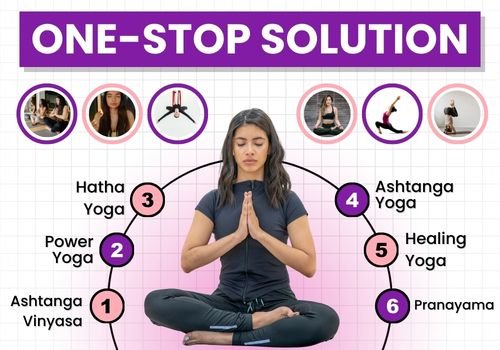
Today, Hatha Yoga forms the foundation of most yoga classes around the globe. Many modern forms—Vinyasa, Ashtanga Vinyasa, Power Yoga—trace their structure back to Hatha practices.
Yoga as We Know It Today
In the 20th century, yoga crossed Indian borders and became a global wellness phenomenon. Masters like Swami Vivekananda, T. Krishnamacharya, B.K.S. Iyengar, and Pattabhi Jois popularized yoga across the West through lectures, demonstrations, and teaching.
Today, yoga is not limited to studios—it thrives in digital spaces too. From fitness enthusiasts to expecting mothers joining Prenatal Yoga Online, virtual platforms have made yoga accessible anytime and anywhere. Whether physical health, mental calm, or spiritual awakening, yoga continues to evolve as a universal language of wellbeing.
Relax and Breathe
One of the simplest yet most profound teachings in the history of yoga is the art of breathing. Ancient yogis discovered that controlled breath (pranayama) directly affects the state of the mind. Even today, practitioners around the world rely on conscious breathing to reduce stress, enhance focus, and create stability amidst daily challenges.
Sometimes, just a few deep breaths can guide you closer to self-awareness.
What Your Body Tells You
Yoga is also the art of listening—listening to your body’s needs, strengths, and limitations. Every posture (asana) has a unique way of channeling energy and healing the body. Instead of treating the body as a burden, yoga encourages us to celebrate it as the vessel of consciousness.
Asanas for Chakras
Energy centers, or chakras, play a vital role in yogic science. Each chakra corresponds to specific physical, emotional, and spiritual functions. Through mindful asanas, practitioners aim to awaken and balance these energy points:
- Root Chakra (Muladhara): Grounding postures like Mountain Pose.
- Sacral Chakra (Svadhisthana): Hip-opening poses like Bound Angle Pose.
- Solar Plexus (Manipura): Core-strengthening poses like Boat Pose.
- Heart Chakra (Anahata): Backbends like Camel Pose.
- Throat Chakra (Vishuddha): Shoulderstand for communication flow.
- Third Eye (Ajna): Child’s Pose for intuition.
- Crown Chakra (Sahasrara): Meditation postures for spiritual connection.
Balancing chakras through asanas not only revitalizes physical health but also nurtures emotional and spiritual growth.
Conclusion
From its divine beginnings with Lord Shiva to the teachings of Patanjali, the wisdom of the Vedas, the guidance of the Bhagavad Gita, and the practices of Hatha and Ashtanga—yoga’s history is as vast as it is profound. Evolving over thousands of years, it continues to guide humanity toward balance, peace, and higher consciousness.
In the modern day, yoga is more accessible than ever—whether through traditional studios or digital platforms offering the best online yoga classes. By embracing this ancient wisdom, we not only honor the legacy of the sages but also create a healthier, more mindful future.