
Yoga has become an accessible and practical way to support physical fitness, flexibility, mobility, relaxation, and overall well-being. With busy schedules and changing lifestyles, many people are choosing to practice yoga from the comfort of their homes instead of traveling to a studio. Online yoga classes make it possible to follow guided sessions through a phone, tablet, laptop, or smart TV, making regular practice easier to fit into everyday life.
Whether you are completely new to yoga, returning after a long break, or looking for a more convenient way to maintain your practice, online classes can provide structure and guidance. However, with so many class formats, instructors, schedules, and difficulty levels available, knowing how to choose and use online yoga effectively is important.
This complete guide explains how online yoga classes work, what beginners should consider, how to create a comfortable home practice, and how to build a consistent routine.
1. Understanding Online Yoga Classes and Their Benefits
Online yoga classes are guided yoga sessions that can be accessed through websites, apps, video platforms, or live virtual sessions. Depending on the program, classes may be live, recorded, or available as a combination of both. Best Online Yoga Some sessions focus on traditional yoga practices, while others are designed around flexibility, mobility, relaxation, strength, breathing, meditation, or general fitness.
One of the biggest advantages of online yoga is convenience. You do not necessarily need to travel to a studio or follow a fixed location. A suitable space at home can become your practice area. This can be particularly useful for working professionals, homemakers, students, parents, and people with unpredictable schedules.
Another advantage is variety. Online programs may offer short sessions for busy days as well as longer classes when you have more time. You can explore beginner yoga, gentle yoga, stretching-focused sessions, strength-oriented practices, relaxation sessions, and other styles according to your goals.
Online yoga can also help people become more comfortable with practicing at their own pace. Beginners may need time to understand basic postures, breathing techniques, transitions, and common yoga terminology. Recorded classes can allow participants to pause, review, or repeat a movement when necessary.
For someone comparing different programs, looking for the Best Online Yoga option should involve more than simply choosing the most popular class. Consider the instructor’s experience, teaching approach, class structure, difficulty level, safety guidance, scheduling options, and whether the program matches your personal goals.
Online classes can also support consistency. When your yoga session is available at home, there may be fewer practical barriers between deciding to exercise and actually beginning the workout. Even a short session can become part of a regular routine when practiced consistently.

2. How to Choose the Right Online Yoga Class
Choosing an online yoga class becomes easier when you first understand what you want from your practice. Different people have different reasons for practicing yoga. Some want better flexibility, while others may be interested in mobility, relaxation, strength, balance, mindfulness, or simply creating a regular movement habit.
Start by identifying your experience level. If you are new to yoga, choose beginner-friendly sessions that explain posture alignment, breathing, transitions, and modifications. Avoid starting with advanced classes simply because they appear more challenging or impressive.
The instructor is another important factor. A good instructor should communicate clearly, demonstrate movements properly, provide useful cues, and explain modifications when appropriate. Beginners especially benefit from instructors who explain not only how to perform a posture but also how to approach it safely.
Next, consider the class format. Live online yoga classes can provide real-time guidance and a structured schedule. Recorded classes offer greater flexibility because you can practice whenever your schedule allows. Some programs combine both formats, allowing participants to enjoy flexibility while still having access to guided live sessions.
Class duration is also worth considering. If you have a busy schedule, a 15- or 20-minute session may be easier to maintain than a one-hour class. Longer sessions can be useful when you have enough time, but consistency is often more practical when your routine matches your lifestyle.
Pay attention to the description of each class. A session labeled for beginners should ideally include clear instructions and manageable movements. If a class focuses on flexibility, strength, relaxation, or mobility, make sure its content aligns with your goal.
It is also useful to understand whether equipment is required. Many beginner yoga sessions can be performed with a yoga mat and comfortable clothing. Some practices may use blocks, straps, bolsters, cushions, or blankets, but these are not always necessary for beginners.
Before committing to a program, check whether the instructor discusses modifications and encourages participants to respect their individual limits. Yoga should not be approached as a competition. A posture does not need to look exactly like the instructor’s for the practice to be useful.
3. Setting Up a Safe and Comfortable Home Yoga Practice
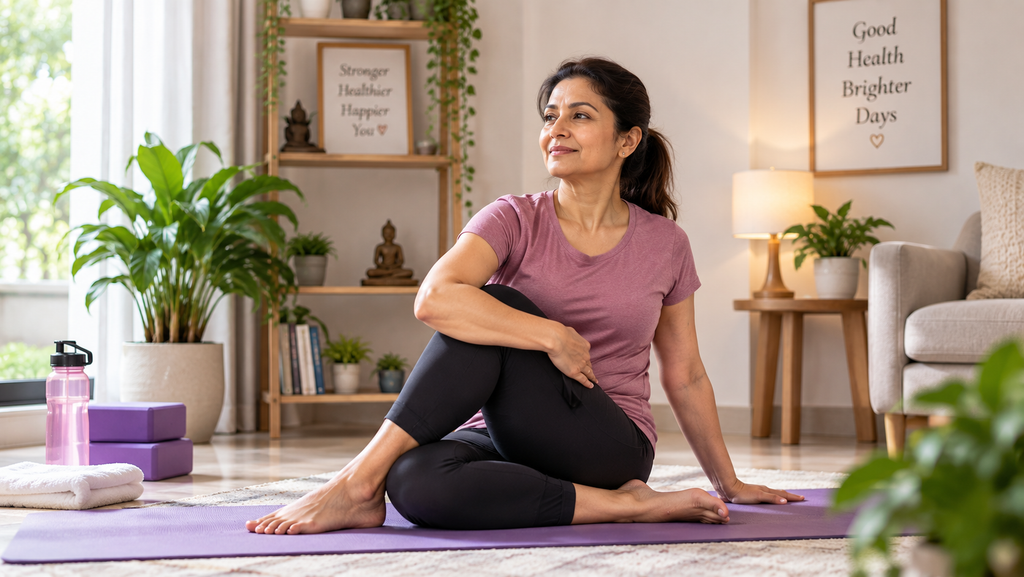
A comfortable environment can make online yoga sessions easier and more enjoyable. You do not need a large room or expensive equipment. A clean, reasonably open area where you can move without hitting furniture is usually enough for many basic sessions.
Place your yoga mat on a stable, non-slippery surface. Make sure there is enough space around you for standing, stretching, bending, and changing positions. Keep sharp objects, unstable furniture, and other potential obstacles away from your practice area.
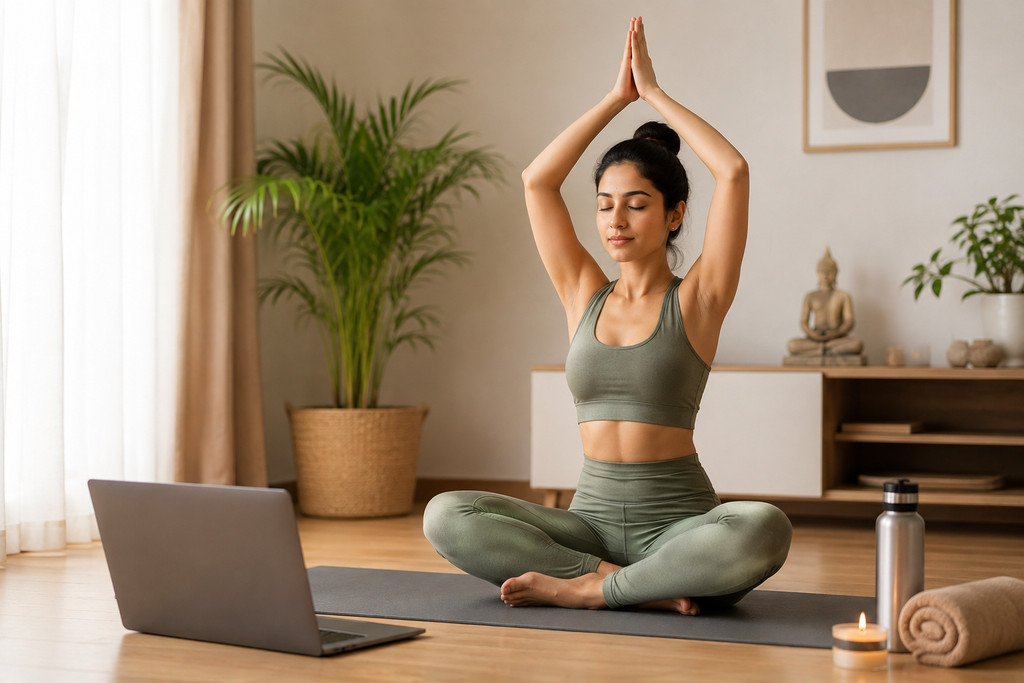
Your device should be positioned where you can clearly see the instructor. If you are following a live class, test your internet connection and camera placement beforehand if participation requires video. A stable device stand can be more convenient than holding a phone during the session.
Wear comfortable clothing that allows free movement. You do not necessarily need specialized yoga clothing. The most important consideration is that your clothes should not significantly restrict movement or make you uncomfortable.
It is also useful to prepare mentally before beginning. Try not to rush directly from a stressful task into an intense session. Take a few moments to settle down, breathe naturally, and focus on the practice.
Beginners should pay particular attention to body signals. Yoga can involve stretching and physical effort, but sharp, sudden, or intense pain should not be ignored. If a movement feels unsuitable, stop or modify it rather than forcing your body into a position.
Warm-ups can be valuable, particularly before sessions that involve stronger movements. Gentle mobility exercises can gradually prepare the body for more demanding positions.
Breathing is another central part of yoga. Instead of holding your breath unnecessarily, follow the instructor’s breathing instructions and maintain a calm, natural breathing pattern when appropriate. Breathing awareness can also help you remain focused during practice.
If you have an existing injury, medical condition, recent surgery, or other physical limitation, consider getting appropriate professional guidance before beginning a new exercise routine. Online instruction cannot provide the same level of individualized assessment as an in-person evaluation.
Most importantly, avoid comparing your progress with other people online. Flexibility, mobility, strength, balance, and coordination can vary significantly from person to person. Progress should be viewed as a gradual process.
4. Building a Consistent Online Yoga Routine
The biggest benefit of an online yoga program often comes from consistency rather than occasional intense sessions. Creating a realistic schedule can help turn yoga from something you occasionally try into a regular part of your lifestyle.
Start with a manageable frequency. Beginners may choose two or three sessions per week and gradually increase their practice depending on how their body responds and how much time they have available.
Choose a time that fits naturally into your day. Some people enjoy yoga in the morning because it gives them dedicated movement time before work or other responsibilities. Others prefer an evening practice to transition away from the day’s activities.
You can also combine different types of sessions throughout the week. For example, one day could focus on gentle mobility, another on a general yoga flow, and another on relaxation or breathing exercises. This variety can keep your routine interesting while allowing different aspects of practice to receive attention.
Setting realistic goals can make your routine easier to maintain. Instead of expecting dramatic changes immediately, focus on smaller goals such as attending a certain number of sessions each week, learning basic postures, improving body awareness, or becoming more consistent.
Keep track of your progress if you find it motivating. You could record the number of sessions completed, class duration, how you felt before and after practice, or which movements are becoming more comfortable. Progress is not always visible through flexibility alone. Improved confidence, coordination, awareness, and consistency can also be meaningful signs of development.
Do not worry if you occasionally miss a session. Best Online Yoga A sustainable routine should allow for busy days, travel, rest, and unexpected changes. Missing one workout does not mean your progress has disappeared. Simply return to your routine when you are ready.
As your experience increases, you can gradually explore different styles and levels. However, progression should be based on control and understanding rather than simply choosing the hardest class available.
A good online yoga routine should fit your lifestyle instead of creating additional stress. The goal is to develop a practice that you can realistically continue over time.
When evaluating the Best Online Yoga option for your needs, look beyond marketing claims and consider the quality of instruction, class variety, accessibility, safety information, schedule, and your personal fitness goals. The right program is one that you can understand, enjoy, and follow consistently.
Online yoga can be a practical way to bring movement and mindfulness into everyday life. With a suitable instructor, an appropriate difficulty level, a safe practice environment, and realistic expectations, beginners can gradually develop confidence and establish a routine that works for them.
Whether you have only a few minutes each day or prefer longer sessions several times a week, online yoga gives you the flexibility to build your practice around your lifestyle. Start at a comfortable level, listen to your body, focus on consistency, and allow your practice to develop gradually.

