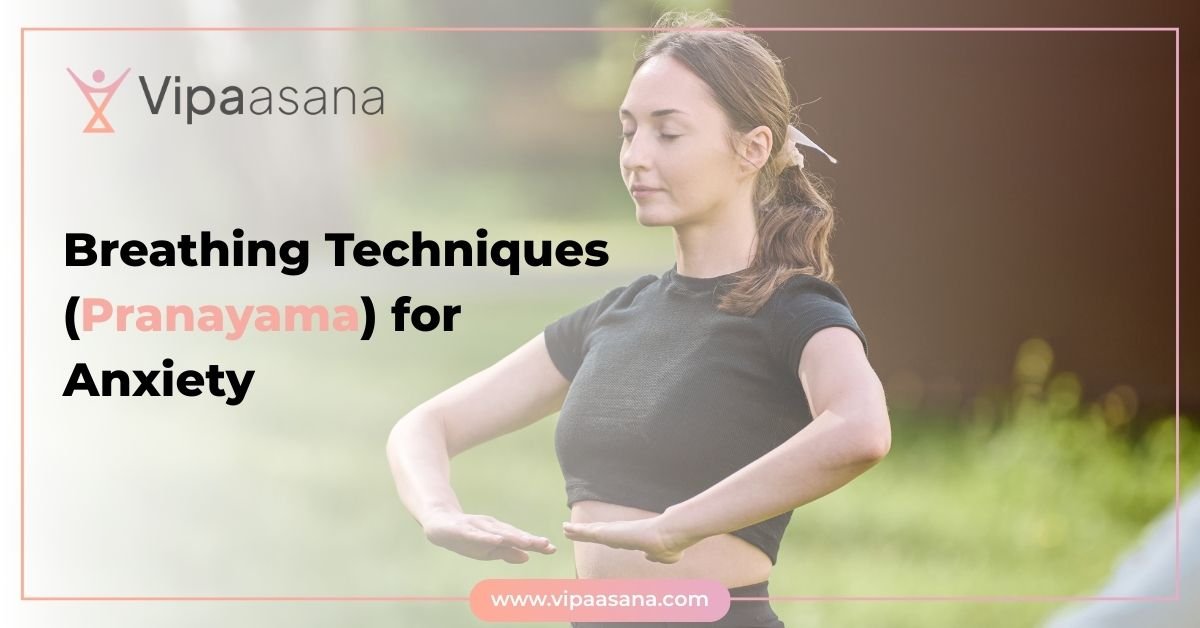
Anxiety is one of the most pervasive mental health challenges of our time, affecting millions worldwide with symptoms ranging from persistent worry and racing thoughts to physical manifestations like rapid heartbeat, shallow breathing, muscle tension, and overwhelming panic. While pharmaceutical interventions and psychotherapy remain important treatment options for many, an ancient practice offers remarkable relief that’s both scientifically validated and immediately accessible: pranayama, the yogic art of breath control.
Unlike medication that requires prescriptions or therapy that demands scheduled appointments, your breath is always available, requiring no equipment, no special location, and no financial investment. The powerful breathing techniques taught in comprehensive yoga courses online provide evidence-based tools for managing anxiety that work at the physiological, neurological, and psychological levels simultaneously, offering both immediate relief during acute anxiety episodes and long-term transformation of your baseline stress response.
Understanding the Breath-Anxiety Connection
To appreciate why pranayama is so effective for anxiety, we must first understand the intimate relationship between breathing patterns and emotional states. This connection operates bidirectionally: anxiety affects your breathing, and your breathing affects your anxiety.
When anxiety triggers your fight-or-flight response, your breathing automatically becomes rapid and shallow, centred in the upper chest rather than the diaphragm. This hyperventilation creates a cascade of physiological changes, including decreased carbon dioxide in the blood, which paradoxically makes you feel short of breath despite breathing quickly, altered blood pH that can cause dizziness and tingling, reduced oxygen delivery to the brain despite rapid breathing, and activation of additional stress responses, creating a vicious cycle.
Here’s the transformative insight: while you cannot directly control your heart rate, blood pressure, or stress hormones, you can consciously control your breathing. And by changing your breath, you indirectly influence all those other systems. Slow, deep, diaphragmatic breathing activates the vagus nerve, which triggers your parasympathetic nervous system—the “rest and digest” response that directly counteracts anxiety’s physiological manifestations.
Research published in Frontiers in Psychology demonstrates that controlled breathing techniques significantly reduce anxiety and improve cognitive performance. Studies using brain imaging show that pranayama practices alter activity in brain regions associated with emotion regulation, attention, and stress response. This isn’t a placebo effect or wishful thinking—these are measurable neurological and physiological changes.
Essential Pranayama Techniques for Anxiety Relief
Diaphragmatic Breathing: The Foundation
Before learning specialised techniques, master diaphragmatic breathing—the foundation of all pranayama practice. Most anxiety sufferers breathe shallowly from the chest, which perpetuates stress responses. Diaphragmatic breathing reverses this pattern.
Lie on your back or sit comfortably with one hand on your chest and one on your belly. Inhale slowly through your nose, allowing your belly to expand while keeping your chest relatively still. The hand on your belly should rise significantly while the hand on your chest barely moves. Exhale slowly through your nose or mouth, feeling your belly fall. Continue for 5-10 minutes, focusing entirely on the sensation of your belly rising and falling.
This simple practice activates the vagus nerve, slows your heart rate, lowers blood pressure, and signals safety to your nervous system. Many people experience noticeable anxiety reduction within just a few minutes of practice. Structured yoga courses online provide detailed instruction on proper diaphragmatic breathing technique, ensuring you’re receiving maximum benefits.
4-7-8 Breathing: The Natural Tranquilliser
Developed by Dr Andrew Weil based on ancient yogic practices, 4-7-8 breathing is remarkably effective for acute anxiety and insomnia. This technique works by extending the exhale relative to the inhale, which strongly activates the parasympathetic nervous system.
Sit comfortably with your back straight. Place the tip of your tongue against the ridge behind your upper front teeth and keep it there throughout the practice. Exhale completely through your mouth, making a whoosh sound. Close your mouth and inhale quietly through your nose for a count of four. Hold your breath for a count of seven. Exhale completely through your mouth for a count of eight, making the whoosh sound. This completes one cycle. Repeat for four complete cycles.
The ratio is more important than the absolute duration—if counting to seven feels too long, use a count of 2-3.5-4, maintaining the 4:7:8 ratio. Practice this technique twice daily and whenever anxiety arises. Many practitioners report that it works like a pharmaceutical tranquilliser, producing noticeable relaxation within minutes without any side effects.
The extended exhale is key: exhalation activates the parasympathetic nervous system more powerfully than inhalation. By making your exhale twice as long as your inhale, you’re essentially overriding your anxiety’s control over your nervous system.
Box Breathing: Military-Grade Anxiety Management
Box breathing, also called square breathing, is used by Navy SEALs, police officers, and emergency responders to maintain calm under extreme pressure. If it works in life-threatening combat situations, it certainly works for everyday anxiety.
The technique is beautifully simple: Inhale through your nose for a count of four. Hold your breath for a count of four. Exhale through your nose for a count of four. Hold your breath (lungs empty) for a count of four. Repeat for 5-10 minutes or until you feel calm.
The equal counts create a balanced, rhythmic pattern that brings order to the chaos anxiety creates. The breath holds increase carbon dioxide in your blood, which counteracts the hyperventilation common during anxiety. The mental focus required to maintain the count also interrupts anxious thought patterns, giving your mind something concrete to focus on besides worry.
Box breathing can be practised anywhere—during meetings, before presentations, in traffic, or whenever anxiety strikes. The more you practice during calm moments, the more effective it becomes during actual anxiety episodes.
Alternate Nostril Breathing (Nadi Shodhana): Balancing the Nervous System
This classic pranayama technique balances the left and right hemispheres of the brain while calming the nervous system. Research shows it reduces heart rate, lowers blood pressure, and decreases anxiety more effectively than simple rest.
Sit comfortably with your spine straight. Using your right hand, fold your index and middle fingers toward your palm, leaving your thumb, ring finger, and pinky extended (Vishnu mudra). Close your right nostril with your thumb and inhale slowly through your left nostril. Close your left nostril with your ring finger, release your thumb, and exhale through your right nostril. Inhale through the right nostril. Close the right nostril with your thumb, release your ring finger, and exhale through the left nostril. This completes one round. Continue for 5-10 minutes, maintaining slow, smooth breaths.
This technique creates a meditative state while physically balancing your autonomic nervous system. Many practitioners find it particularly effective for the racing thoughts and mental agitation that characterise anxiety. Comprehensive yoga courses online typically include detailed video instruction on this technique, ensuring proper form and maximum benefit.
Extended Exhale Breathing: Direct Vagus Nerve Activation
The simplest anxiety-reduction technique might also be the most powerful: making your exhales longer than your inhales. This directly stimulates the vagus nerve, which runs from your brainstem to your abdomen and controls your parasympathetic response.
Breathe in through your nose for a count of four. Breathe out through your nose or mouth for a count of six, seven, or eight—whatever feels comfortable without strain. Continue for 5-10 minutes, or use this pattern whenever you notice anxiety building.
The beauty of this technique is its simplicity and subtlety. You can practice it during conversations, meetings, or any situation where more obvious techniques might feel inappropriate. Simply lengthen your exhales, and your nervous system responds by downregulating stress responses.
Ujjayi Breathing: The Victorious Breath
Ujjayi pranayama creates a soft, oceanic sound in the back of your throat by slightly constricting your glottis. This technique appears throughout yoga asana practice but is also powerful as a standalone anxiety management tool.
Sit comfortably and imagine fogging a mirror with your breath, creating the “haaaa” sound. Now close your mouth and create that same constriction in your throat while breathing through your nose. You should hear a soft, oceanic sound with both inhales and exhales. Breathe slowly and deeply, maintaining the ujjayi sound. Practice for 5-10 minutes.
The audible breath gives your mind something to focus on, interrupting anxious thought loops. The slight restriction slows your breathing naturally, activating relaxation responses. The warming effect of ujjayi breath also has a grounding, comforting quality that many find soothing during anxiety.
Creating a Pranayama Practice for Anxiety Management
For maximum effectiveness, establish both a regular preventive practice and acute intervention techniques.
Daily Prevention Practice (10-15 minutes): Each morning, before anxiety has the opportunity to build, practice 5 minutes of diaphragmatic breathing to establish a calm baseline, followed by 5-10 minutes of alternate nostril breathing to balance your nervous system. This preventive approach raises your baseline resilience, making you less susceptible to anxiety triggers throughout the day.
Acute Intervention Techniques: When anxiety strikes, immediately employ 4-7-8 breathing for four cycles, providing rapid relief. If anxiety persists, continue with box breathing for 5-10 minutes to restore calm. For ongoing management during stressful situations, use extended exhale breathing throughout the experience.
Evening Wind-Down (10 minutes): Before bed, practice 10 minutes of extended exhale breathing or 4-7-8 breathing to clear the day’s accumulated stress and improve sleep quality. Anxiety often disrupts sleep, which worsens anxiety—a vicious cycle these evening practices interrupt.
The Science Behind Pranayama’s Effectiveness
Understanding the mechanisms makes practice more compelling. Pranayama reduces anxiety through multiple pathways, including vagus nerve stimulation that activates parasympathetic responses, carbon dioxide regulation that prevents panic-inducing hyperventilation, prefrontal cortex activation that enhances emotion regulation, amygdala downregulation that reduces fear responses, and GABA production increase, the neurotransmitter that reduces anxiety.
Research published in the Journal of Alternative and Complementary Medicine found that pranayama practice significantly increases GABA levels. Since many anti-anxiety medications work by enhancing GABA activity, pranayama essentially provides similar benefits through natural mechanisms without side effects or dependence risks.
Integration with Comprehensive Practice
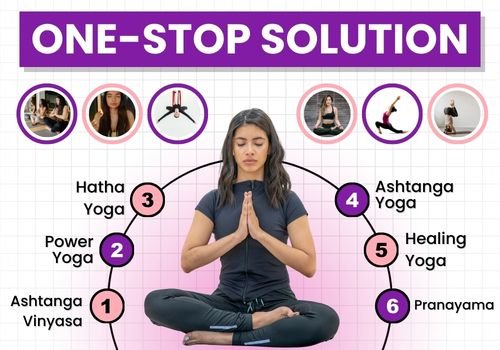
While pranayama alone is powerful, its effects multiply when integrated with other yoga elements. Structured yoga courses online typically combine pranayama with physical postures that release tension, meditation practices that address anxious thought patterns, and yoga philosophy that reframes your relationship with anxiety.
This comprehensive approach addresses anxiety at every level—physical, energetic, mental, and emotional—providing more complete and lasting relief than isolated interventions.
Important Safety Considerations
While pranayama is generally safe, certain considerations apply. If you experience dizziness, discontinue and return to normal breathing. Avoid breath retention if you’re pregnant, have high blood pressure, or suffer from certain heart conditions. If you have serious anxiety disorders, use pranayama as a complement to professional treatment, not a replacement. Start with short practice periods and gradually extend duration as comfort increases.
The Transformation of Consistent Practice
Regular pranayama practice doesn’t just manage anxiety symptoms—it transforms your fundamental relationship with stress and emotional regulation. Practitioners consistently report reduced baseline anxiety levels, improved ability to recognise and interrupt anxiety spirals, enhanced emotional resilience, better sleep quality, and decreased reliance on anti-anxiety medication (under medical supervision).
These changes emerge gradually, typically becoming noticeable within 2-4 weeks of consistent daily practice. The key is regularity—brief daily practice produces far greater results than occasional lengthy sessions.
Conclusion
In a world where anxiety affects hundreds of millions, and pharmaceutical interventions carry significant risks and costs, pranayama offers a safe, effective, immediately accessible alternative rooted in thousands of years of practice and validated by modern neuroscience. Your breath is always available, requiring no special equipment, location, or financial investment—just a few minutes and the willingness to learn proper technique.
The breathing techniques outlined here—diaphragmatic breathing, 4-7-8 breathing, box breathing, alternate nostril breathing, extended exhale breathing, and ujjayi—provide a comprehensive toolkit for both preventing anxiety and managing acute episodes. Whether you’re dealing with generalised anxiety, panic attacks, social anxiety, or stress-related tension, these practices offer tangible relief.
Learning proper technique through yoga courses online ensures you’re receiving maximum benefits while avoiding common mistakes. With expert instruction, you can confidently build a pranayama practice that transforms your experience of anxiety from overwhelming to manageable, from chronic to occasional, from a life-limiting condition to an opportunity for developing profound self-regulation and resilience. Your breath is your most powerful tool for managing anxiety—learn to use it skillfully, and discover the calm that’s been within you all along.