
Yoga is a simple yet powerful practice that can support physical fitness, flexibility, balance, relaxation, and overall well-being. For beginners, starting yoga can sometimes feel confusing because there are many different poses, styles, and techniques to explore. The good news is that you do not need to be highly flexible or experienced to begin. With a few basic poses and a consistent routine, anyone can gradually become more comfortable with yoga.
This beginner’s guide explains the basics of yoga, some easy poses to start with, their potential benefits, and practical tips for building a regular practice. Whether you want to improve flexibility, strengthen your body, reduce everyday stress, or simply create a healthier routine, yoga can be adapted to your individual needs and fitness level.
What Is Yoga?
Yoga is a mind-body practice that combines physical postures, breathing techniques, movement, and relaxation. It has been practiced for centuries and is now used by people around the world as part of their wellness routines.
The physical aspect of yoga involves different poses, often called asanas. These movements can range from gentle stretches to more challenging strength-building positions. Yoga also places importance on controlled breathing and awareness, helping practitioners focus on how their body feels during movement.
Unlike some forms of exercise, yoga does not have to be performed at a fast pace. Beginners can start slowly and focus on proper alignment, breathing, and comfort.
Why Should Beginners Start Yoga?
Yoga can be a useful addition to a beginner’s fitness and wellness routine because it can be modified for different ages, abilities, and experience levels. You do not need expensive equipment or a large space to get started.
Regular practice may help you become more aware of your posture and movement while gradually improving flexibility, strength, and balance. Gentle yoga can also provide an opportunity to slow down and focus on breathing after a busy day.
For beginners, the most important goal is not performing advanced poses. Instead, focus on learning basic movements correctly and developing a sustainable routine.

Basic Yoga Poses for Beginners
There are many yoga poses that beginners can learn safely when performed with appropriate technique and modifications. The following poses are commonly used in beginner-friendly routines.
Mountain Pose
Mountain Pose, or Tadasana, is one of the simplest standing yoga positions. Although it looks easy, it helps beginners understand proper standing alignment and body awareness.
Stand upright with your feet comfortably positioned. Keep your spine naturally straight, relax your shoulders, and allow your arms to rest by your sides. Distribute your weight evenly across both feet and breathe slowly.
This pose can help you become more aware of your posture and prepare your body for other standing poses.
Child’s Pose
Child’s Pose, or Balasana, is a gentle resting position that can be included between more active poses.
Start by kneeling and slowly lower your hips toward your heels. Bend forward and allow your forehead to move toward the mat. Your arms can extend forward or rest beside your body.
The pose provides a gentle stretch and can be used as a resting position during a yoga session. Beginners should adjust the position if they experience discomfort in their knees, hips, or back.
Cat-Cow Pose
Cat-Cow is a gentle movement that alternates between two positions. It is often used during warm-ups.
Begin on your hands and knees with your hands under your shoulders and knees under your hips. As you inhale, gently move your chest forward and allow your spine to curve naturally. As you exhale, gently round your spine.
Move slowly and coordinate the movement with your breathing. This exercise can encourage spinal mobility and help beginners become more comfortable with controlled movement.
Downward-Facing Dog
Downward-Facing Dog, or Adho Mukha Svanasana, is a well-known yoga pose that involves the arms, shoulders, legs, and back.
Start on your hands and knees. Lift your hips upward while gradually straightening your legs as much as comfortable. Your hands should remain firmly connected to the floor.
Beginners do not need to force their heels toward the floor. Keeping the knees slightly bent can make the pose more comfortable. Focus on maintaining a stable position rather than trying to achieve a perfect shape.
Cobra Pose
Cobra Pose, or Bhujangasana, is a gentle back-extension pose commonly included in beginner yoga routines.
Lie on your stomach with your hands placed near your shoulders. Slowly lift your chest while keeping your lower body relaxed and connected to the floor. Avoid pushing yourself too high.
The movement can help introduce beginners to gentle spinal extension. If you feel pain or excessive pressure in your lower back, come out of the pose and consider a gentler variation.
Child’s Pose to Tabletop Flow
A simple movement between Child’s Pose and Tabletop can be useful for beginners who want to practice coordination and controlled transitions.
From Child’s Pose, slowly move forward onto your hands and knees. Pause in Tabletop, keeping your spine comfortable and neutral. Then move back toward Child’s Pose.
Repeating this movement slowly can help you become familiar with changing positions while maintaining awareness of your breathing.
Warrior I
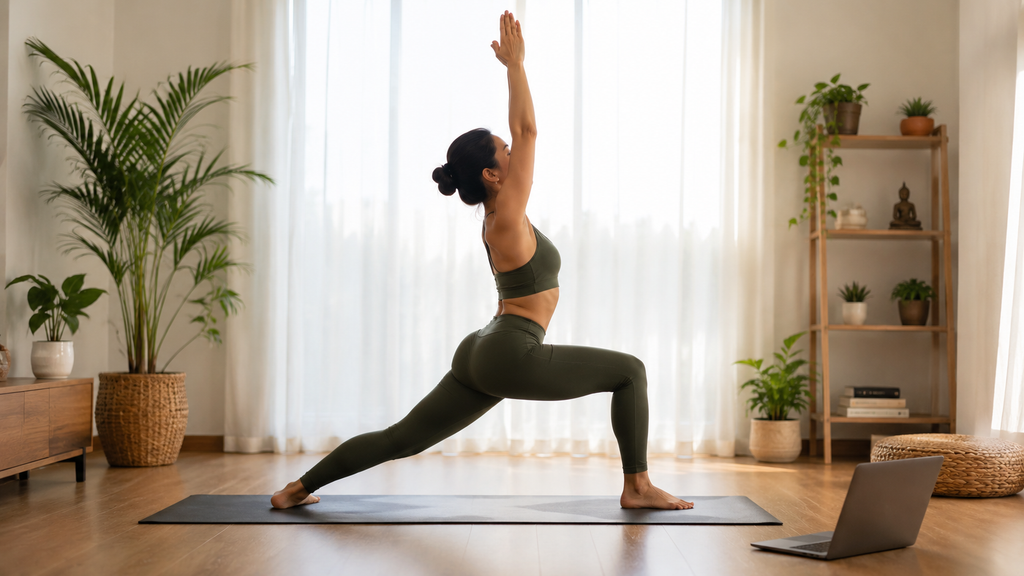
Warrior I, or Virabhadrasana I, is a standing pose that can help beginners practice balance, leg strength, and body awareness.
Step one foot forward and place the other foot behind you. Bend the front knee comfortably while keeping the back leg stable. Raise your arms upward if comfortable and keep your torso controlled.
Beginners should avoid forcing the front knee or holding the pose longer than they can comfortably manage.
Warrior II
Warrior II is another standing pose that challenges balance and encourages strength in the legs.
Stand with your feet apart and turn one foot outward. Bend the front knee while extending your arms in opposite directions. Keep your chest facing forward and maintain a steady gaze.
This pose can be modified by reducing the depth of the knee bend or shortening the stance.
Seated Forward Fold
Seated Forward Fold, or Paschimottanasana, involves sitting with the legs extended and gently moving the upper body forward.
Sit comfortably with your legs in front of you. Inhale to lengthen your spine and slowly lean forward as you exhale. Do not worry about touching your toes.
Beginners should focus on maintaining a comfortable stretch rather than forcing the body downward. Keeping the knees slightly bent may also make the movement easier.
Easy Pose
Easy Pose, or Sukhasana, is a comfortable seated position often used for breathing, meditation, or relaxation.
Sit with your legs crossed and your spine comfortably upright. Rest your hands on your knees and take slow, natural breaths.
This simple position can help beginners develop the habit of sitting quietly, focusing on their breathing, and becoming more aware of their body.
Benefits of Yoga for Beginners
Yoga can provide several potential physical and mental wellness benefits when practiced regularly and appropriately.
Improved Flexibility
One of the most commonly associated benefits of yoga is improved flexibility. Many yoga poses involve gentle stretching of different muscle groups.
Beginners may initially notice stiffness in areas such as the hips, shoulders, hamstrings, or back. Consistent practice can gradually help improve range of motion.
Flexibility usually develops over time, so there is no need to force a stretch during the first few sessions.
Better Strength
Yoga is not only about stretching. Many poses require you to support and control your body weight.
Standing poses can engage the legs, while poses such as Plank can challenge the arms, shoulders, and core. A balanced routine can gradually improve muscular endurance and body control.
Beginners should build strength progressively rather than immediately attempting difficult poses.
Improved Balance
Balance can become an important part of yoga as you progress. Standing poses such as Tree Pose and Warrior variations require coordination and stability.
Practicing balance regularly can improve body awareness and help you understand how your weight is distributed.
It is completely normal to wobble or lose balance when learning. Beginners can practice near a wall or use another stable support when appropriate.
Better Posture Awareness
Yoga encourages attention to spinal alignment, shoulder position, and body mechanics.
Practicing poses mindfully can help you become more aware of how you sit, stand, and move throughout the day. Good posture is not about holding your body rigidly; it involves finding a comfortable and balanced position.
Stress Management and Relaxation
Yoga often combines physical movement with controlled breathing and periods of relaxation. This can make it a useful practice for managing everyday stress.
A slower yoga session can provide time to step away from screens, work, and daily responsibilities. Breathing exercises and relaxation at the end of a session can also help create a calmer transition into the rest of your day.
Greater Body Awareness
Yoga encourages you to pay attention to your body while moving. You learn to notice tension, balance, breathing, and physical sensations.
This awareness can help beginners understand their personal limits and recognize when a pose needs to be modified.
Support for a Healthy Routine
Creating a regular yoga habit can make physical activity easier to maintain. Even a short session can become part of a daily wellness routine.
The goal does not have to be practicing for an hour every day. Starting with 10 to 20 minutes and gradually increasing the duration can be more realistic for many beginners.
How to Start a Beginner Yoga Routine
Starting a yoga routine does not need to be complicated. Begin by choosing a comfortable and quiet space where you can move without distractions.
A basic session can include a few minutes of breathing, gentle warm-up movements, beginner standing poses, simple stretches, and relaxation.
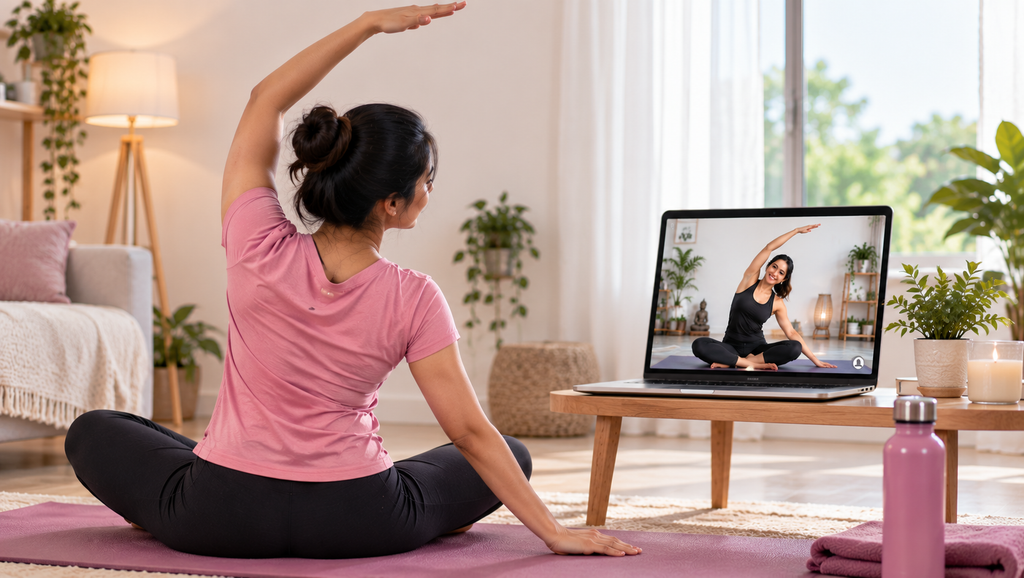
If you prefer structured guidance, you can also explore Yoga Online through guided classes that allow you to practice from home. Live or recorded sessions can help beginners follow a planned sequence and understand how different poses are performed.
How Often Should Beginners Practice Yoga?
There is no single schedule that works for everyone. Beginners can start with two or three sessions per week and gradually build consistency.
Some people may prefer short daily sessions, while others may have more time for longer sessions a few times a week.
Consistency is generally more important than trying to practice for long periods occasionally. Listen to your body and allow enough recovery when needed.
Tips for Practicing Yoga Safely
Safety should be a priority when learning yoga. Start with beginner-level movements and avoid forcing your body into positions that feel painful.
Warm up before challenging movements and move slowly between poses. Keep your breathing natural rather than holding your breath.
If you have an existing injury, medical condition, are pregnant, or have concerns about whether a particular pose is appropriate for you, consult a qualified healthcare professional or appropriately trained yoga instructor before beginning.
Using props such as blocks, straps, cushions, or folded blankets can also make certain poses more accessible.
Common Mistakes Beginners Should Avoid
One common mistake is comparing your flexibility or performance with other people. Yoga is a personal practice, and everyone starts with different levels of mobility and strength.
Another mistake is trying advanced poses too soon. Complex poses require preparation, strength, balance, and technique.
Beginners should also avoid ignoring pain. A mild stretch can be normal, but sharp, sudden, or persistent pain is a reason to stop the movement.
Skipping warm-ups and rushing through transitions can also make a session less comfortable. Take time to understand each movement before increasing intensity.
Can Beginners Learn Yoga at Home?
Yes, beginners can practice yoga at home with suitable guidance and a comfortable space. Home practice can be convenient because you can choose a time that fits your schedule.
If you are new to yoga, guided classes can be particularly useful. Yoga Online programs may offer beginner-friendly sessions, live instruction, and different class durations, allowing you to select an option that matches your experience level.
However, beginners should choose instructors and classes carefully and prioritize proper technique over speed or difficulty.
A Simple 20-Minute Beginner Yoga Routine
A beginner-friendly routine can be structured in the following way:
- 2–3 minutes of comfortable breathing and relaxation
- 2 minutes of gentle neck, shoulder, and joint movements
- 3 minutes of Cat-Cow movements
- 2 minutes of Child’s Pose
- 3 minutes of Mountain Pose and gentle standing movements
- 3 minutes of Warrior I and Warrior II variations
- 2 minutes of a gentle seated stretch
- 2 minutes of quiet relaxation
This routine can be adjusted according to your comfort and experience. Beginners should focus on slow, controlled movements rather than trying to complete every pose perfectly.
How to Make Yoga a Long-Term Habit
Building a long-term yoga habit is easier when the routine fits naturally into your lifestyle.
Choose a consistent time of day that works for you. Some people prefer morning yoga, while others find evening sessions more convenient.
Keep your yoga space ready and avoid making your routine unnecessarily complicated. Setting small goals can also help. For example, you might begin with three sessions per week and increase gradually.
Most importantly, treat yoga as a practice rather than a performance. Progress can include better breathing, improved balance, greater mobility, or simply feeling more comfortable in your body.
Final Thoughts
Yoga can be an accessible way for beginners to introduce movement, stretching, breathing, and relaxation into their daily routine. Basic poses such as Mountain Pose, Child’s Pose, Cat-Cow, Cobra Pose, Warrior I, and Warrior II provide a useful starting point for learning fundamental yoga movements.
With regular practice, beginners may gradually develop better flexibility, strength, balance, body awareness, and relaxation skills. The key is to start at a comfortable level, practice consistently, and progress gradually.
Whether you choose to attend classes, practice at home, or follow guided sessions, remember that yoga is not about achieving perfect poses. It is about developing a mindful and sustainable relationship with movement and well-being.

