
Practicing yoga and meditation at home can be a simple and effective way to create time for your physical and mental well-being. A 60-minute session gives you enough time to combine gentle movement, stretching, breathing exercises, meditation, and relaxation without making the practice feel rushed.
You do not need a large space or expensive equipment to begin. A yoga mat, comfortable clothing, and a quiet environment are usually enough. The most important part is consistency. By following a structured 60-minute routine, beginners and experienced practitioners can create a peaceful daily habit that supports flexibility, mobility, body awareness, relaxation, and mindfulness.
What Is a 60-Minute Yoga and Meditation Session?
A 60-minute yoga meditation session combines physical yoga practices with breathing and meditation. Instead of focusing only on yoga poses, the session allows you to gradually move from physical activity toward mental relaxation.
A balanced one-hour practice can include:
- Gentle warm-up movements
- Yoga postures
- Stretching
- Balance and strengthening poses
- Breathing exercises
- Meditation
- Final relaxation
The structure can be adjusted according to your experience, energy level, and personal goals. Beginners can spend more time on gentle movements, while experienced practitioners may include more challenging postures.
The purpose is not to complete as many poses as possible. Instead, the goal is to move with awareness and finish the session feeling relaxed and refreshed.
Benefits of Practicing Yoga and Meditation at Home
Home practice provides flexibility because you can choose when and where to practice. It can also make it easier to develop a regular routine.
A consistent yoga and meditation practice may support:
- Flexibility and mobility
- Muscle strength and body awareness
- Balance and coordination
- Relaxation after a busy day
- Mindful breathing
- Better awareness of posture
- A sense of calm
- Physical activity and general wellness
Meditation can complement yoga by giving you dedicated time to slow down and focus on the present moment. Combining the two can make a 60-minute session feel more complete than practicing either activity alone.
However, yoga and meditation are not substitutes for medical care. If you have an injury, significant pain, or a health condition that affects physical activity, consider speaking with a qualified healthcare professional before beginning a new routine.

How to Prepare Your Home for Yoga
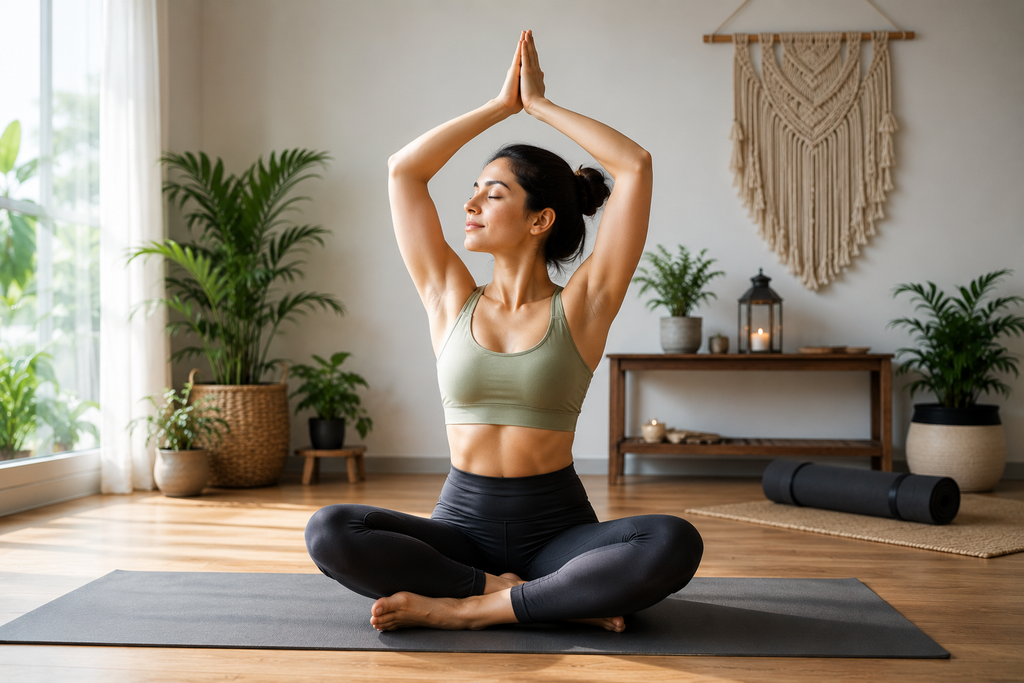
You do not need a dedicated yoga room. A small, clean area where you can comfortably extend your arms and legs is generally sufficient.
Before beginning, consider the following:
- Place your yoga mat on a stable surface.
- Keep your practice area free from objects you could trip over.
- Wear comfortable clothing that allows easy movement.
- Keep water nearby.
- Reduce unnecessary distractions.
- Choose comfortable lighting and room temperature.
- Keep your phone away or use a silent mode.
If you are practicing meditation after yoga, choose a place where you can sit comfortably for several minutes without interruption.
Creating a consistent practice environment can also make it easier to associate that space with relaxation and mindfulness.
60-Minute Yoga Meditation Routine
A simple 60-minute session can be divided into different stages. The following structure provides enough time for movement, breathing, meditation, and relaxation.
0–5 minutes: Centering and breathing
5–10 minutes: Gentle warm-up
10–35 minutes: Yoga practice
35–45 minutes: Stretching and mindful movement
45–55 minutes: Meditation and breathing
55–60 minutes: Final relaxation
You can adjust these timings according to your needs. For example, beginners may spend longer warming up and less time holding difficult poses.
0–5 Minutes: Centering and Deep Breathing
Begin by sitting comfortably or lying down. Close your eyes if that feels comfortable and allow your body to settle.
Take a few natural breaths without trying to change them immediately. Then gradually bring your attention to the movement of your abdomen and chest.
Try a simple breathing pattern:
- Inhale gently through the nose.
- Allow the abdomen to expand naturally.
- Exhale slowly and comfortably.
- Keep the shoulders relaxed.
- Repeat for several breaths.
There is no need to force deep breathing. The purpose of this opening stage is to transition your attention away from daily activities and toward your practice.
You can silently set an intention for the session, such as staying present, moving gently, or giving yourself uninterrupted time.
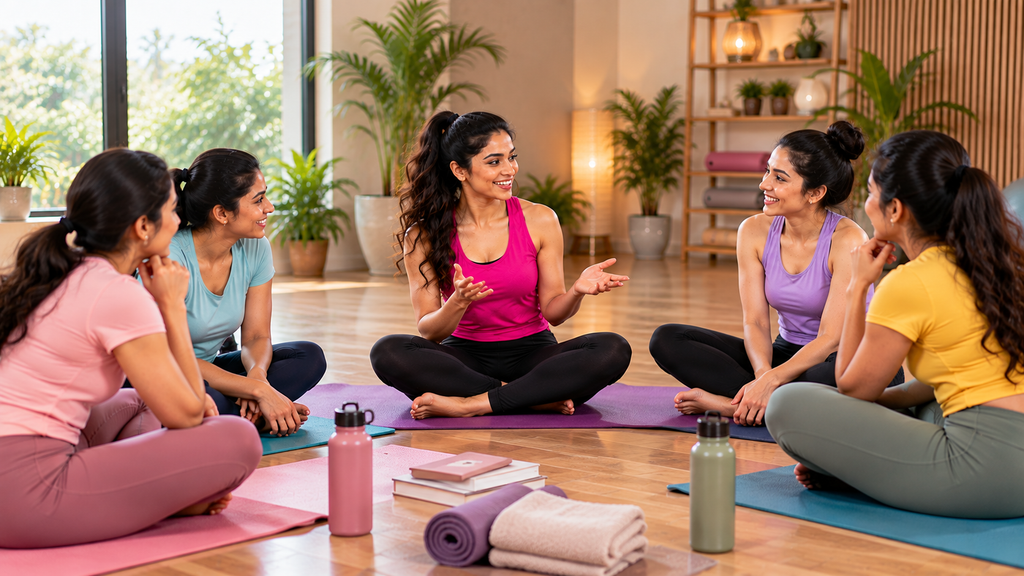
5–10 Minutes: Gentle Warm-Up
A warm-up prepares the body for the movements that follow. Start slowly and avoid sudden or forceful movements.
You can include:
- Neck movements
- Shoulder rolls
- Wrist and ankle movements
- Gentle side stretches
- Seated spinal movements
- Cat-Cow movements
For Cat-Cow, begin on your hands and knees. Move slowly between a comfortable rounded-spine position and a gentle chest-opening position while coordinating the movement with your breathing.
The warm-up should feel comfortable rather than exhausting. Focus on smooth movement and awareness.
10–35 Minutes: Main Yoga Practice
The main portion of your 60-minute routine can include a combination of standing, seated, and floor-based poses.
You do not need to perform every pose in one session. Choose movements that match your experience and current physical condition.
Mountain Pose
Mountain Pose is a simple standing posture that encourages awareness of alignment.
Stand with your feet comfortably positioned. Keep your spine naturally upright, relax your shoulders, and allow your arms to rest by your sides.
Take several steady breaths while noticing how your body feels.
This pose can be useful between other standing movements because it gives you an opportunity to pause and reset.
Standing Forward Fold
From a comfortable standing position, gently fold forward while keeping the movement controlled.
Do not force yourself to reach the floor. You can bend your knees if needed.
This movement can provide a gentle stretch through the back of the legs and back body. People with certain back or hamstring issues should modify the pose appropriately.
Downward-Facing Dog
Downward-Facing Dog is commonly included in yoga sequences. Begin on your hands and knees and gradually lift your hips upward.
Keep your knees bent if that feels more comfortable. The goal is not to force your heels toward the floor.
Focus on creating a stable, comfortable position and breathing naturally.
If this posture is uncomfortable for your wrists, shoulders, or back, choose a gentler alternative.
Low Lunge
Step one foot forward while keeping the other knee supported on the mat.
Keep your movement controlled and avoid pushing deeply into the stretch. Low Lunge can be useful for gentle hip and leg mobility.
Repeat on both sides and spend approximately 30–60 seconds on each side, depending on your comfort.
Warrior Pose
Warrior variations can add strength and stability to a yoga session.
Stand with your legs apart and bend one knee while keeping the other leg extended in a comfortable position. Keep your upper body upright and your breathing steady.
Do not allow the front knee to collapse inward. Maintain a comfortable stance rather than trying to create a very deep bend.
Repeat on the opposite side.
Tree Pose
Tree Pose introduces balance and concentration.
Stand tall and shift your weight onto one leg. Place the other foot at a comfortable position on the supporting leg, avoiding direct pressure against the knee joint.
You can keep your hands at your chest or use a wall for support.
If balance is difficult, that is completely normal. Focus on stability rather than holding the pose for a long time.
Child’s Pose
Child’s Pose can provide a gentle resting position between more active movements.
Kneel and gradually lower your upper body toward the mat while keeping the position comfortable.
You can place a cushion or folded blanket under your head or hips if needed.
Stay for several breaths and allow your breathing to become natural.
Bridge Pose
Lie on your back with your knees bent and feet supported on the floor. Best Online Yoga Slowly lift your hips to a comfortable height and then lower them with control.
Keep your neck relaxed and avoid forcing the movement.
Bridge Pose can add a gentle strengthening element to your routine while also encouraging awareness of the hips and spine.
35–45 Minutes: Stretching and Mindful Movement
After the more active portion of your practice, gradually slow down.
You can include seated stretches such as:
- Seated forward fold
- Gentle seated twist
- Butterfly stretch
- Comfortable hip stretches
- Supine knee-to-chest movement
Move slowly and breathe naturally.
Stretching should not cause sharp or intense pain. You do not need to reach a particular depth for a stretch to be useful. Your range of movement can vary from day to day.
This section is also a good opportunity to notice how your body feels compared with the beginning of the session.
45–55 Minutes: Meditation and Breathing
Once the physical practice is complete, find a comfortable seated or lying position.
Allow your hands to rest naturally. Close your eyes if comfortable.
Begin with simple breath awareness.
Notice:
- The sensation of breathing
- The movement of the abdomen
- The feeling of air moving through the nose
- The contact between your body and the floor
- Sounds around you
When your mind wanders, gently bring your attention back to your breath.
You do not need to stop thinking completely. Thoughts are a normal part of meditation. The practice is about noticing when your attention has wandered and calmly returning it.
You can continue this practice for five to ten minutes.
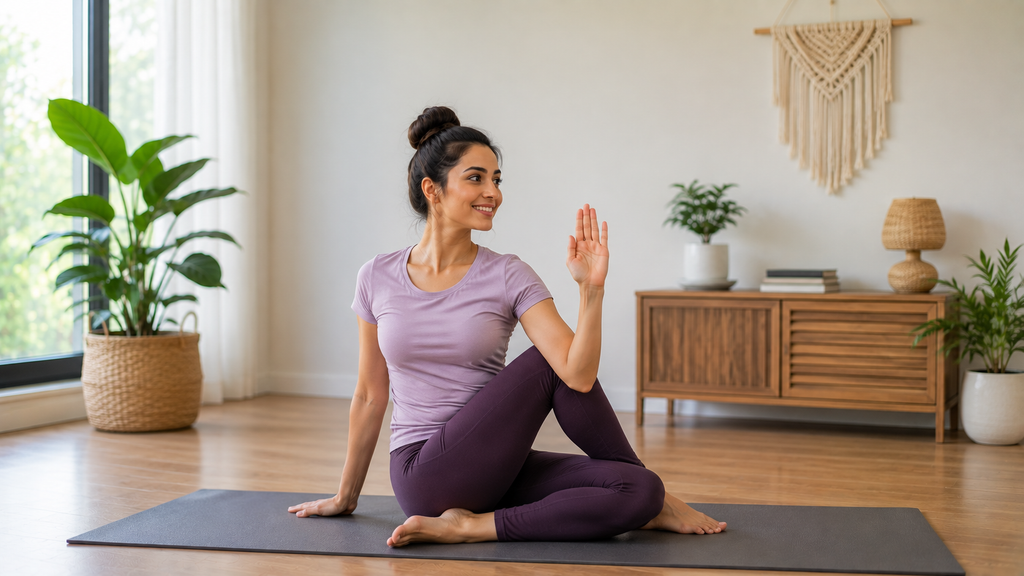
Simple Guided Meditation Technique
A simple body-awareness meditation can also be included.
Start by bringing attention to your feet. Notice any sensations without judging them.
Slowly move your attention upward through:
- Legs
- Hips
- Abdomen
- Chest
- Shoulders
- Arms
- Neck
- Face
Relax areas that feel unnecessarily tense.
Finish by taking several comfortable breaths before opening your eyes.
This technique can help make the transition from active yoga to quiet meditation smoother.
55–60 Minutes: Final Relaxation
Finish the session with five minutes of relaxation.
Lie comfortably on your back and allow your arms and legs to rest naturally.
Close your eyes and let your breathing return to its natural rhythm.
There is nothing to accomplish during this final stage. Simply remain still and notice the effects of the practice.
After several minutes, slowly move your fingers and toes. Turn to one side and gradually sit up.
Take one final breath before ending the session.
How Beginners Can Modify a 60-Minute Routine
A full hour may feel challenging for someone who is completely new to yoga. You do not have to perform advanced poses simply because the session lasts 60 minutes.
Beginners can make the routine easier by:
- Holding poses for shorter periods
- Taking more breaks
- Using a wall for balance
- Keeping knees slightly bent
- Using cushions or blocks
- Choosing gentle variations
- Spending more time on breathing and relaxation
The quality of movement matters more than the number of poses.
If a particular movement causes pain, stop and choose a more comfortable alternative.
How Online Yoga Can Support Home Practice
Following a guided class can make home practice easier because you do not have to plan every movement yourself. A qualified instructor can provide instructions, demonstrations, modifications, and reminders about breathing and alignment.
When searching for the Best Online Yoga Classes, consider whether the program provides beginner-friendly instruction, clear demonstrations, appropriate modifications, and classes that match your schedule.
Live classes can also provide an opportunity to follow an instructor in real time, while recorded sessions offer flexibility when your schedule changes.
The right format depends on your preferences, experience, available time, and comfort with independent practice.
How Often Should You Practice?
There is no single schedule that works for everyone.
You might begin with three sessions per week and gradually increase your frequency if your body responds well.
A possible weekly routine could be:
- Monday: 60-minute yoga and meditation
- Tuesday: Gentle stretching or walking
- Wednesday: 60-minute yoga session
- Thursday: Rest or light movement
- Friday: 60-minute yoga and meditation
- Saturday: Optional gentle practice
- Sunday: Rest and relaxation
Consistency is more important than trying to practice intensely every day.
Common Mistakes to Avoid
Home yoga can be beneficial, but beginners should avoid several common mistakes.
One mistake is rushing through poses without paying attention to alignment or breathing. Another is comparing your flexibility with other people.
Other mistakes include:
- Skipping warm-up movements
- Forcing stretches
- Holding the breath
- Attempting advanced poses too quickly
- Ignoring pain
- Practicing on an unstable surface
- Doing too much too soon
- Treating yoga as a competition
Yoga should be adapted to your body rather than forcing your body to fit a particular pose.
Making Your 60-Minute Practice Consistent
Building a regular habit is easier when you make your routine realistic.
Choose a time that fits naturally into your day. Best Online Yoga Some people prefer morning sessions, while others find evening yoga more comfortable.
You can also prepare your mat in advance, keep your practice area organized, and follow a planned class instead of deciding what to do every day.
Start with manageable goals. Practicing three times a week consistently can be more sustainable than creating an ambitious daily routine that becomes difficult to maintain.
Final Thoughts
A 60-minute yoga meditation session at home can bring together movement, stretching, breathing, mindfulness, and relaxation in one balanced routine. You can customize the session according to your experience, schedule, and comfort level.
The practice does not need to be complicated. Begin with gentle movements, gradually include different yoga poses, slow down toward the end, and give yourself enough time for meditation and relaxation.
With regular practice, a one-hour session can become a valuable part of your wellness routine. The key is to listen to your body, avoid forcing movements, practice consistently, and choose guidance that suits your experience.
Whether you practice independently or follow guided sessions, the purpose of yoga and meditation is to create mindful time for yourself. A calm home environment and a structured 60-minute routine can make that practice easier to maintain over time.

